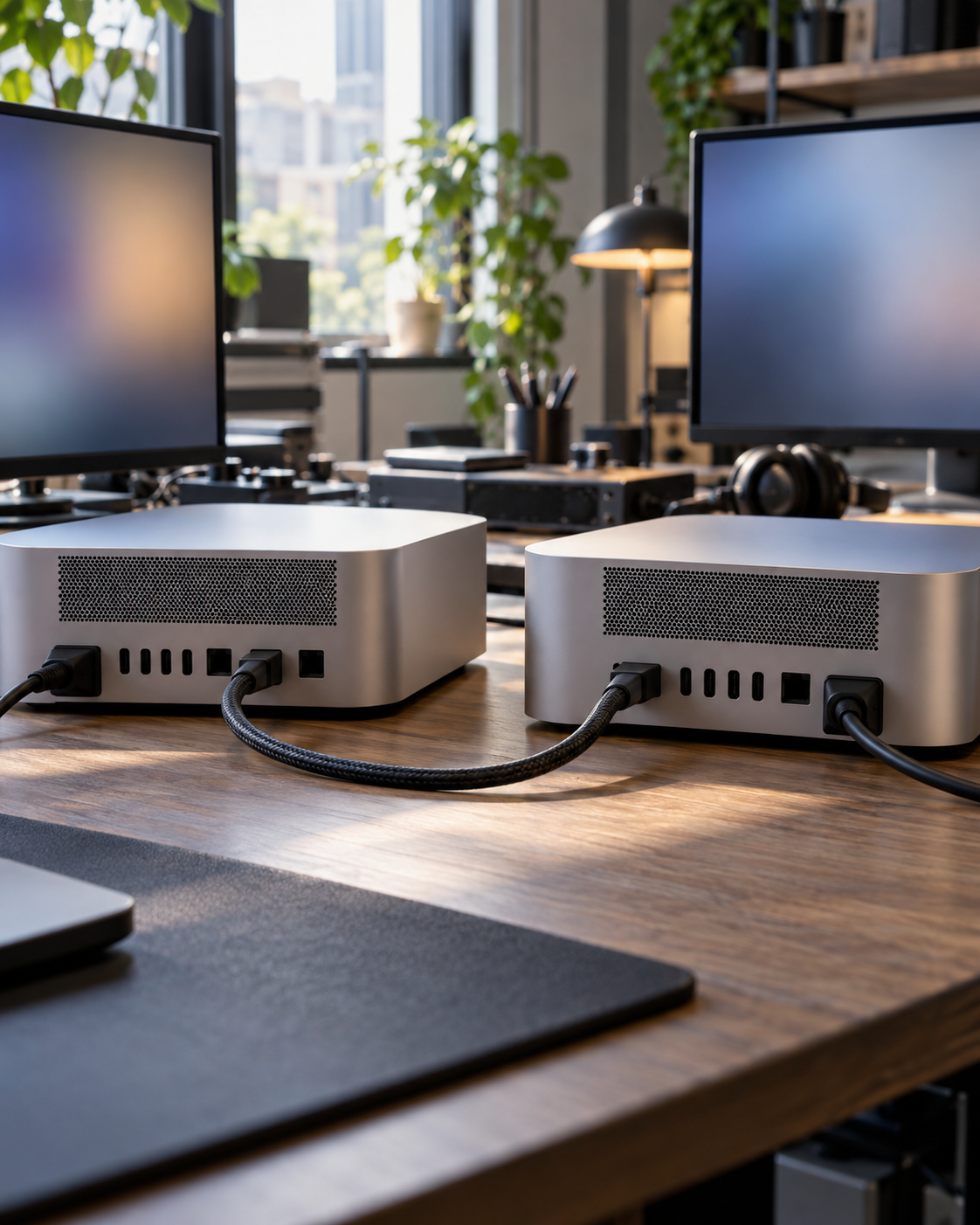
There was a widespread belief that using massive AI models required huge data centers or cloud APIs. However, by releasing the model weights directly, Meta has offered a new option: running the models on multiple high-performance desktop computers.
Announced by Meta on October 15 (U.S. local time), Muse Spark Open is a multimodal model with a total of 816 billion parameters. On the same day, Apple also revealed how to run the model on an M5 Ultra-based Mac Studio using MLX, along with its actual performance.
What matters is the approach, not just the size of the model. The key point of this news is that developers can now do more than just send requests to the server—they can download the weights, run them in their own environment, and fine-tune them.
| What was disclosed was not the model service, but the weights

Meta has disclosed the weights for Muse Spark Open and announced that they are available from Hugging Face, Amazon SageMaker AI, Google Cloud Model Garden, Microsoft Foundry Models, and others. It also provides API access through Baseten, Fireworks AI, Groq, Modal, Nebius, OpenRouter, and Together AI.
Weights are numerical data that a model acquires during the training process. By downloading them, you can perform inference using compatible software and hardware without relying on a model operated by a cloud provider. However, this is different from fully open-source software, which grants unlimited usage rights. You must read the applicable license terms.
Compared to the private API-based models Meta previously offered, this change gives developers more direct control over the runtime environment and the modification process. However, that doesn't mean you'll immediately achieve peak performance just by using a regular laptop.
| Why 816B and 42B Appear at the Same Time
Muse Spark Open is a Model of Experts (MoE) architecture with a total of 816B parameters and 42B active parameters. In MoE, rather than using the entire model simultaneously for every computation, the system selects and activates specific expert networks that match the input.
So, the total number of parameters indicates the size of the model that needs to be stored, while the number of active parameters describes the portion used in typical token processing. These two numbers are not contradictory, nor does it mean that the entire model can be stored in 42B of memory.
Meta stated that this model was originally designed to handle multimodal inputs and provides a 1 million-token context window. While it may be useful for tasks that involve processing long code repositories or extensive documents in a single workflow, actual performance depends on the type of task and the inference configuration.
| Focus on coding and long-term agent work

Meta cited complex software engineering, multi-step reasoning, and agent tasks involving lengthy workflows as representative use cases. Here, an "agent" refers to a system that goes beyond simply answering questions to performing tasks by using tools and dividing work into plans.
A coding agent needs more than just the ability to generate a good answer once. It’s important to maintain consistency by understanding the relationships between multiple files, reviewing test results, and correcting previous work if errors occur. A long context can help with this workflow, but just because it’s long doesn’t mean it’s always accurate.
The self-assessment results released by Meta should be interpreted as performance claims based on conditions set by the company. To compare different models, you also need to consider external validation studies conducted using the same hardware, access to tools, and task configurations.
| The conditions for running two Mac Studios
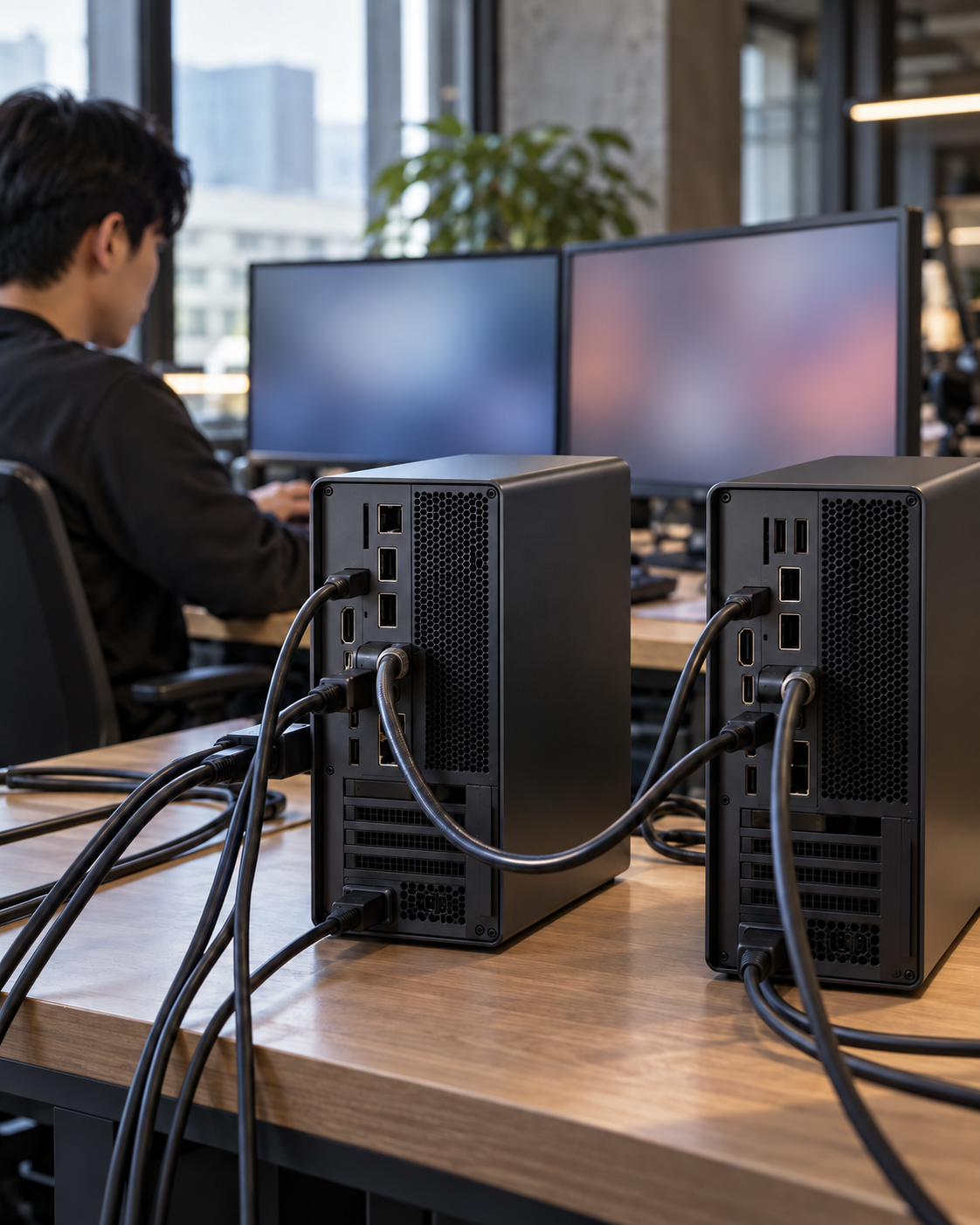
The reason this announcement is drawing attention is Apple’s MLX research findings. Apple described a configuration in which multiple M5 Ultra Mac Studio systems—each offering up to 512GB of unified memory—are connected to run Muse Spark Open locally. In particular, they highlighted the ability to distribute the model across two systems.
However, even just calculating the weights at the base precision of BF16 requires over 1.6 TB of memory. Apple reduced the model’s memory footprint to approximately 493 GB using the NVFP4 quantization format. Since additional memory is also required for intermediate calculations during actual inference, Apple explicitly stated that a single Mac Studio cannot accommodate the entire model.
Therefore, "running on two devices" is only possible under certain conditions—namely, with appropriate quantization, memory configuration, MLX version, and distributed connectivity. You should avoid saying that any configuration of two Macs for home use will yield the same results.
| Actual processing speeds released by Apple MLX
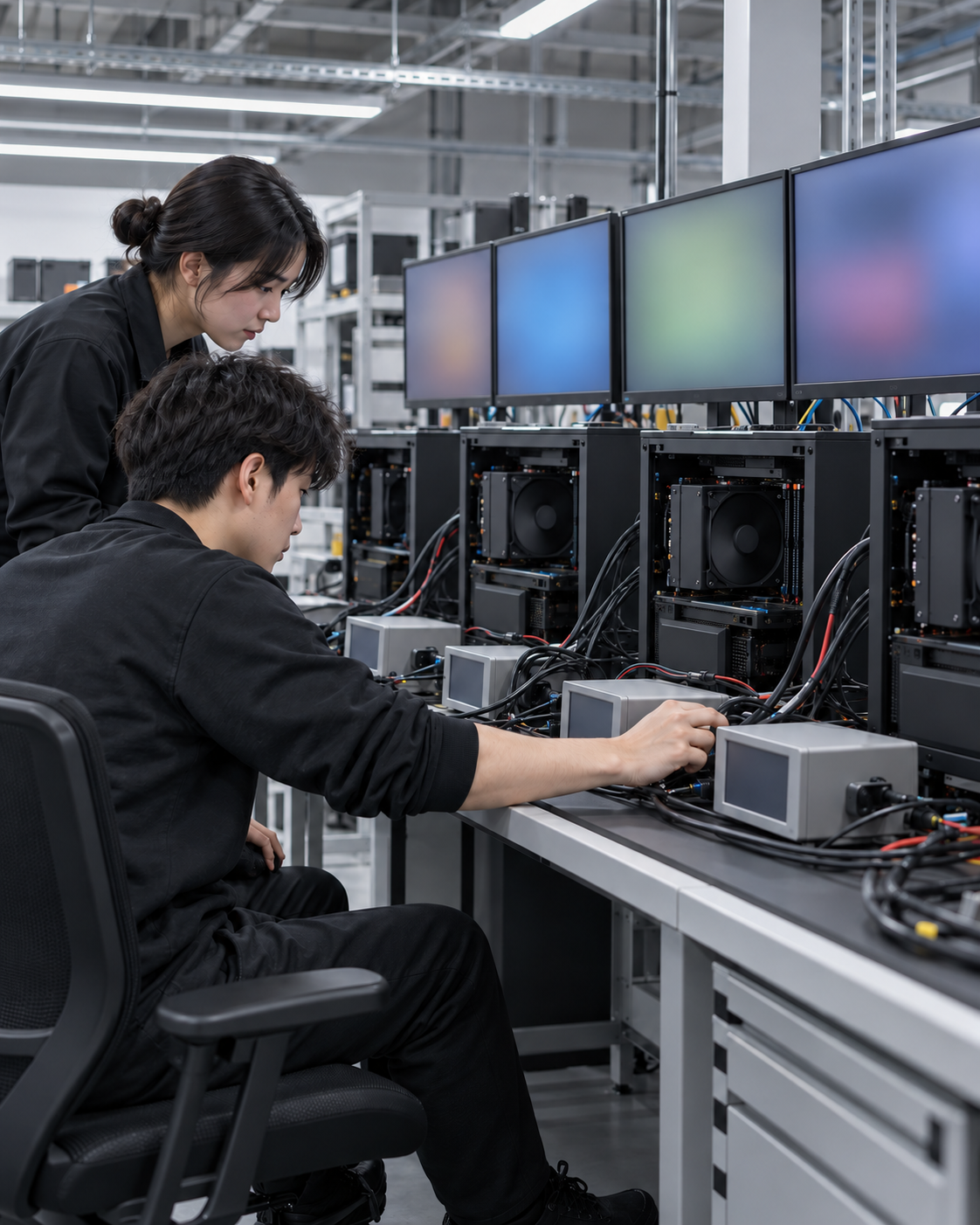
Apple also released benchmarks using MLX and Thunderbolt-based RDMA distributed connectivity. RDMA is a technology that reduces the burden of data transfer between connected devices. In the company’s tests, under an 8,192-token input condition, a configuration of two M5 Ultra Mac Studios generated approximately 24.99 tokens per second using tensor parallelism, while a configuration of four generated approximately 36.73 tokens per second.
When the two devices were configured in a pipeline, the measured speed was approximately 15.74 tokens per second. This means that even with the same model, the speed varies depending on the distribution method and the number of devices. You shouldn't present the performance of four devices as if it were the performance of a two-device configuration.
Since these figures are based on inputs of a specific length and a defined test environment, they do not mean that a 1 million-token input will always be processed at the same speed. You need to distinguish between local executability and responsiveness in actual work scenarios.
| Why Is OpenWeight Important to Developers?

If you manage the weights yourself, the data doesn't necessarily have to be sent to an external AI API. For companies that handle internal code or documents, this offers the advantage of making it easier to design their own data transfer paths and log retention policies.
In addition, by utilizing PyTorch-based tools, you can fine-tune models for specific tasks and evaluate which of the various inference engines—such as SGLang, vLLM, TensorRT-LLM, Transformers, and MLX—is best suited for your environment. Since the difficulty of optimization varies depending on the GPU manufacturer and service provider, you should check the list of supported options and verify actual runtime stability.
However, just because it's local doesn't automatically mean it's safe. Operators must separately manage issues such as errors in the model itself, malicious input, access control failures, and the protection of stored data. Only by factoring in maintenance costs and hardware procurement costs can one determine whether this approach is more advantageous than the cloud.
| Even if the name includes "Open," it's essential to check the license

Meta explained that it applies a separate license called the Muse Model License, which allows many developers to use the model for free under certain commercial restrictions. This differs from granting users the right to redistribute the model without restriction for any purpose.
If your team is actually planning to include a model in a product or release a modified model, You need to check the latest provisions in the original text, such as the scope of use, distribution conditions, and disclosure requirements. We must not confuse the disclosure of the weights with the disclosure of the source code, training data, and the entire training process.
In terms of safety, Meta stated that it has met the criteria of its own Superintelligence Scaling Framework; however, this result cannot be taken as a guarantee that risks have been eliminated in all environments. As deployment methods become more diverse, the safety settings of each operator become increasingly important.
| Changes to Watch for Going Forward
This announcement signifies that the use cases for large AI models have expanded from a cloud-centric approach to one where developers operate them directly. With Apple’s research also being released, high-capacity unified memory and high-speed inter-device connectivity have emerged as new competitive factors.
Next, we'll look at real-world examples of how the distribution license is applied, independent evaluations of the code and agents, long-term operational stability, and the total cost of purchasing two or more high-spec devices. Just because you can download the model doesn't necessarily mean that anyone can use it affordably.
Ultimately, Muse Spark Open demonstrated both weighted data access and the ability to run locally, but usability, cost, security, and performance validation remain separate challenges. It will be important to see on what scale actual development teams adopt it.

Tags
#Meta #MuseSparkOpen #OpenWeight #AI Model #Multimodal AI #MoE #Apple #MacStudio #M5Ultra #MLX #Local AI #AI Agent