On August 2, 2026, the European Union's AI regulations entered a new phase.
Until now, the EU AI Act has been implemented sequentially, starting with certain provisions—such as prohibited uses of AI and obligations regarding general-purpose AI models—but starting today, the European Commission’s AI Office and the authorities of member states will begin enforcing the law Begin actively supervising and implementingYes. Transparency requirements for generative AI and chatbots also went into effect.
After reading this news, “Does that mean all AI-generated images will now automatically have a visible watermark?”It's easy to think that. But the actual rules are a bit more nuanced. The content generated by AI includes Machine-Readable MarkingsAnd showing it directly to users Visible Notice...are different obligations.
Starting today, let's take a look at what's changing, one by one.
| The EU AI Act: It’s No Longer Just a Warning—It’s Time for Enforcement
Since the EU AI Act took effect in August 2024, its provisions have been implemented in phases. In 2025, certain prohibited activities and rules related to general-purpose AI models took effect first, and as of August 2, 2026, enforcement powers and The transparency requirements under Article 50 actually take effectI've started.

Market surveillance authorities in member states will oversee most AI systems, while the AI Secretariat will be responsible for certain systems based on general-purpose AI models, as well as systems integrated into large online platforms and search engines. AI used by EU institutions will be supervised by the European Data Protection Supervisor.
Violations of transparency obligations may result in penalties of up to 15 million euros (approximately 25 million won) or 3% of the company’s global revenue for the most recent fiscal year.It's possible. It's no longer just a recommendation—it's now a legal obligation that can result in actual fines.
Companies outside the EU can’t rest easy either. If they provide AI services to the EU market, or if the output of AI systems developed abroad is used within the EU, they may be subject to these regulations. Domestic AI companies and platforms operating global services are also affectedThat's why I'm getting it.
| Four Transparency Requirements Taking Effect Today
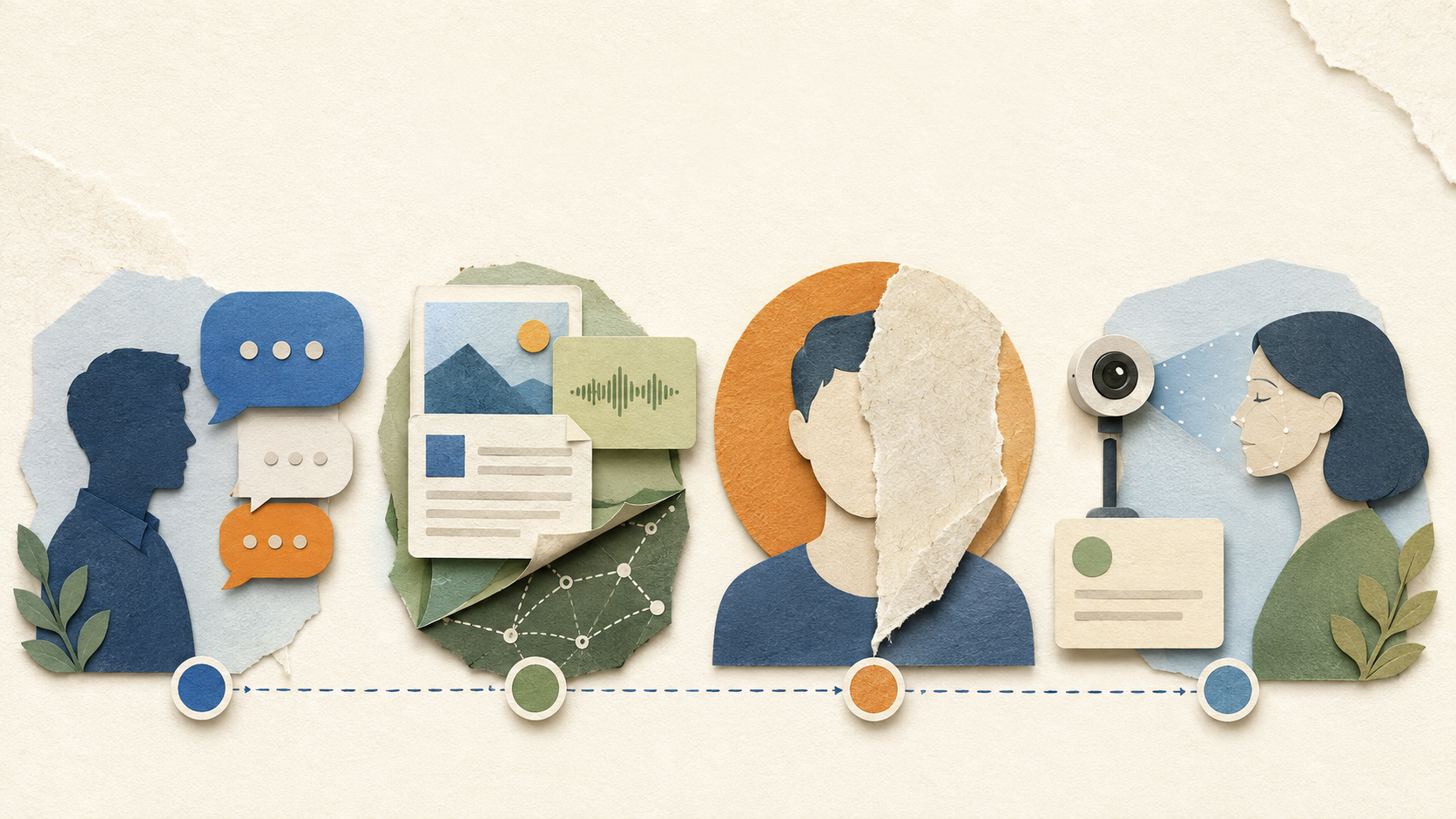
1. You need to let people know that the chatbot is powered by AI.
Chatbots and virtual agents that interact directly with people should be designed so that users can tell whether they are talking to a human or an AI.
While there may be exceptions in cases where it’s obvious from the context of the conversation alone that it’s an AI, clear disclosure is necessary for customer service or information services where there’s a risk of customers mistaking it for a human. It’s likely that it will become more common to notify users that they’re speaking with an “AI agent” on the service’s first screen or during the initial conversation.
2. AI-generated content must include a detectable technical marker.
Providers of generative AI services must include machine-readable markers in text, images, audio, and video generated or manipulated by AI, and ensure that such content can be identified as having been created by AI.
The term "mark" used here does not necessarily refer only to watermarks that appear prominently on the screen. It can also include technologies—such as file metadata or content source information—that are not normally visible but can be verified by software or platforms.
However, features that assist with general editing—such as spell-checking, noise removal, and color correction—or that do not significantly alter the meaning of the input data may be exempt from this requirement.
3. Deepfakes must be clearly labeled so that people can recognize them.
AI-generated images, audio, and videos that resemble real people, objects, places, or events—and can therefore be mistaken for the real thing—may be classified as deepfakes. Anyone who publishes or uses such content must disclose that it was artificially generated or manipulated in a way that allows people to recognize this fact.
For content—such as movies, satire, art, and creative works—that isn’t intended to be taken as factual from the outset, it’s possible to provide a disclosure in an appropriate manner that doesn’t interfere with the viewer’s enjoyment of the work. This doesn’t mean you have to place a large warning message right in the middle of the screen.
4. Disclosures are also required for emotion recognition, biometric classification, and certain AI-generated content
When using AI to infer a person's emotions or classify people based on biometric data, the system must inform the individuals involved that it is in operation.
AI-generated content that provides the public with information on matters of public interest—such as politics, public services, health, the environment, finance, and science—may also be subject to these requirements. If such content is published without substantive human review or editorial control, it must clearly state that it was created or manipulated by AI.
Conversely, if a person with relevant expertise carefully reviews the content and an editor with the authority to edit or reject it bears ultimate responsibility, this could constitute an exception to the duty to disclose. It is also important to note that simply checking spelling or polishing sentences is not sufficient to be considered a thorough human review.
| Not all AI-generated images have a visible label.
This is the part of the rule that’s easiest to get confused about.

Transparency in AI content can be broadly divided into two layers.
|
Category |
Who's in charge? |
What kind of method is it? |
|
Machine-Readable Markings |
Generative AI Service Provider |
By embedding detectable technical information into text, images, audio, and video generated by AI |
|
Visible Notice |
Entities that publish and use content |
Add a visible label to deepfakes and certain AI-generated posts related to matters of public interest |
Therefore, we cannot assume that all ordinary AI-generated illustrations will display the exact same badge. Source information that is not visible during the generation process may be included, and the disclosures visible to users are primarily applied to content—such as deepfakes—that carries a high risk of being misinterpreted. There may also be cases where individual platforms apply their own labels to a broader scope than what is required by law.
There is one more exception. Generative AI systems placed on the market before August 2, 2026, are granted a limited grace period until December 2, 2026, solely with regard to the machine-readable labeling requirement. There is also no requirement to retroactively label content created before August 2.
So even if all service screens and image files don't change all at once today, that doesn't mean the rules aren't in effect. Changes to existing services may be implemented gradually, depending on the grace period and update schedule.
| How will services like ChatGPT and Gemini change?
Global generative AI services are likely to make it clearer to EU users that they are interacting with AI and to strengthen technical markings on generated content that allow users to verify its source.

The following changes are expected in image and video generation services and content platforms.
Include AI source information or detection metadata in the generated files
A feature that verifies or indicates whether content was generated or manipulated by AI during the upload process
Changes to the procedures for reporting and verifying deepfakes have been made more specific
Enhanced records management and compliance features for enterprise services
However, it’s not certain that the user interfaces for ChatGPT or Gemini in Korea will change in the same way immediately today. Whether companies will implement policies specific to the EU or apply the same system across their entire global service depends on each company’s product updates.
| It’s not like all of this—including regulations on high-risk AI—started today.
The statement “The EU AI Act went into full effect today” could easily lead to misunderstandings. While the rules on oversight and transparency have officially taken effect, the obligations applicable to high-risk sectors—such as education, hiring, and biometrics—have been postponed.

|
Effective Date |
Key Points |
|
August 2, 2026 |
Application of the Executive Powers of the AI Secretariat and Member State Agencies and the Transparency Obligations Under Article 50 |
|
December 2, 2026 |
End of the Grace Period for Machine-Readable Labels in Existing Generative AI Systems |
|
December 2, 2027 |
Separate high-risk AI regulations to be applied to areas such as biometrics, education, hiring, and immigration |
|
August 2, 2028 |
Application of High-Risk AI Rules to Regulated Products Such as Machinery, Toys, and Elevators |
In other words, today is less about the EU AI regulation being finalized and more about a turning point where practical enforcement begins for the chatbots and generative content we encounter in our daily lives.
| Things for Korean Users and Content Creators to Keep in Mind
EU laws don’t directly apply to every instance where an individual creates AI images as a hobby or uses a chatbot for personal purposes. However, if global platforms apply their technical disclosure and labeling policies uniformly worldwide, we’ll be able to feel the impact of these changes in Korea as well.

Domestic companies that provide services to EU users, or businesses whose AI-generated content is used within the EU, should carefully review the scope of application. If you are a content creator, In particular, there is a need to distinguish between and manage synthetic images, voices, and videos that appear to depict real people and automatically generated content related to matters of public interest.There is one.
Thank you for reading my post again today!

Official Sources Cited
European Commission: Q&A on Transparency Requirements Under Article 50 of the AI Act
European Commission: AI Act Enforcement Framework and Implementation Timeline
European Commission: Entry into Force of the AI Omnibus and Schedule for High-Risk AI
#EUAI Act #AIAct #Generative AI #AI Image #Deepfake #Artificial Intelligence #ChatGPT #Gemini #IT News