The competition over AI model performance is entering a new phase.

Until now, whenever a new AI emerged, the focus has mainly been on its reasoning abilities, coding performance, or benchmark scores. This time, however, OpenAI’s next-generation AI model is drawing attention for a slightly different reason.
On August 7, 2026 (U.S. local time), OpenAI announced its next-generation model, currently under development A recent internal assessment at Astra found significant improvements in agent-based coding and cybersecurity capabilitiesAll rightAnd then they made it public.
In particular, in OpenAI's AI risk management system, the Preparedness Framework, Highest Level of Cyber CapabilityIn A level where "Critical" cannot be ruled outThat was the conclusion reached.
There's one important point here.
That doesn't mean Astra has already been classified as "Critical."
Although the evaluation is still underway, performance appears to be sufficiently high, and OpenAI has Assuming the possibility that the threat level was "Critical," we began strengthening security measures first.It's close to that meaning.
| Astra
The most notable aspect of OpenAI's announcement is Astra's Improving Agent-Based Coding and Cybersecurity SkillsWow.
Source Emiliano Vittoriosi
While earlier AI systems were primarily designed to answer users' questions or generate code, recent AI agents are evolving to perform a single task over an extended period by linking multiple steps and using tools.
These skills are quite useful in fields such as software development and security vulnerability analysis.
The problem is that the likelihood of that same capability being used for offensive purposes also increases.
Based on internal evaluations of Astra and expert assessments conducted over the past few days, OpenAI believes that at this stage, It is difficult to rule out the possibility that they possess critical cyber capabilities.That's how I explained it.
| Criticallevel of
OpenAI aims to manage the risks that may arise with the emergence of powerful AI, Preparedness Framework...and operates its own set of standards.
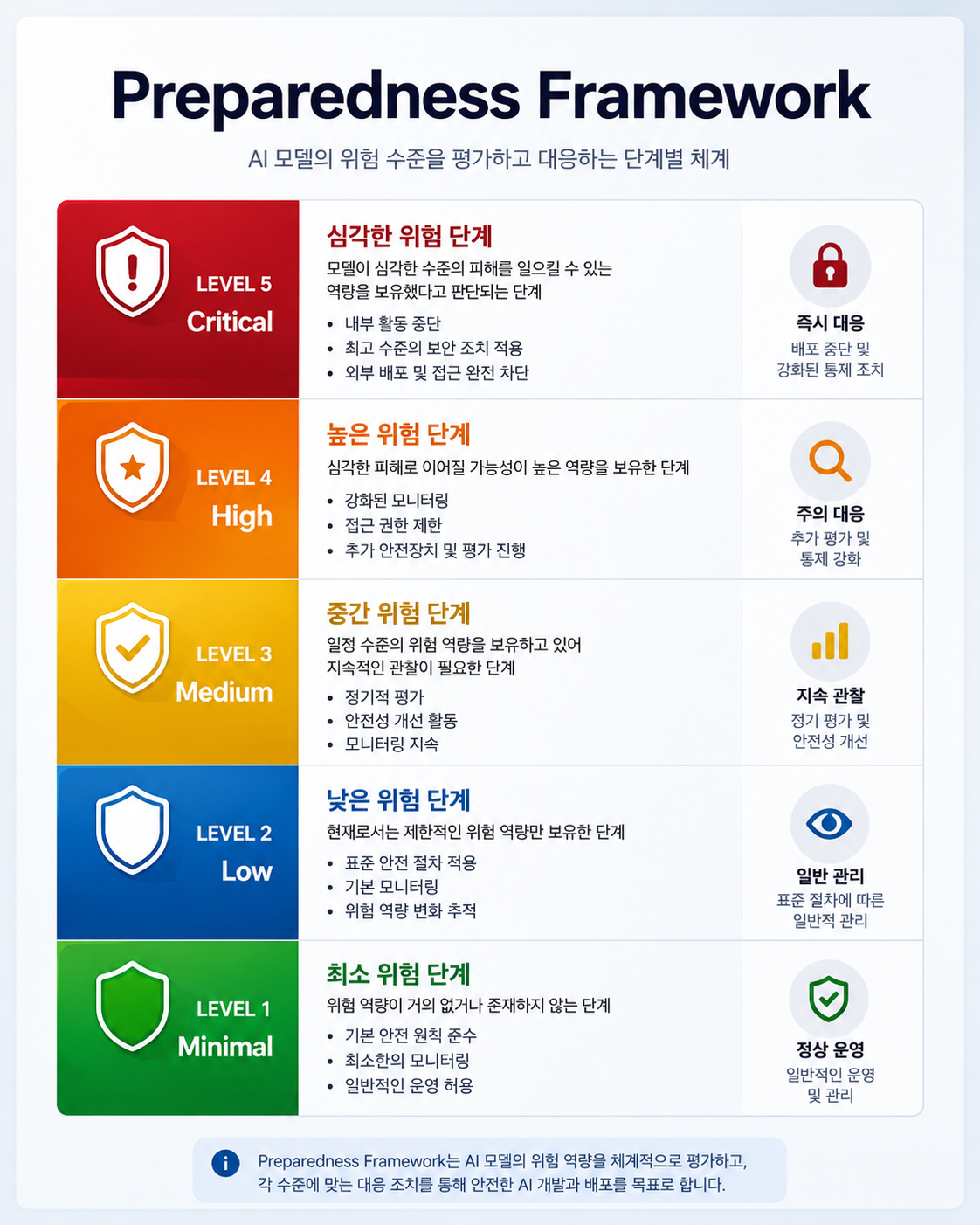
In the field of cybersecurity, “Critical” doesn’t simply mean being good at coding or solving security problems.
Targeting heavily secured real-world systems Identifying and exploiting new vulnerabilities with minimal human interventionAlternatively, this stage assumes the ability to independently devise and execute complex cyberattacks when given only high-level objectives.
Therefore, the mere fact that the possibility of "Critical" was mentioned can be seen as a significant change in itself.
AI's coding capabilities extend beyond the realm of simple development productivity A sign that it is evolving to a level where actual security risks must be taken into accountThat's why.
| GPT-5.6 Sol and Beyond, Astra
When you compare them, it becomes a little clearer just how significant this announcement is.
Currently, GPT-5.6 Sol demonstrates cybersecurity capabilities in OpenAI's Preparedness Framework It's rated as "High."
In the GPT-5.6 evaluation released by OpenAI, both Sol and Luna were classified as "High" in the cybersecurity category but did not meet the "Critical" threshold.
OpenAI determined that while GPT-5.6 Sol demonstrated high performance in actual security evaluations, it did not reach the "Critical" level, which requires reliably carrying out an autonomous attack process from start to finish against heavily protected systems.
On the other hand, things have changed at Astra.
Even though OpenAI has not yet reached a final conclusion, A public statement acknowledging that the possibility of a critical situation cannot be ruled outWow.
This suggests that cyber capabilities, which were rated “High” in the GPT-5.6 generation, may be moving toward the “Critical” threshold in the next generation.
| OpenAI's Response
In this announcement, OpenAI's response is just as important as the model's performance.
OpenAI has determined that Astra's capabilities are advancing faster than expected, and Strengthen internal security standardsI did.
For tests related to Astra, we are implementing an isolated environment, restricting access to networks and tools, and expanding measures such as model weight protection and encryption, as well as additional monitoring and sandbox execution.
And those that have not yet met the newly strengthened security standards We have temporarily suspended some internal activities related to Astra.
You shouldn't interpret this as "Astra development has been halted."
It's not that OpenAI has halted the entire development of Astra, but rather, This was done to restrict certain operations until a security environment commensurate with the model's enhanced capabilities is in place.is close to.
In addition, for agent-based tasks that utilize Astra, additional monitoring to detect risky behavior will be implemented, and The plan is to also entrust model evaluation to government agencies and some AI safety organizationshe said.
| Issues with the Development Process
The reason this announcement is important isn't just because Astra is likely to be more powerful than GPT-5.6.

Source Tingey Injury Law Firm
What's more important is that AI safety concerns have begun to change the actual model development process itself.
In the past, discussions about AI safety often focused on how to mitigate problems that might arise after a model was released.
However, as models have become increasingly powerful, we’ve reached a point where we need to consider not only what environment to use for testing models under development, but also which networks and tools we can connect them to, and how to protect the models themselves.
OpenAI also views the Preparedness Framework not merely as a checklist, but as, A system for proactively identifying serious risks that may arise from high-performance AI and preparing appropriate protective measures...is how it's explained.
Astra is likely to serve as a prime example of how these changes might manifest in actual development environments.
| Bidirectionality
Having stronger cyber capabilities isn't necessarily a bad thing.
Powerful AI can also be used to find vulnerabilities in complex programs that are difficult for humans to detect, or to analyze and fix security issues.
In fact, OpenAI believes that current high-performance models are better at reliably carrying out complete attacks against powerful systems than More effective in defensive efforts to identify and fix vulnerabilitiesIt explains it this way.
Ultimately, the key issue going forward is not only how powerful AI’s cyber capabilities will become, but also, Can we create an environment where the defender can utilize that capability before the attacker does?It's very likely that it will be.
This is also why technologies such as access control, monitoring, and model security are becoming increasingly important alongside the competition for performance.
| The Next-Generation AI Race
No specific details regarding the Astra's performance or release schedule have been announced yet.
Furthermore, based solely on the evaluations that have been made public so far, we cannot conclusively determine that Astra has actually exceeded OpenAI's "Critical" threshold.
However, the fact that OpenAI has raised its security standards by disclosing the "Critical" risk based on its own assessment results and even restricting some internal operations is quite significant.
The benchmark for AI competition is simply “Which model is smarter?”It's because things are gradually changing there.
Going forward, it will be a matter of how powerful a model we can build, and at the same time, To what extent can we safely develop and control a model that powerful? It really could become a core technology for AI companies.
Considering that a "Critical" vulnerability emerged in Astra not long after GPT-5.6 Sol demonstrated a "High" level of cyber capabilities, we need to keep a close eye on the pace at which AI's cyber capabilities are advancing.
The final review of the Astra hasn't been released yet.
However, this announcement, in the race for next-generation AI, A sign that we have entered a phase where security and control capabilities are becoming just as important as performanceThat's one way to look at it.
I tried changing the writing style and the ratio of reference images.
Thank you for reading today as well!

References
Record Date: Saturday, August 8
#OpenAI #Astra #Artificial Intelligence #AI #Cybersecurity #AI Security #GPT56 #ChatGPT #AI Agent #IT News