Most of the generative AI we use frequently connects to massive data centers via the internet. The way it works is that when you send questions and files to the server, the model in the cloud returns the results.
However, Meta has released a model that takes a slightly different approach. Unveiled on August 10, 2026, Muse Glimmeris an open-weight AI with approximately 30 billion parameters, and it does not require a high-performance server, but rather A local agent that runs continuously on a personal Mac or PCAim for that.
The key point is that this isn't just about creating a simple chatbot; it's an attempt to bring AI—which can call upon tools, plan multiple steps, and retry when problems arise during a task—into our personal devices.
| What kind of model is the Muse Glimmer?
Muse Glimmer is a drug developed by Meta Superintelligence Labs A dense model with 29.6 billion parametersWow. It was created by distilling the capabilities of the larger Muse Spark model, and through a separate visual encoder, it can process not only text but also Understand the images and screen shots as wellI can do it.
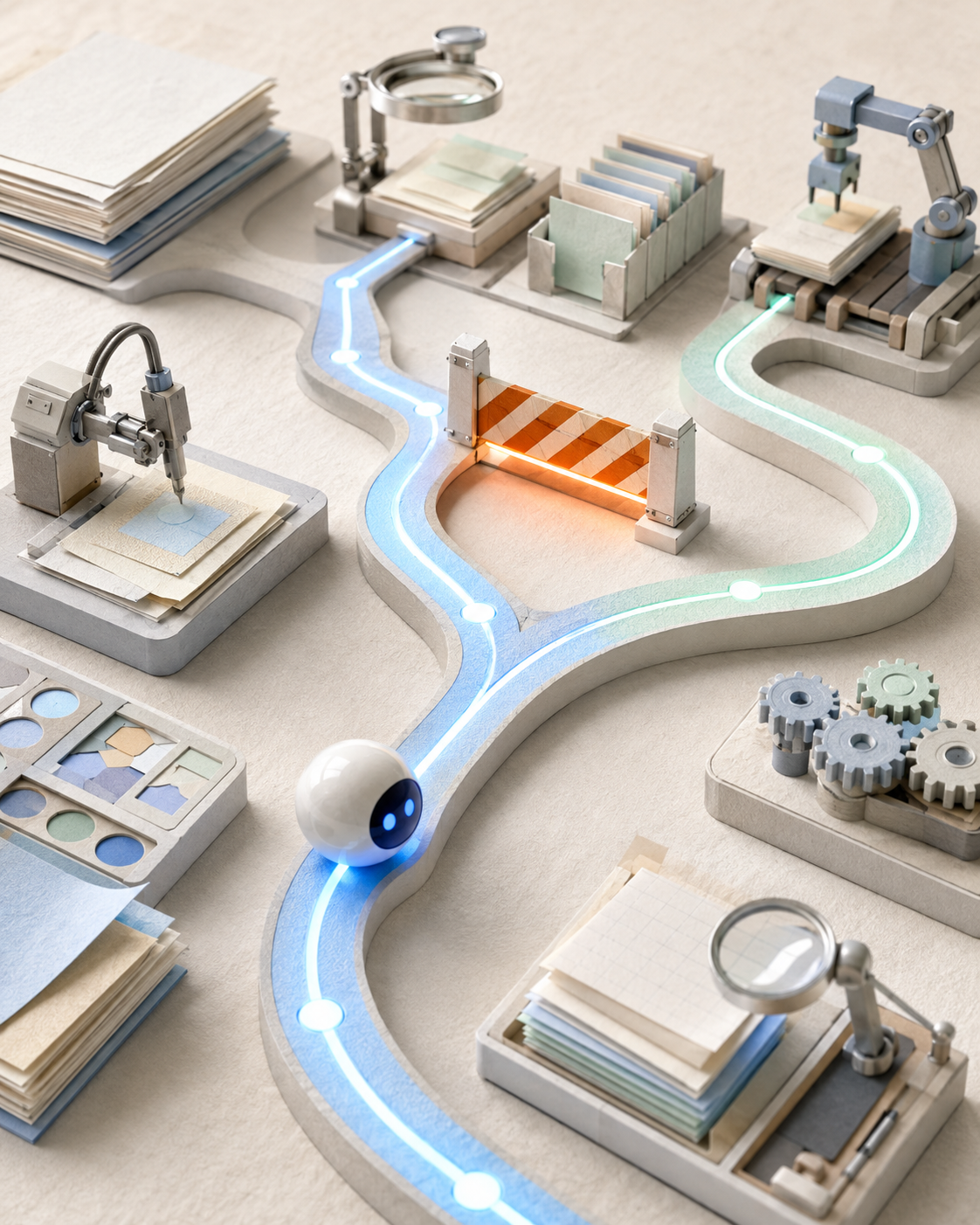
The areas that Meta particularly emphasized were Agent-based tasksWow. While a typical chatbot focuses on generating one answer per question, an agent breaks down a task into multiple steps and uses the necessary tools one by one to achieve the desired result.
For example, when an error occurs while writing code, you investigate the cause and make corrections, or you review various sources and synthesize them into a single final product. Muse Glimmer is designed for this kind of Multi-step reasoning, function and tool invocation, failure recovery, long-running tasksI was trained for that.
It also supports context lengths of 131,072 tokens or more, making it designed to handle long documents or multi-step task histories within a single workflow. It supports text and images as input and text as output.
| How well does it run on a regular PC?
The most striking sentence when introducing Muse Glimmer is It can run on a single graphics card on a Mac or PC.That's the thing. It's true, but there's a condition you need to check here.
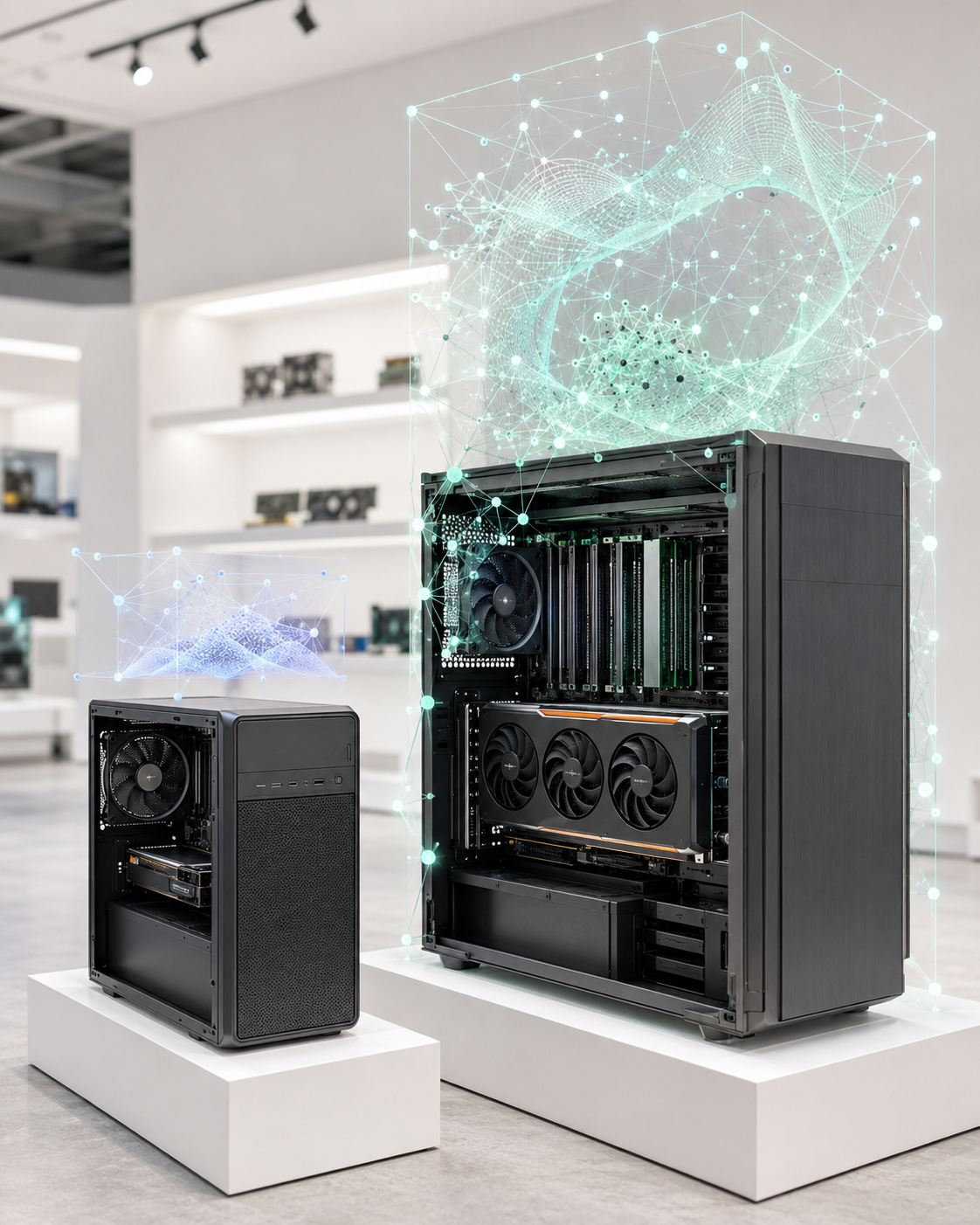
The overall accuracy model is Approximately 64 GB of GPU memoryAim for that. As Meta announced alongside this, The 4-bit quantization version reduced the model size to under 20 GB, in memory environments of 24 GB and 32 GB, respectivelyIt's ready to run on [...].
In other words, while this isn't a model that absolutely requires multiple data center-grade accelerators, that doesn't mean it will run smoothly on commonly used 8GB or 12GB graphics cards. Consumer-grade GPUs with large amounts of memory, like the RTX 5090, or high-end Macs with sufficient integrated memory are closer to being realistic options.
In Meta's public benchmarks, the 17GB quantized model, when used with auxiliary decoding technology, demonstrated speeds capable of real-time conversation on the RTX 5090, M4 Max, and M5 Max. AMD also released results from a Ryzen AI Max+ system running on a single 32GB Radeon AI PRO R9700, but this, too, is a relatively high-end setup equipped with high-capacity memory.
Therefore, the meaning of Muse Glimmer is Large-scale AI runs on any PCRather than, They have scaled down an agent model—which previously required multiple servers—to a single high-performance personal device.in that regard.
| Why We Focused on Local Agents Rather Than Chatbots
The benefits of local AI go beyond just being able to provide answers even when the internet is down. For an agent to handle actual tasks, it needs access to information closely tied to the user’s work environment—such as documents, code, schedules, and messages. Instead of sending this data to an external server every time, Processed on the deviceIf possible, it could make managing personal information and corporate data much easier.

It can also reduce token costs and network latency that arise from repeatedly calling cloud APIs. For frequently repeated tasks—such as document classification, code review, and local file searches—it may be more advantageous to run the model continuously on hardware you’ve already set up.
However, Run LocallyThis doesn't guarantee complete privacy, though. Agents can still use web searches or email, such as External ToolsCalling this function could cause some information to leave the network again. To fully realize the privacy benefits of local AI, you must design the system with careful consideration of which permissions to grant to each tool and where to store activity logs.
| The Scope of Applications Opened Up by Apache 2.0
The model weights for Muse Glimmer are Apache 2.0 LicenseIt has been released. Developers can download the model to modify it or integrate it into their own services, and they can also use it commercially or redistribute it as long as they comply with the license terms.

This is a stark contrast to closed-loop AI, where users are limited to using models only within a specific web service. Companies can build in-house tools that avoid sending sensitive data to external APIs, and individual developers can experiment with agents tailored to specific languages or tasks.
However, Open WeightWow Fully open sourceThat's not the same thing. It means that the weights needed for inference have been released, not that the training data and the entire training process have been made public. Even when introducing Muse Glimmer, compared to open-source models, Open-Weight ModelIt's more accurate to call it that.
| The Background Behind Meta's Return to an Open Strategy
The unveiling of Muse Glimmer is more notable as a shift in Meta’s strategy than as the launch of a single model. In a post published the same day, Mark Zuckerberg wrote that AI capabilities should not be concentrated in the hands of a few companies and institutions, but rather The direction that it should be widely available to individuals...was presented.

While Meta has made a significant impact on the open AI ecosystem through its Llama series, it has recently operated its top-tier Muse Spark model on a limited basis. This time, by first releasing the weights for Muse Glimmer—a relatively small model with low runtime costs—the company appears to be reinvigorating the competition in the open model space.
Of course, this argument is both a philosophy of technology and a business strategy. As the number of users of open-source models grows, Meta’s influence over its model ecosystem and development tools could also expand. Against this backdrop is the competition among U.S. companies to regain the lead, as Chinese AI firms rapidly release open-source models that prioritize performance and cost.
| Will Local AI Replace the Cloud?
It seems unlikely that local models will completely replace cloud AI anytime soon. For complex research or large-scale tasks that require top performance, top-tier models running on massive servers still have the advantage, while local models are heavily dependent on the user’s hardware performance and memory.
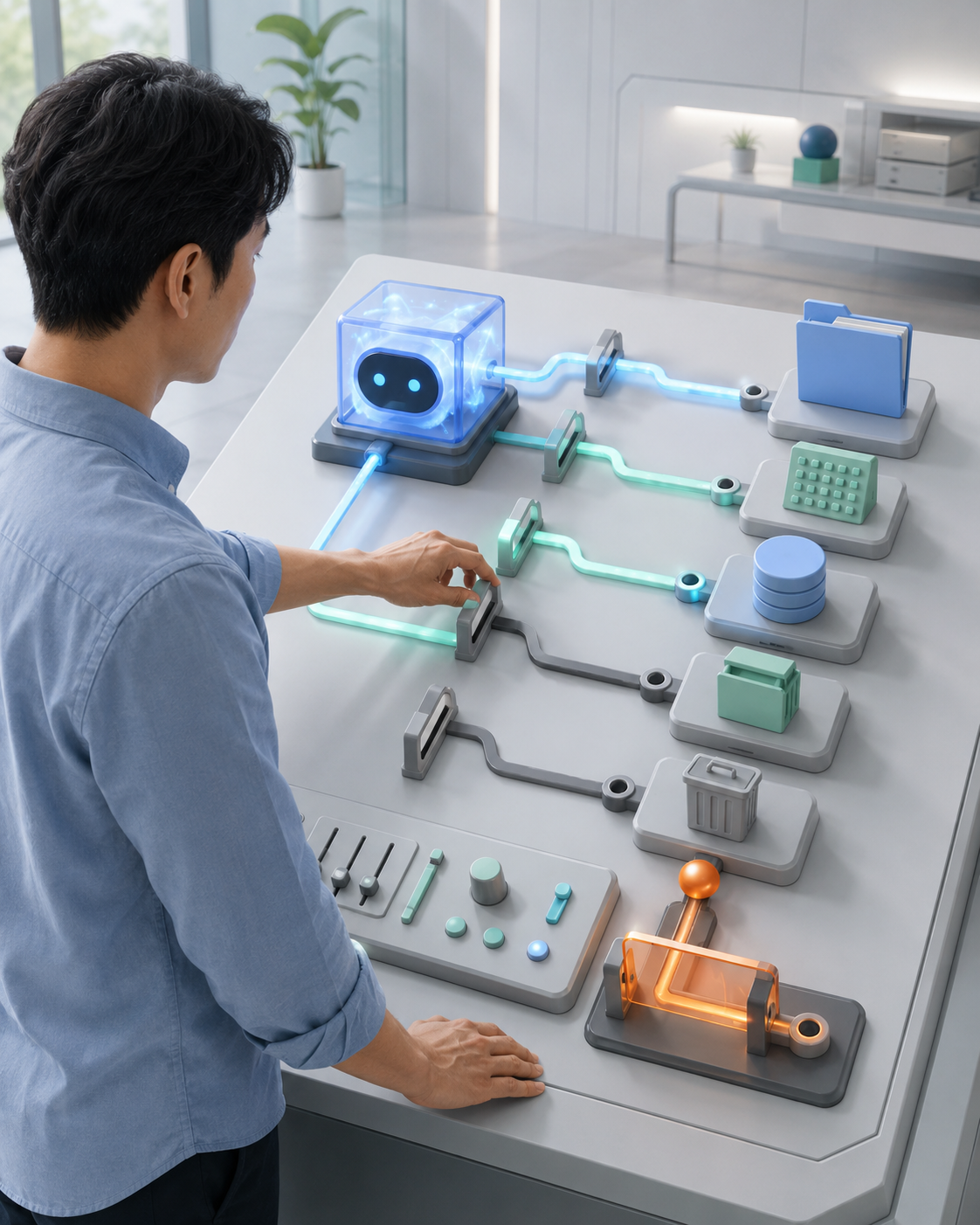
Instead, it is highly likely that the two approaches will have distinct roles. A hybrid architecture in which the device handles repetitive tasks involving sensitive personal information, local file processing, and always-on agents, while cloud models are called upon only when higher performance or the latest information is needed.Hey.
This way, users don't have to entrust all their tasks to a single company's servers; instead, they can choose a model based on cost, speed, and security level. Muse Glimmer can be seen as a model that expands the scope of local options among those choices.
| Access management is just as important as convenience
Agent AI can have more authority than a chatbot that simply generates responses. Since it can modify files, run programs, or connect to external services, even a single wrong decision can affect actual operations.

Therefore, it’s important to ensure that irreversible actions—such as deletion, transmission, and payment—require final human confirmation, and to grant only minimal permissions to necessary folders and tools. We must also guard against prompt injection, where the model mistakenly follows hidden instructions embedded in external documents. The fact that the system runs locally does not eliminate these risks.
Meta also recommends separate safety assessments and safeguards tailored to the specific use case in its model cards. Additionally, Muse Glimmer explicitly states that it is not intended for direct download or use by individuals under the age of 18. When applying this to services used by a wide range of age groups, developers should conduct their own risk assessments and Protective MeasuresI need to set that up.
| The Next Phase of the AI Race: The Shift to Personal Computers
The shift demonstrated by Muse Glimmer is clear. It shows that the AI race isn’t solely about bigger models and more data centers. How small a model can be made while maintaining sufficient performance—and how reliably it can complete tasks on the user’s device—is becoming a new competitive advantage.
For now, you still need a high-spec device with at least 24GB of memory, and if you want to use it as an actual agent, you’ll also need to set up the execution program and permission management. Even so, the fact that they’ve released a multimodal agent with 30 billion parameters that can run on a single PC significantly expands the scope of local AI applications.
In the future, it’s highly likely that AI that connects to the cloud to retrieve answers will compete alongside AI that continues to operate within our devices. Muse Glimmer is a sign that this shift is no longer just a distant vision but has already begun in the form of models that can actually be downloaded.
Thank you for reading.

References
Reuters — Meta launches new AI model as Zuckerberg champions open-weight push
AMD — Run Meta’s Muse Glimmer 30B on AMD Ryzen AI Max+ Agentic PCs and Radeon GPUs
#Meta #MuseGlimmer #Local AI #OpenWeight #AI Agent #Generative AI #MetaAI #Artificial Intelligence #PCAI #AI News