
The competition among AI coding models is now How well you write codeIt can't be explained by that alone.
Can you write code, find and fix errors, call the necessary tools, and complete the actual task by following through the various steps on your own?...is becoming more important.
Google announced on the early morning of August 14, 2026, Korea Standard Time, that Gemini 3.7 Flashis a model developed in response to these changes. Google views this model not as a simple chatbot, but as a tool for quickly and affordably handling coding and AI agent tasks. Workhorse Model...is how I introduced it.
| From a model that generates code to a model that gets the job done
The Gemini 3.7 Flash was unveiled just three weeks after the release of its predecessor, the 3.6 Flash.

The focus of the update is on software development and agent operations. Not only debugging, resolving issues, and generating code that can be used in a live service, but also the process of planning tasks, invoking tools, and reviewing the resultsIt has been improved to this point.
Here, an AI agent is a little different from an AI that simply answers questions. For example, “Find the cause of the error and fix it.”When I receive a request like that, I go through a series of steps: reviewing the code files, using the relevant tools, applying the changes, and then checking the results.
Google explained that version 3.7 of Flash better handles situations where it gets stuck during processing, re-evaluates the user's intent when necessary, and follows complex instructions more accurately. Ultimately, the goal of this update is not just to provide a single, impressive answer, but rather The ability to complete a task with minimal intervention and few retriesis close to.
| Performance Changes as Seen in Benchmark Numbers

Here is a comparison of the key evaluation results released by Google with those of Flash 3.6.
|
Evaluation Criteria |
Gemini 3.7 Flash |
Gemini 3.6 Flash |
Difference |
|
FrontierCode 1.1 Main |
43.6% |
34.4% |
+9.2%p |
|
DeepSWE v1.1 |
65.3% |
49.0% |
+16.3%p |
|
WebDev Arena |
1,588 Elo |
1,538 Elo |
+50 |
|
GDP.pdf |
34.0% |
22.0% |
+12.0%p |
|
AutomationBench |
30.4% |
17.0% |
+13.4%p |
In the coding assessment, I’ve improved my ability to produce usable code on the first try and handle long-term software development tasks. In the web development assessment, I demonstrated a strength in creating fully functional screens with fewer requests, and my scores also improved in the assessments for understanding complex documents and automating business processes.
However, it’s important to keep in mind that these figures are evaluation results selected and published by Google. In actual development environments, perceived performance may vary depending on the programming language and framework used, the size of the codebase, and how tools are integrated. When comparing with models from other companies, you should not interpret the results by simply mixing and matching different execution environments and evaluation conditions.
| The real game-changer in this announcement is the price
The API pricing for Gemini 3.7 Flash, effective through the end of 2026, is per 1 million tokens of input $0.75, per 1 million tokens output $3.75Hey. According to Google, it's half the original price of Flash 3.6.
Agents tend to call the model more frequently than regular chatbots. This is because additional tokens are consumed at each stage of the process—formulating a plan, reading the results from tools, modifying the code, and revalidating. That’s why the total cost of completing a single task is just as important as the performance of a single model call.
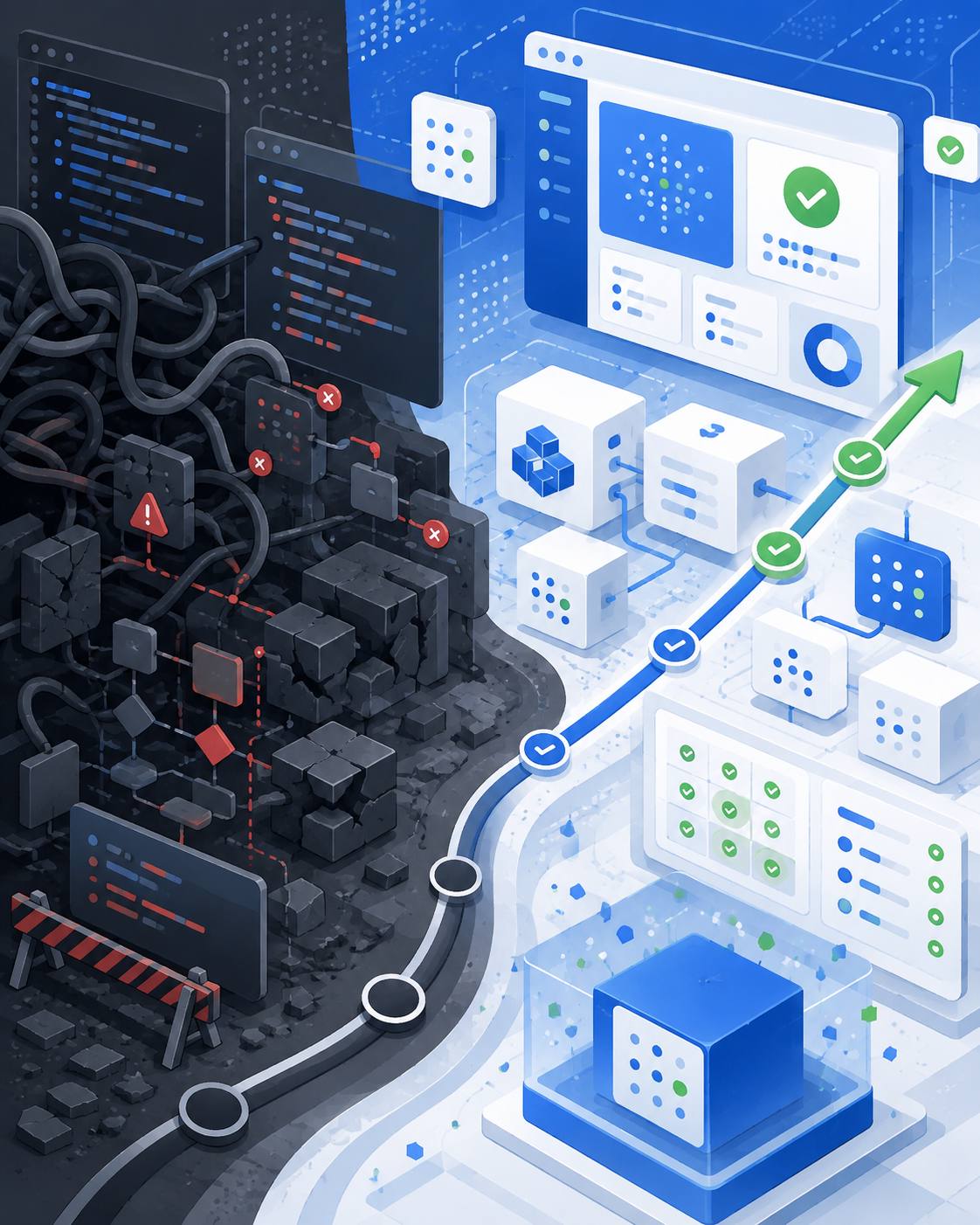
The low price allows developers and companies to experiment more with automation. This can have a particularly significant impact on high-volume tasks, such as repetitive code reviews, document organization, and internal workflows.
However, The current price isn't permanent. According to Google's official announcement, this price is Ends on December 31, 2026and, starting January 1, 2027, $1.50 per 1 million tokens input and $7.50 per 1 million tokens output...is scheduled to be implemented. When designing a long-term service, you need to factor in not just the current discounted price but also future prices when calculating costs.
| Gemini Spark, a Personal AI Agent
Gemini 3.7 Flash isn't just a model for the API. It's a personal AI agent available to Google AI Pro and Ultra subscribers in over 160 countries. Gemini SparkIt will take effect on the day of the announcement.

Spark is a service that operates continuously under the user's direction, handling tasks such as organizing multiple files, drafting emails, and updating status reports. With the 3.7 Flash update, which improves the service's ability to use Google Workspace tools more accurately, the quality of results for complex office tasks can also improve.
Google's strength lies in the fact that its models are directly integrated with its services. As model performance improves, it becomes easier for that improvement to translate into tangible actions within existing work environments like Gmail, Docs, and Drive. This announcement goes beyond the release of a coding model for developers— Expanding Google's Agent EcosystemThat's why it's read that way.
| Differences from Meta's recent direction regarding local agent models

While Meta’s Muse Glimmer, which we covered recently, aimed to be an open-weight agent model that runs directly on personal computers, Gemini 3.7 Flash Focuses on Cloud APIs and Google Service Integrationis there.
|
Category |
Gemini 3.7 Flash |
Meta Muse Glimmer |
|
Execution Method |
Focused on Google's Cloud and Services |
Focused on local execution on personal PCs and single GPUs |
|
Key Strengths |
Managed APIs, Tool Integration, Rapid Service Deployment |
Data Control, Local Use, and Model Modifiability |
|
Cost Structure |
Payment based on the tokens used |
Provide the equipment and operating environment ourselves |
|
When appropriate |
When quickly creating and scaling agents |
When local control and independent operation are important |
It's hard to say that one approach is unconditionally better than the other. If rapid deployment and integration with Google services are important, the Gemini approach is more convenient; if data control or offline operation is important, a local model may be more suitable.
This difference suggests that, rather than the AI market converging around a single, massive model, The possibility that cloud-based agents and local agents will each serve different needsShow me.
| What to Check in Actual Operation Rather Than Just Looking at the Specs
The published specs for the Gemini 3.7 Flash are clearly better than those of the previous model. Still, when deciding whether to actually adopt it, benchmark scores alone aren't enough.

First, you need to test it yourself using your own codebase and work materials. Not only the success rate on the first try, but also Check the number of incorrect edits, the time spent on human review, and even the failure rate of tool callsOnly then can we see the actual change in productivity.
The cost isn't limited to just the token price. If an agent has to retry the same task multiple times or call unnecessary tools, the advantage of a low token price can be diminished. When you add verification and monitoring costs to the model usage fees, Comparison based on the cost of a single completed projectThat's the more accurate way to put it.
Also, for actions that are difficult to undo—such as deploying code, sending emails, or modifying files—human Approval StepsIt's best to leave it as is. As agents gain more autonomy, not only performance but also permission management and execution logs become increasingly important.
| The Next Stage of the AI Race

The release of Gemini 3.7 Flash isn't an announcement of a new, massive model. Instead, it's more of a strategy to rapidly improve the existing Flash series, enhance coding and tool-usage capabilities, and then increase actual usage through aggressive limited-time pricing.
The benchmark for competition among AI models is now moving beyond how plausibly they answer questions. Evaluations will also take into account how reliably they complete complex tasks, how often human intervention is required, and how much it costs to complete a single task.
What Google is highlighting this time is precisely Coding performance, agent execution capabilities, and low implementation costsIt's a combination of factors. If Gemini 3.7 Flash actually reduces retry and supervision time in real-world scenarios, the competition among AI agents could accelerate even further—moving beyond mere model performance metrics to transform the very way companies operate.
Have a great day!

References
#Google #Gemini37Flash #Google AI #Generative AI #AI Agent #CodingAI #GeminiSpark #Developer Tools