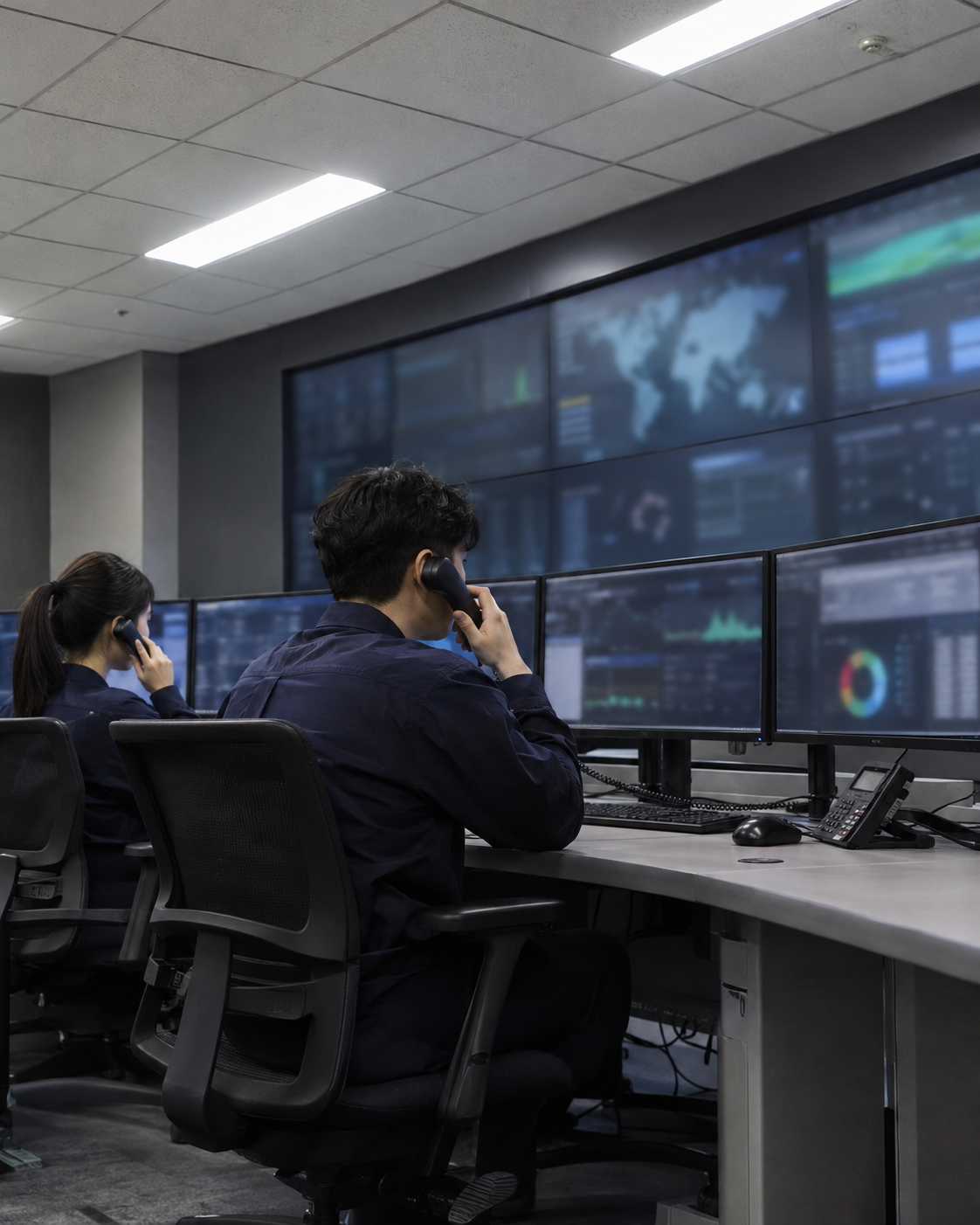
To help organizations that operate essential services but lack security personnel and budgets, OpenAI Daybreak for Frontline Defenders We've launched the program. It's an initiative to provide high-performance AI defense tools to organizations—such as the power grid, water and sewer systems, local governments, and regional financial institutions—whose security breaches would directly impact citizens' daily lives.
The amount of support is $1 billionHowever, this should not be understood as a cash donation or a simple investment. OpenAI announced that, for the next six months, it will provide Daybreak subscriptions along with training, technical support, and partner services.
At a time when powerful AI can be used for both offense and defense, this signifies a commitment to giving priority access to field organizations—which have fewer resources to respond than large corporations. At the same time, We need to further verify the actual selection criteria, the effectiveness of the support, and the long-term operational model.
| The $1 billion is in the form of grants, not cash

According to OpenAI's official guidance, $1 billion in subsidized Daybreak access over six monthsIt says that they provide [...]. The scope of support includes the use of AI-based cyber defense products, training, technical support, and collaboration with external partners.
Therefore, This isn't a program that distributes a fixed amount of cash to every applicant organization. OpenAI has explicitly stated that submitting an application does not guarantee eligibility, funding, access to models, partner services, or the timing of provision. Actual benefits may vary depending on the organization’s role and needs, as well as the results of the review.
| Operating Agencies for Essential Services Receiving Priority Funding

The initial target groups are water and wastewater utilities, power grid operators, state and local governments, regional and community banks, nonprofit organizations, and open-source maintainers. While they are responsible for socially critical systems, they often find it difficult to secure the same level of security personnel and budgets as large technology companies or financial institutions.
Vulnerability management is particularly complex for organizations that have a mix of legacy hardware and new software. It is also common for security personnel in small organizations to handle multiple tasks simultaneously, so A tool that automates recurring checks and prioritization could be helpful.
| Defense Operations Supported by Daybreak

Daybreak is a service that helps authorized defense organizations review code and systems, prioritize identified issues, and develop and validate corrective measures. It can also be used to analyze suspicious activity and compile the evidence needed to respond.
The key point is AI doesn't completely replace security personnel, but rather helps them quickly review large amounts of data and reduce repetitive tasks. Actual system changes and decisions regarding how to respond must be verified by an authorized person, and, Critical infrastructure also requires separate verification from existing safety procedures.
| Reducing the Speed Gap Between Attackers and Defenders
OpenAI has warned that as high-performance models become more widespread, AI-powered cyberattacks could become more widespread and sophisticated. As the barrier to automating attacks lowers, the gap in speed between identifying and fixing vulnerabilities could widen if defense organizations continue to rely primarily on manual processes.
This program is an effort to bridge the gap by providing both tools and training to organizations that lack access to the latest AI technology. Since simply providing a license makes it difficult to utilize the technology effectively in the field, It's also important that they've combined education and technical support.
| The more powerful a feature is, the more access control is needed
The high-performance models used by Daybreak are useful for defense, but there is also a risk that these same capabilities could be misused. OpenAI has opted to restrict sensitive cyber capabilities in models intended for general users, while providing broader defensive capabilities to authorized organizations whose identities and purposes have been verified.
For this system to work properly, we must not only consider the eligibility of the applying organizations, but also We need to manage everything from the actual purpose of the work and access permissions to logging and post-review. Preventing misuse without unduly slowing down on-site response times may be the most challenging aspect of running the program.
| Starting in the United States and expanding to other countries

OpenAI plans to start by focusing on essential service providers in the United States and then expand the program to other countries. Since the program targets sectors—such as electricity, water, and finance—where regulations and operational structures vary from country to country, it may be difficult to apply a single, uniform support model across the board.
During the overseas expansion phase, it becomes important to determine where data is processed, what criteria are used to protect public sector information, and how to comply with local regulations and procurement procedures. It is more likely that an operational system tailored to the realities of each institution—rather than the scale of funding—will determine the outcome.
| Promises That Must Be Proven Through Actual Defense Results
"Daybreak for Frontline Defenders" is significant in that it represents an effort to ensure that the benefits of cutting-edge AI are not concentrated solely in organizations with large security budgets. Since even a small vulnerability in essential services can lead to significant harm across society, an approach that strengthens on-the-ground defense capabilities is necessary.
However, It's hard to judge the effectiveness based solely on the nominal amount of $1 billion. To evaluate performance, it is necessary to disclose the actual number of selected organizations, the volume of subsidized usage, the number of vulnerabilities discovered and fixed, reductions in response times, the false positive rate, and the costs incurred after the program ends. Going forward, we need to keep a close eye on both how the funding is administered and the transparency of the results reports.
Tags
#OpenAI #Daybreak #Cybersecurity #Cyber Defense #Critical Infrastructure #Power Grid Security #Water and Sewer Security #Local Government #Regional Bank #Open-Source Security #AI Security #Security Training