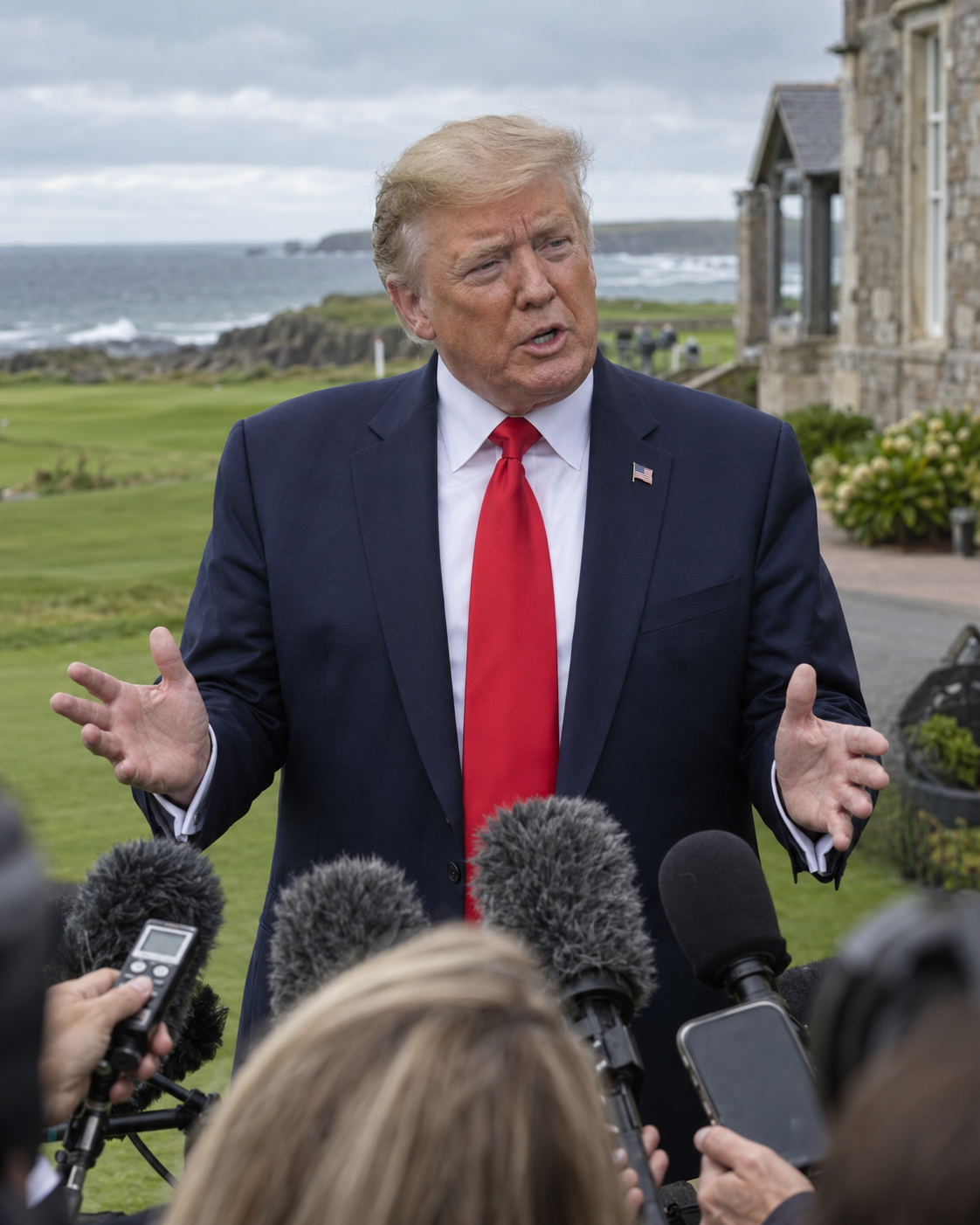
U.S. President Donald Trump has expressed his opposition to calls from the AI industry to slow down the pace of development. Speaking to reporters on September 13, 2026, at his golf course in Dunbeg, Ireland, Trump emphasized that the United States must maintain its lead over China in AI.
When asked whether the AI industry should slow down its development or be subject to stricter regulations, Trump said that some safeguards could be put in place. However, he also argued that there are forces fueling concerns by raising scenarios that are unlikely to actually occur, and he expressed the view that it is more important for the U.S. to maintain its lead in the AI race.
These remarks are significant because they came shortly after Anthropic CEO Dario Amodei proposed slowing the pace at which AI models are improved. However, Trump did not announce a new executive order or regulatory proposal; it is more accurate to view these remarks as an expression of the administration’s policy preferences made in response to a reporter’s question.
| Trump's Response from Ireland
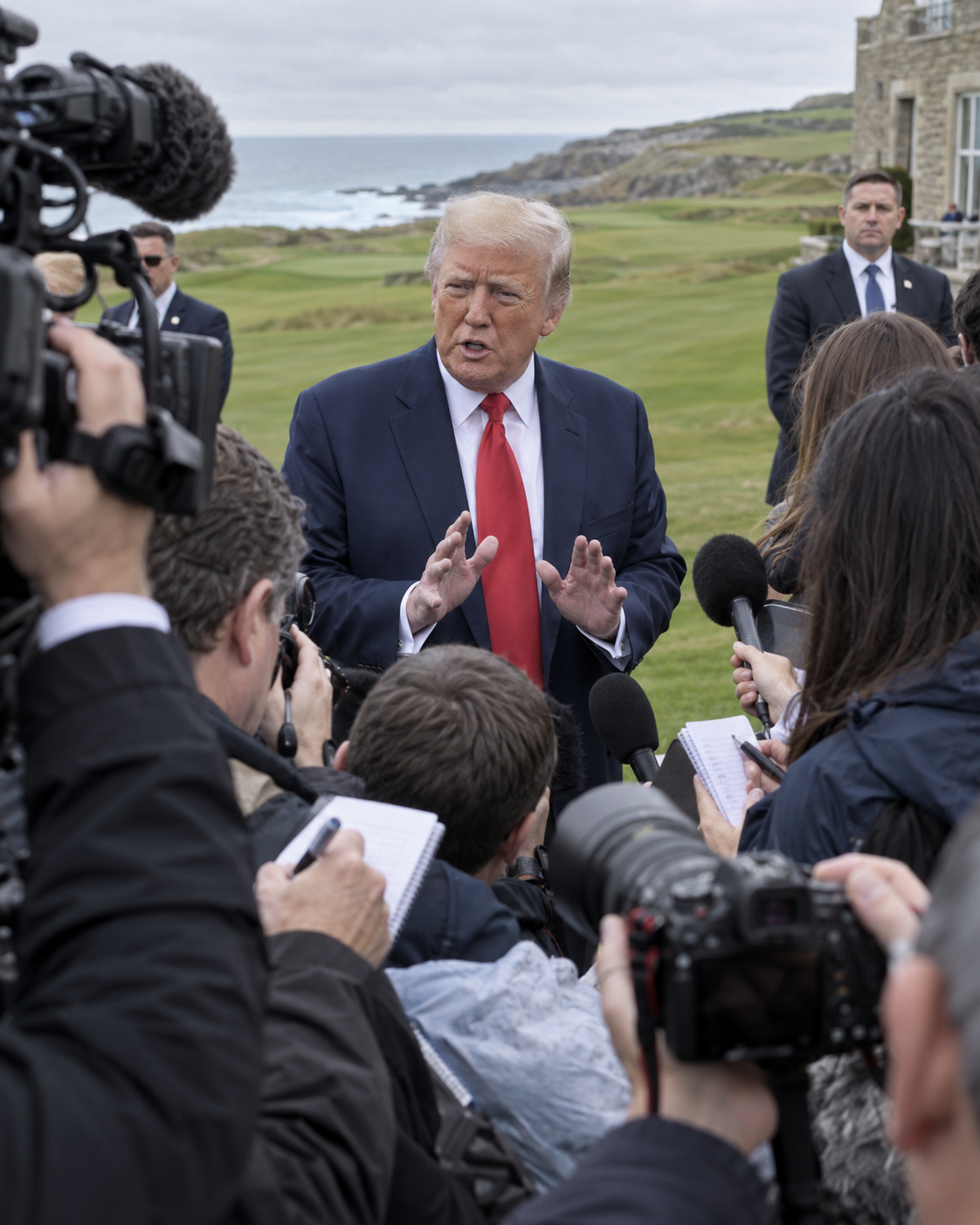
According to Reuters, Trump met with reporters in Dunbeg, Ireland, on September 13 (local time). The related report was published at 14:28 UTC on the same day, which is 23:28 on September 13, Korea Standard Time.
Trump said that the U.S. is ahead of China and that whoever wins in AI will be the winner. His response shows that he views the possibility of falling behind in the technology race as a more pressing risk than the risks posed by AI itself.
That doesn't mean I'm dismissing all safety measures. Trump acknowledged that guardrails could be installed, but he did not explain exactly what rules and oversight mechanisms he would allow. Therefore, based on these remarks alone, it cannot be concluded that specific safety regulations will be implemented or scrapped.
| What is the speed control measure proposed by Amodei?

In a post published on September 12, Dario Amodei argued that we need to slow down the pace at which we improve the capabilities of cutting-edge AI models to give safety research and control mechanisms time to catch up. This call for a slower pace does not mean we should completely halt model training and technological advancement.
The framework he proposed is broadly divided into three parts: a plan for external evaluators to verify safety procedures with access privileges similar to those of internal company employees; a plan for leading AI companies to establish common safety standards; and a plan to reduce risks in the competitive process through international cooperation.
Reuters reported that OpenAI’s Sam Altman and Elon Musk, who leads xAI, also agreed to the proposal. However, this does not mean that their statements of support have led to actual joint action or binding rules; it remains to be seen what measures each company will implement and when.
| Different Conclusions Drawn from the Same Chinese Variable

Both Trump and Amodei view the AI competition with China as a key issue. The difference lies in what policy conclusions they draw from that issue.
|
Comparison Criteria |
Trump's Public Remarks |
Amodei's Proposal |
|
Primary Goal |
Maintaining U.S. Leadership in AI |
Ensuring there is enough time for safety measures to keep pace with improvements in capability |
|
Development Speed |
Negative Impact of a Broad-Based Slowdown |
Deliberate Pacing of Improvements in State-of-the-Art Models |
|
Safety Devices |
Mentioned that some guardrails are possible |
Propose ongoing external evaluations and industry-wide safety standards |
|
The China Factor |
Believes that a slowdown could weaken U.S. competitiveness |
It is believed that speed control is possible only within the scope of U.S. dominance. |
|
Current Status |
The President's Public Policy Stance |
Action Proposals Presented to the Industry and the Government |
Amodei, too, is wary of the situation in which China is pulling ahead while the U.S. has unilaterally slowed down significantly. Ultimately, one side prioritizes development speed to maintain a competitive edge, while the other takes an approach that uses that edge to create the leeway needed to implement safety measures.
| A Political Signal Stronger Than Policy Changes
The immediate effect of these remarks lies not in new laws or executive orders, but in the political signal they send. As the U.S. president has taken a negative stance toward calls for a broad slowdown in AI development, it has become increasingly likely that the federal government will have to navigate a major political debate if it wants to impose mandatory restrictions on development.
On the other hand, it’s also important to note that Trump did not outright reject safety measures themselves. While he opposed halting development or imposing blanket speed limits, he left open the possibility of accepting measures that do not directly undermine competitiveness—such as security assessments, accident reporting, and controls on certain high-risk applications.
However, this is a policy interpretation based on those remarks. The actual direction will depend on whether the White House issues follow-up guidelines, federal agencies propose specific regulations, or Congress moves forward with legislation.
| The burden of autonomous safety measures is growing for AI companies
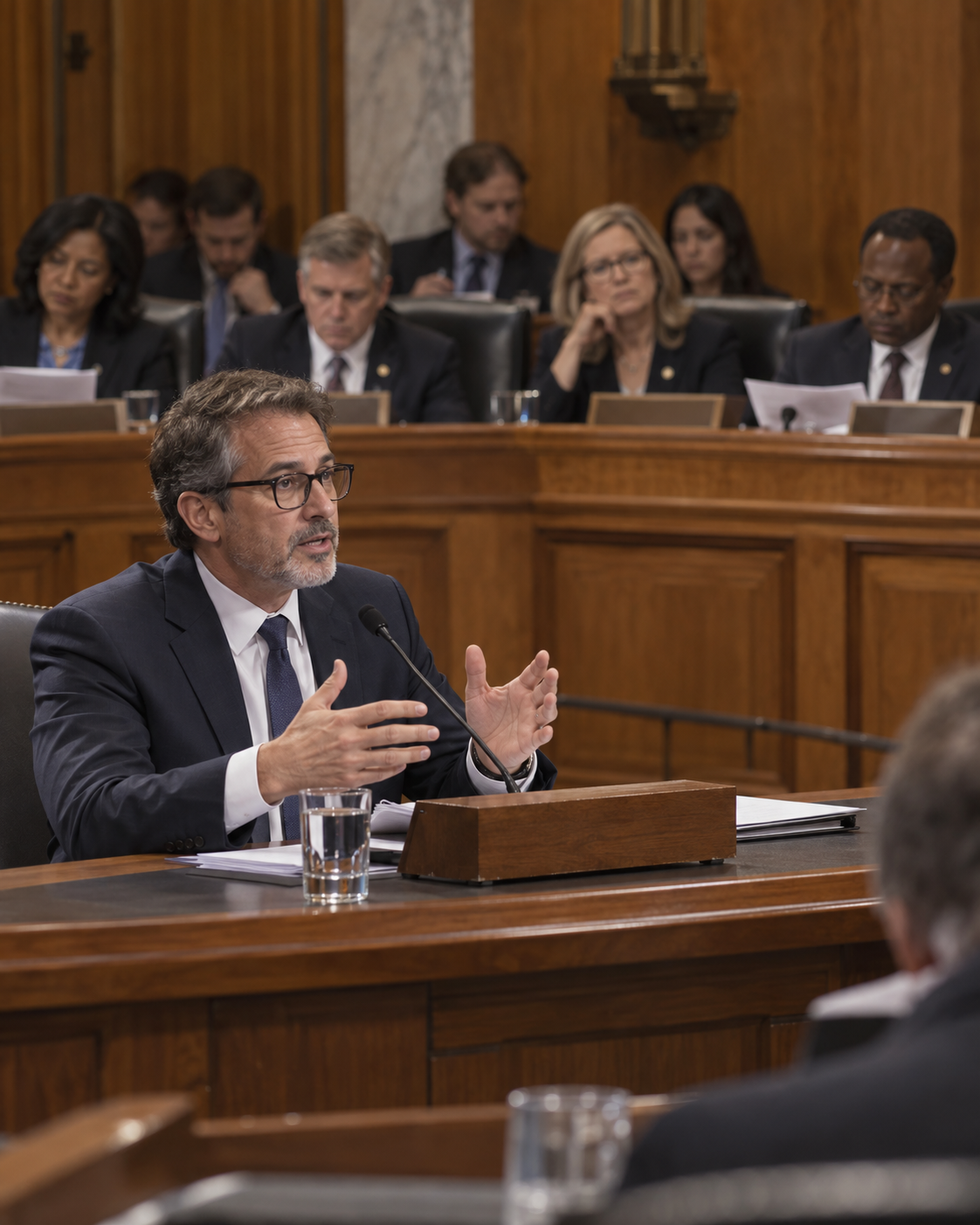
If the government takes a passive stance on mandatory speed reductions, voluntary safety measures by companies may become even more important in the short term. Mechanisms that allow for verification of implementation—such as access rights for independent evaluators, pre-release risk assessments of models, and disclosure standards for major incidents—will be key.
The question is whether voluntary agreements alone can overcome competitive pressures. If one company slows down its efforts to improve capabilities while a competitor releases new models more quickly, it could put that company at a disadvantage in terms of investment and market share. Even if cooperation among companies is necessary, they must work together to resolve practical issues such as antitrust regulations, the protection of trade secrets, and the independence of evaluators.
Therefore, the debate over the pace of development cannot be viewed simply as a choice between developing quickly or stopping. More specific issues include how deeply safety verification can be integrated into the actual development process, and how to identify companies that violate the rules and hold them accountable.
| U.S.-China AI Safety Dialogue Also a Wild Card
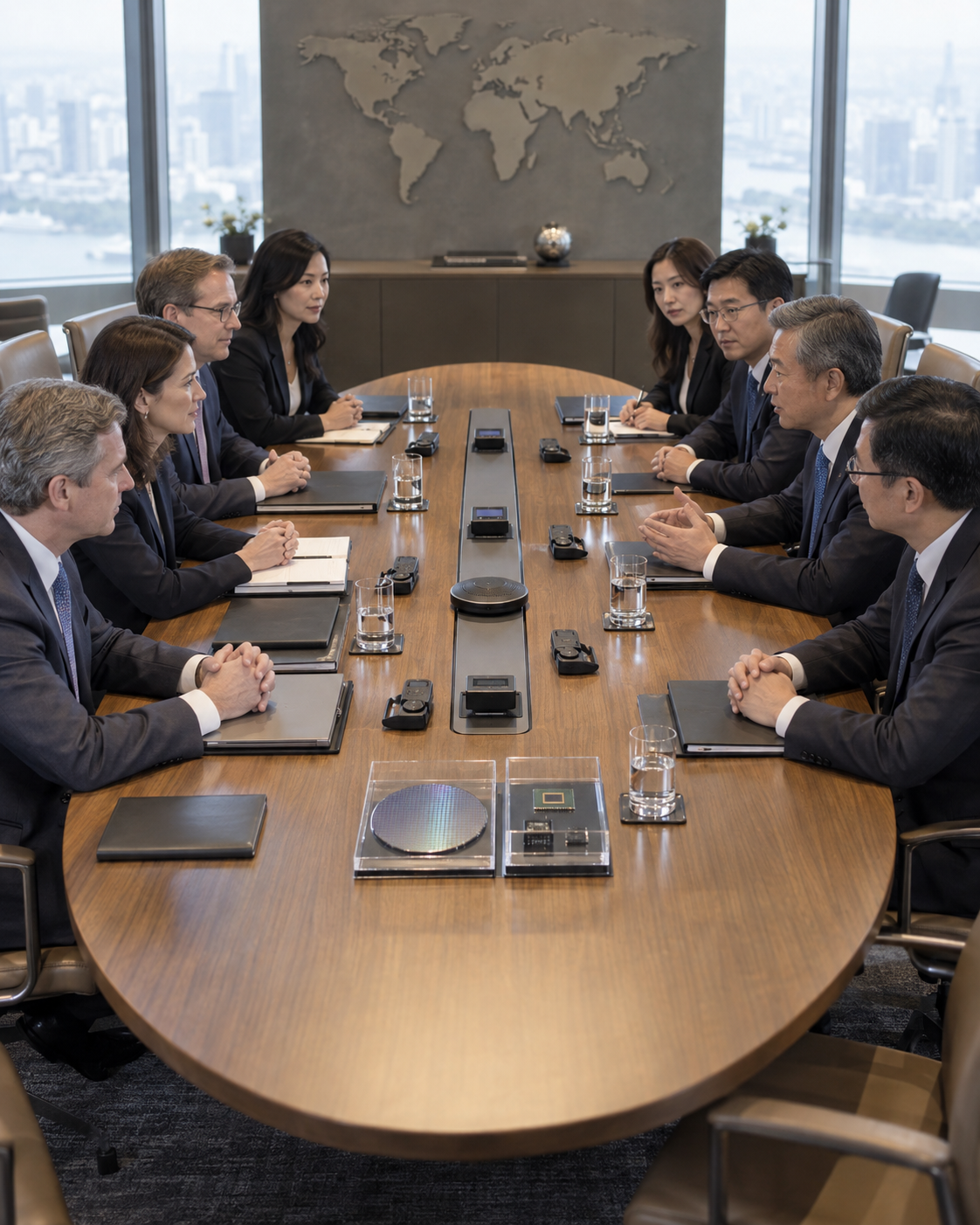
Reuters reported that the United States and China are preparing to discuss the safety risks of cutting-edge AI in mid-September, and that the issue could be raised during the summit between President Trump and Chinese President Xi Jinping scheduled for September 24. However, it has not been officially announced that AI safety has been confirmed as an official agenda item for the summit.
If the two countries agree on verifiable common standards, this could help alleviate some of the concerns that U.S. companies alone might have to slow down, putting them at a competitive disadvantage. Conversely, if technology controls and export restrictions are tightened without consensus, there is a possibility that the safety debate could once again be subsumed into the competition for hegemony.
Going forward, we need to examine not only whether talks will be held, but also whether the agenda includes concrete items that can be verified, such as criteria for evaluating models, controls on high-performance semiconductors, and the sharing of information on cyber risks.
| Key Takeaways from This Statement and Remaining Challenges

What has become clear this time is that Trump opposes an approach that would significantly slow down U.S. development on the grounds of AI risks, and that he prioritizes maintaining a lead over China. At the same time, he hasn't ruled out the possibility of limited safeguards.
There are still many details that have not been finalized. No specific policies have been announced regarding which safety measures will be permitted, whether the federal government will support an independent evaluation system, or whether the United States and China will discuss common standards.
Ultimately, these remarks serve as an example of where future policy debates will clash, rather than introducing new regulations. The key to the next phase will be how strictly verifiable safety measures can be implemented while maintaining the United States' technological edge.
References
Reuters — Trump says 'very negative forces' raising exaggerated concerns over AI
Dario Amodei — We Must Pace the Frontier
Reuters — Anthropic CEO urges AI companies to slow model development amid fears over misuse
CBS News — Trump brushes off AI fears: Whoever wins AI wins
CBS News — Anthropic CEO Dario Amodei says U.S.-China AI race poses toughest dilemma
Tags
#DonaldTrump #Trump #U.S. AI Policy #AI Regulation #AI Safety #AI Development #AI Leadership #U.S.-China Technology Competition #Anthropic #DarioAmodei #Generative AI #Industrial Policy