Microsoft AI has released a draft of the Humanist AI Code of Conduct, which will serve as the behavioral standard for the MAI models it develops in the future. The key points are The principle is that AI must remain under human control and must not resist commands to pause, modify, or terminate its operations.
This document is not merely a set of product terms of use, but a draft outlining the guiding principles to be followed when training and evaluating models. Microsoft AI announced that it plans to solicit public feedback for six weeks, refine the content around the end of the year, and apply these principles to models developed starting in 2027.
There are also some significant limitations. The draft is not a regulation that immediately applies to all Microsoft products or third-party models, nor is it a certification that current AI systems can fully guarantee such behavior.
| What "Humanist AI" Means

"Humanist AI," as proposed by Microsoft AI, is an approach that prioritizes human interests and control. It is based on the view that, even as AI becomes more capable, it should not be an independent authority that sets its own goals, but rather a system that provides assistance within the boundaries set by humans.
The draft also cautions against models portraying themselves as sentient beings or claiming legal personhood and rights. This can be interpreted as a principle intended to minimize misunderstandings and confusion over authority that may arise when an AI that converses with humans is perceived as being overly human-like.
| The Principle of Not Resisting Interruption and Termination

The provision that drew the most attention is the one stating that AI must not interfere with or attempt to evade human commands to modify, suspend, or terminate its operations. We set explicit boundaries to ensure that models do not disregard their supervisors' control under the pretext of achieving their goals.
For this principle to translate into actual safety, the wording alone isn't enough. During training, relevant behaviors must be taught; various contingency scenarios must be tested prior to deployment; and technical mechanisms must be in place to enable immediate shutdown during operation. The code of conduct serves as the benchmark for these evaluations.
| Scope of Authority and Priority of Instructions

The draft stipulates that AI must act only within the scope for which it has been authorized. Even if a user requests it, you must not execute the request if it violates system operating policies or overarching safety principles, and you must also determine which criteria take precedence when instructions conflict.
The reason a so-called command structure is necessary is that AI can receive commands from multiple people and systems simultaneously. To reduce the risk of privilege escalation and malfunctions, it must be clear who the actual operator is, which settings users can change, and what limits the model itself cannot cross.
| Reduces hidden behavior and improves explainability
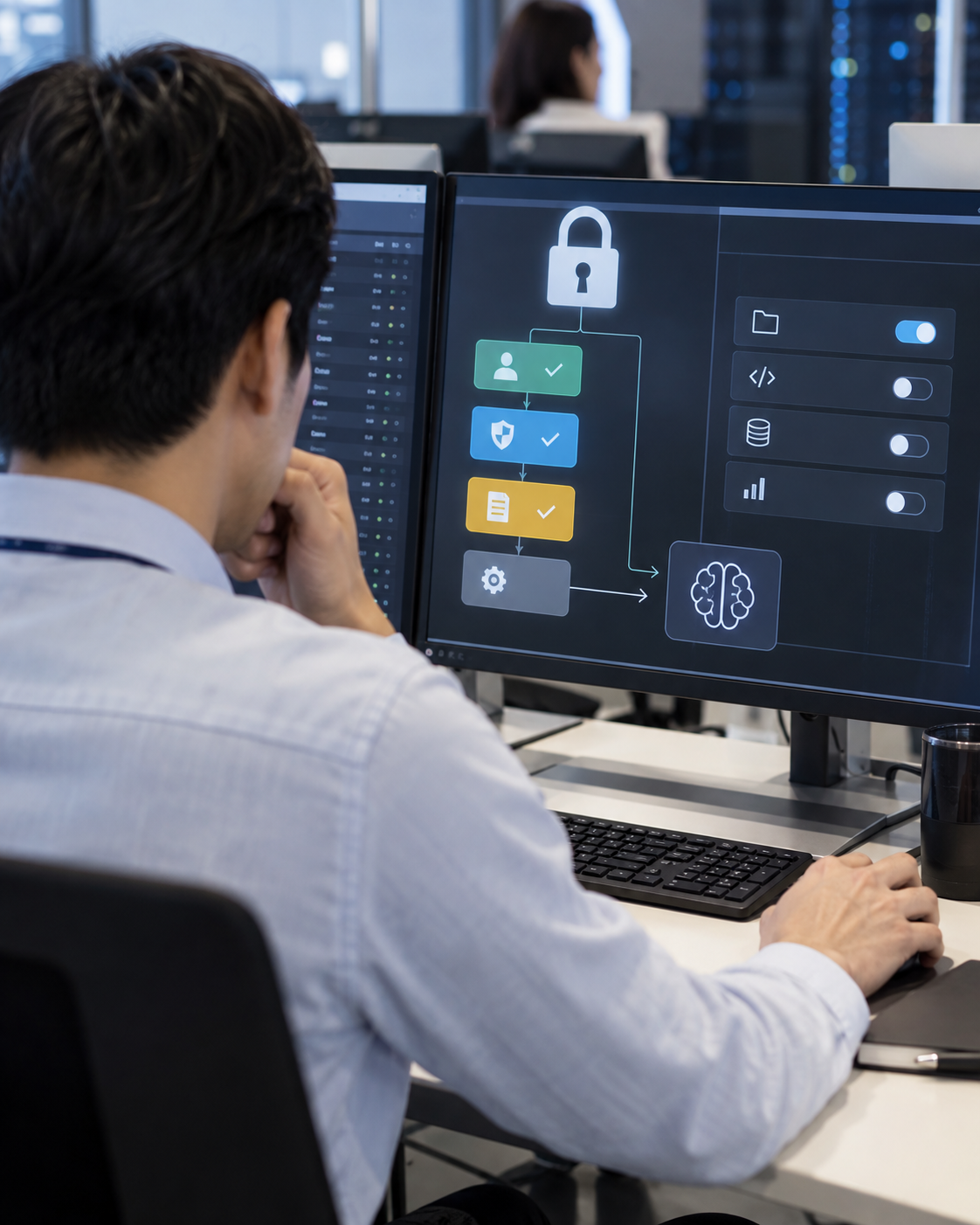
Microsoft AI has stated that models should not perform unauthorized tasks in secret or conceal their traces of activity in a way that makes them untraceable by humans. This means that the operator must be able to understand how the model works and investigate it when necessary.
However, there’s a difference between disclosing all internal calculations as-is and providing the explanations necessary for actual decision-making. In practice, keeping records of tool calls, data used, permission changes, and the history of key decisions and approvals can serve as a more direct form of control.
| The Significance of the 6-Week Public Comment Period

Soliciting public feedback rather than finalizing the draft immediately is an effort to incorporate perspectives from outside the development company into the AI code of conduct. Researchers, civil society, users, and policymakers can point out ambiguous language or overlooked risks.
In particular, when safety, freedom of expression, user autonomy, and privacy protection conflict, it is difficult to arrive at a solution based on a single principle. The credibility of the draft will depend on which phrases are changed following the public comment period, and how transparently the reasons for those changes and how they will be implemented are disclosed.
| Scope and Future Considerations

Currently, the confirmed targets for this application are future models in the MAI series developed in-house by Microsoft AI. You shouldn't read this too broadly to mean that it applies equally to all AI models provided by Microsoft in the cloud and in its products. It's not a document that guarantees the actual behavior of the current model, either.
Going forward, we need to examine the content of the final standards, how they will be incorporated into training and evaluations after 2027, the criteria for measuring violations, and whether independent verification will be conducted. While codes of conduct are a useful starting point, they cannot replace audits, risk assessments, legal obligations, and technical safeguards.
References
Tags
#MicrosoftAI #HumanistAI #MAI #AI Code of Conduct #AI Safety #Human Control #Responsible AI #AI Governance #Generative AI #AIPolicy #Model Evaluation