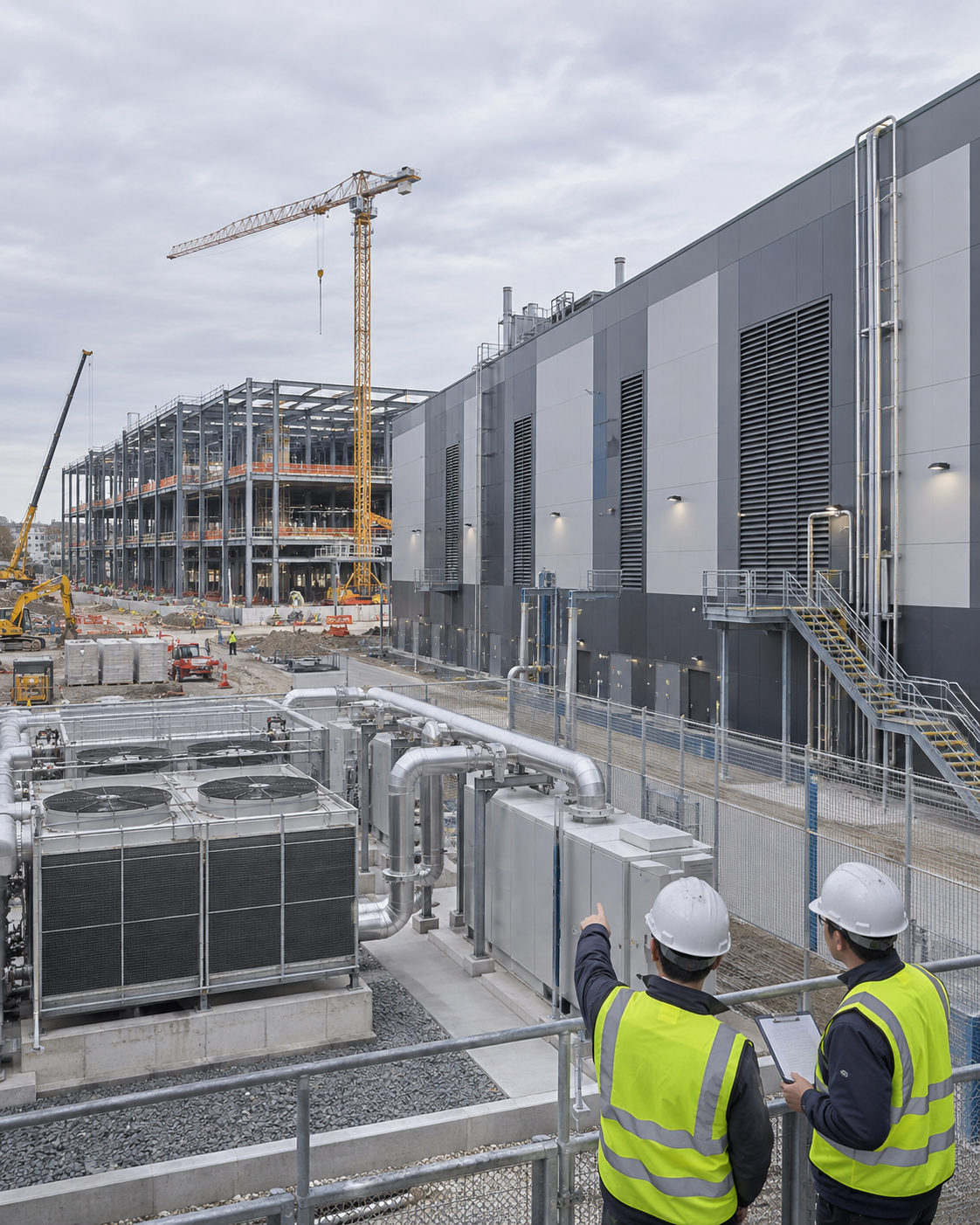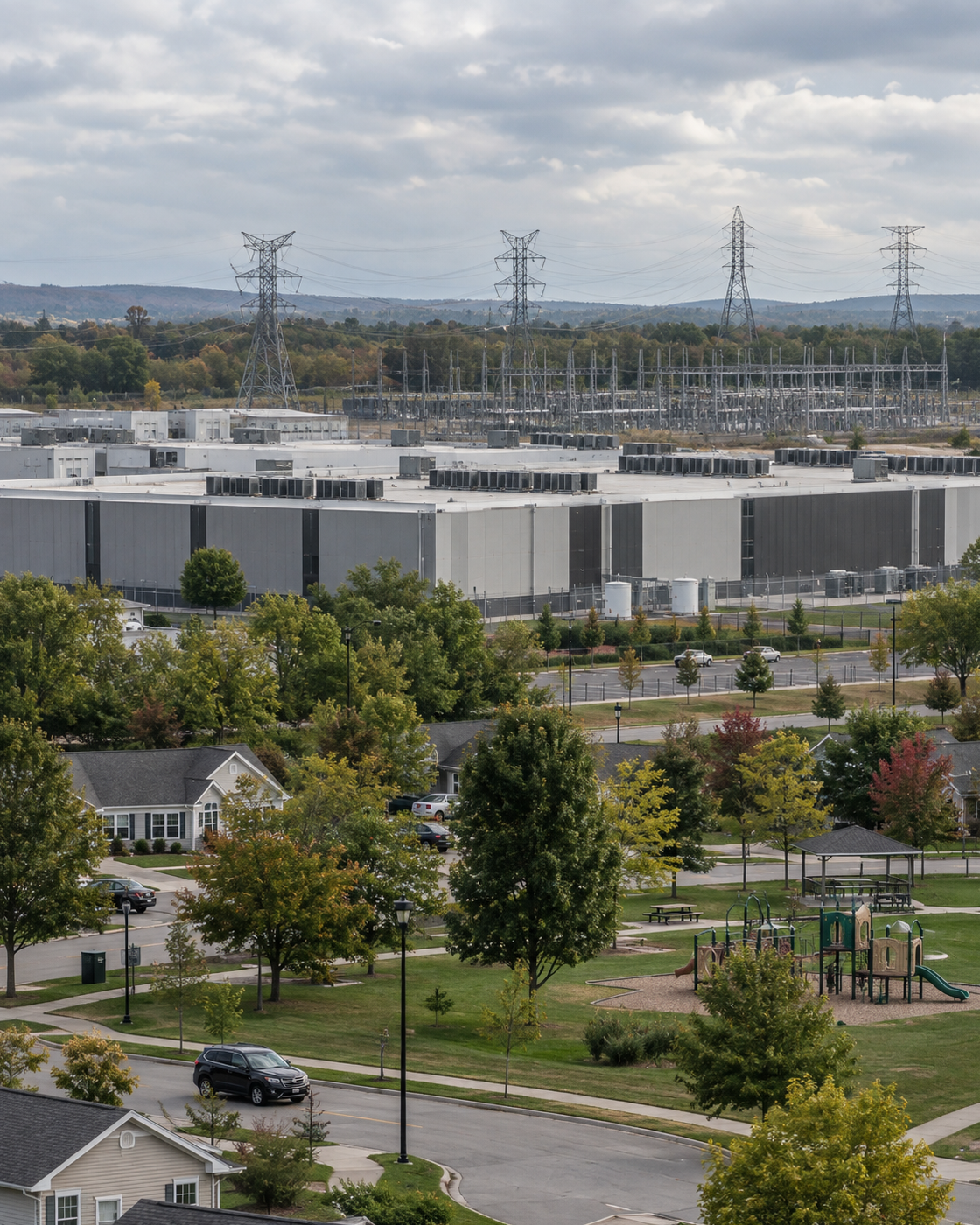
New York State has recommended that local governments attracting new data centers negotiate with operators to secure at least $1 million in community investment for every 1 MW of power demand. For a 50 MW facility, that would amount to $50 million.
However, This amount is not a tax or statutory levy that is immediately imposed on all businesses. The Host Community Investment Framework released by New York State is a set of voluntary guidelines and a contractual framework that local governments can use when negotiating with developers.
This measure stems from concerns that, while the demand for electricity and water at AI data centers is growing rapidly, the number of permanent jobs created in the region after completion may be lower than that of traditional manufacturing facilities. The key point is that it presents a specific monetary figure for how the economic value of the data center will be shared with the local community.
| $1 million per MW is the benchmark for negotiations.

New York State's framework requires data centers to It is recommended that at least $1 million be invested in the local community for every 1 MW of utility-scale power. The logic is that as the scale of a business grows, so does the strain on local infrastructure, such as the power grid, roads, and water and sewer systems.
The timing of investments and the method of payment are to be determined by local governments and developers. Contributions can take the form of funding a Community Investment Fund managed directly by the local government or supporting specific public projects. The agreement also includes provisions requiring negotiations for additional contributions when electricity demand increases due to business expansion.
The key point is that it’s mandatory. The framework that has been released so far is merely a set of voluntary guidelines, so Local governments are not required to apply this standard, nor are developers required to pay the same amount across the board. The actual amount you'll have to pay may vary depending on negotiations and contracts in each region.
| Why Data Centers Are Viewed Differently from Manufacturing Facilities
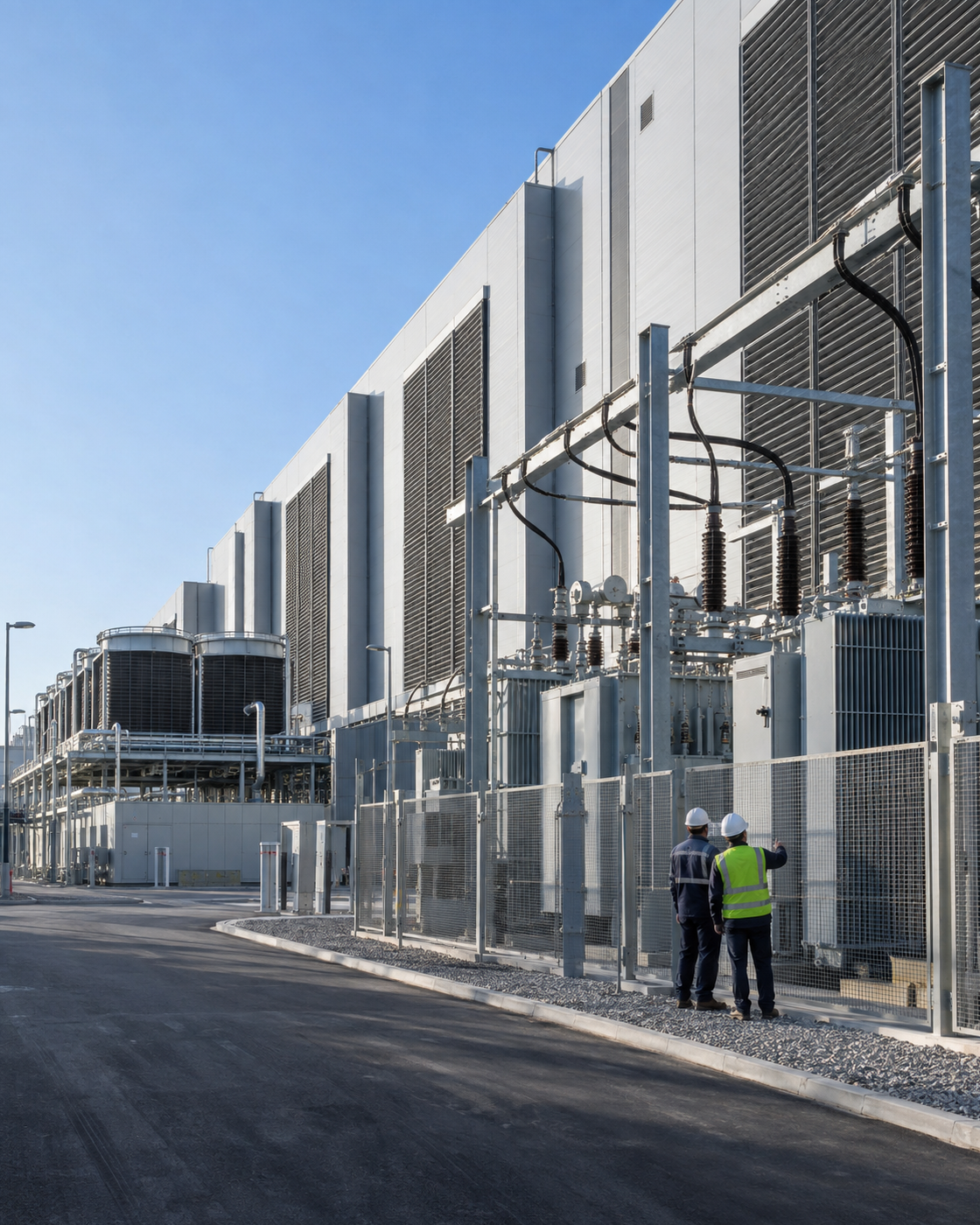
Large data centers require extensive land, massive amounts of electricity, cooling water, and power transmission and distribution facilities. Although a large workforce is required during the construction phase, operations are automated, so the number of permanent jobs maintained after completion may be lower than that of a manufacturing plant of the same size.
Because of these characteristics, New York State determined that it would be difficult to evaluate a data center’s contribution to the local community based solely on existing tax incentives and job-centered development logic. The state argued that if an operator makes extensive use of the power grid and public infrastructure, it must provide long-term value to the local community in ways other than just job creation.
This is less a policy that outright blocks data centers and more an approach that involves reevaluating the costs and benefits. This can be seen as a shift away from the previous practice of offering incentives to companies first in the competition to attract investment, toward including the financial burden that facilities place on the local community as a condition of negotiation.
| Investment targets range from infrastructure to housing
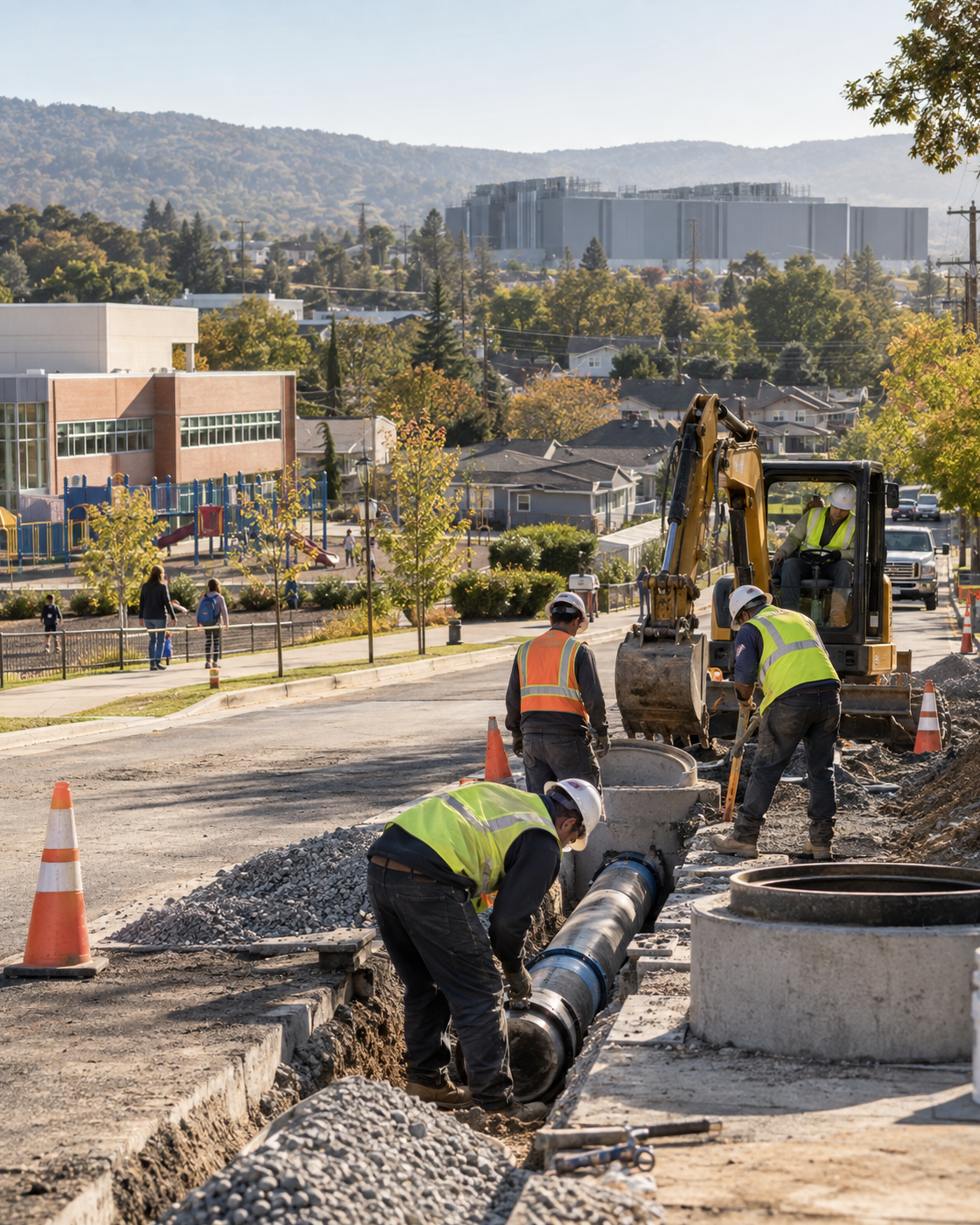
The framework identified not only public infrastructure—such as roads, water and sewer systems, public transportation, and parks—but also affordable housing, housing for workers, vocational training, school programs, child care, broadband internet, public safety, and support for small businesses as areas for investment.
Items that directly affect residents' lives—such as water usage, noise, lighting, architectural design, and landscaping—can be negotiated separately as "Good Neighbor Commitments." The agreement also allows for provisions regarding fair wages for construction workers and a commitment to hire local workers.
Once the facility is operational, it is recommended that information regarding employment, electricity and water consumption, contributions to funds, environmental impacts, and mitigation measures be disclosed to the local community on an annual basis. Rather than simply providing a one-time grant before construction begins, It's a structure designed to incorporate responsibility for the entire operational period into the contract.
| Discussions on electricity rates and environmental regulations were also held
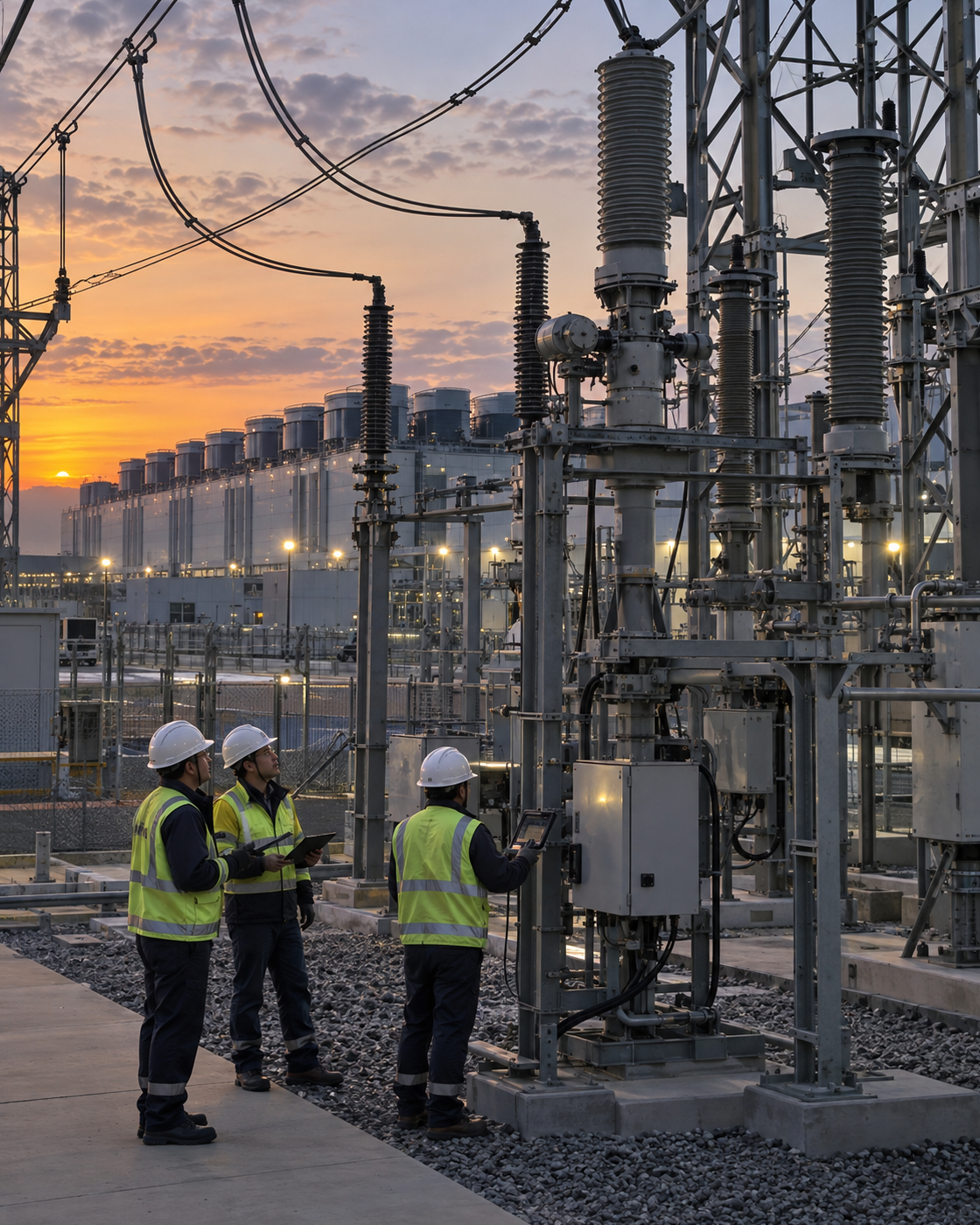
These guidelines are linked to New York State’s temporary moratorium on data center development. Pursuant to Executive Order No. 62, issued by Governor Kathy Hochul on July 14, 2026, a temporary moratorium on related development is in effect while the environmental impact of large new data centers is being assessed.
New York State plans to establish common standards for electricity demand, water use, water quality, and air quality through a general environmental impact assessment. It is also considering measures to require data centers to bear a greater share of electricity costs or secure their own power sources, as well as creating a fund to invest in aging power grids.
Therefore, If you focus solely on the recommendation of $1 million per MW, it's easy to lose sight of the bigger picture of the policy. There's a trend toward consolidating community investment, electricity rate protection, environmental reviews, and transmission grid expansion costs into a single accountability framework for data centers.
| Calculations have become more complicated for both developers and local governments

From a developer’s perspective, community investment funds can represent a significant additional project cost on top of land and electricity costs. In particular, for projects in the hundreds of MW range, even the recommended guidelines alone can amount to hundreds of millions of dollars, which can directly influence site comparisons and return-on-investment calculations.
Conversely, it could serve as a benchmark that enhances local governments’ bargaining power. This is because even small regions with a significant information gap compared to tech companies can use the common framework proposed by the state government to evaluate electricity, employment, the environment, and long-term contributions together.
However, since the condition of the power grid, tax revenue, and residents' needs vary by region, there may be debate over whether a one-size-fits-all amount is always appropriate. We must consider both the possibility that an excessively high burden could drive investment to other states and the possibility that an agreement that is too low could shift local costs onto residents.
| The actual impact will depend on whether local governments adopt it

What was confirmed in this announcement is that New York State has set forth guidelines for voluntary negotiations and standard contracts. It is not legally mandated that every new data center must pay $1 million per MW.
Going forward, it will be important to see to what extent local governments incorporate these standards into actual development negotiations, and what form the environmental assessment and electricity rate systems ultimately take. It is highly likely that the first projects approved after the current temporary suspension is lifted will effectively serve as a test case for the policy.
It is clear that the expansion of AI infrastructure is now being treated not merely as a matter of attracting investment, but as an issue of cost allocation involving electricity, the environment, and the local economy. Whether similar standards are spreading to other states could become the next factor in the competition for U.S. data center locations.
Tags
#New York State #Data Center #AI Infrastructure #Electricity Demand #Community Investment #KathyHochul #Environmental Policy #Power Grid #Industrial Policy #U.S. AI Policy #Cloud Infrastructure #Regional Development