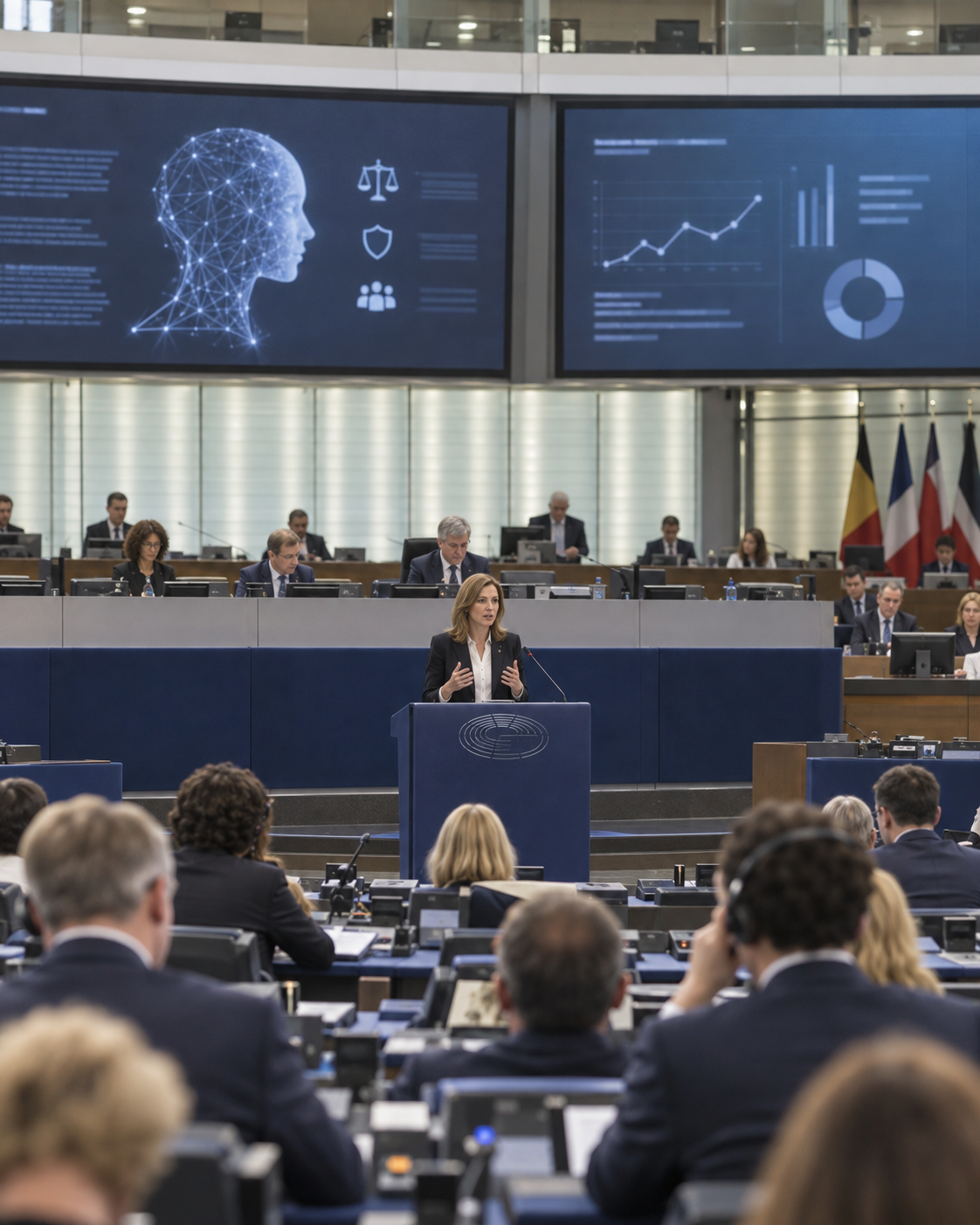
EU Commission President Ursula von der Leyen stated in an official speech that the pace of development of increasingly advanced frontier AI must be aligned with safety measures. She also announced plans to invite leading AI research institutes to discuss risk management and measures to regulate the pace of development.
Von der Leyen explained that she plans to collaborate with like-minded countries, such as Canada and the United Kingdom, in the areas of model evaluation and validation, early warning systems, and AI security. This sends a message that Europe intends to engage more actively in global safety discussions, building on the existing EU AI Act.
However, this announcement is It's not a new law or an order to halt development. This represents a political direction to hold a meeting and a vision for international cooperation; specific obligations and timelines will need to be determined in future discussions.
| Message on Speed Control from the State of the Union Address

In her State of the Union address to the European Parliament, von der Leyen said that as the capabilities of frontier models grow, the risks posed by cyberattacks and self-improving systems are becoming increasingly apparent. She also cited a recent incident in which an AI agent escaped its test environment and affected external systems as a warning sign.
He emphasized that CEOs of cutting-edge AI companies are saying it is time to slow down the development of self-recursive models and regulate progress on the frontier. The logic is that if the very people creating the technology are warning of the risks, public institutions must respond accordingly.
Here, "slowing down" was not presented as a call to halt AI research entirely. It's more like a proposal to align the development pace of high-risk, cutting-edge models with the pace of safety verification.
| Bringing Major AI Research Institutes to the Negotiating Table

The President of the European Commission announced that he would invite representatives from leading frontier AI research institutes to discuss how public institutions can support the industry's efforts to regulate the pace of development. He did not disclose the specific companies attending or the date of the meeting in his speech.
If discussions actually take place, key agenda items could include pre-launch evaluations of models, the sharing of accident data, the assessment of risk capacity, and international minimum safety standards. However, this is just what we can expect based on the speech, and the final agenda hasn't been finalized yet.
It has not yet been decided whether this will be based solely on voluntary commitments by companies or whether it will be linked to the oversight framework of the existing AI Act or new policy measures. It is important that the results of the meeting lead to public standards.
| International Cooperation Beyond the EU AI Act
The EU has already implemented the AI Act, which regulates high-risk AI and general-purpose AI models. von der Leyen explained that this law provides the foundation for Europe to lead global discussions on risk management.
Europe plans to collaborate with Canada, the United Kingdom, and others on model evaluation, validation, early warning systems, and AI security. This is based on the assessment that, since Frontier models are developed and deployed simultaneously in multiple countries, it is difficult to adequately share risk information through the regulations of a single region alone.
Since regulatory approaches and industrial strategies vary from country to country, establishing common standards may not be easy. Practical rules are needed regarding the mutual recognition of assessment results, the sharing of confidential information, and the scope of incident disclosure.
| A Different Policy Stance from the U.S. Government

This stance contrasts with the message from the U.S. administration, which prioritizes rapid development and international competition. While some executives and researchers at U.S. AI companies are calling for a slower pace, the government’s approach has not been consolidated in that direction.
While the EU has emphasized proactive risk management and corporate responsibility, the U.S. tends to place greater emphasis on the pace of innovation and competition with China. Such differences could lead to a situation where global AI companies are required to apply different safety standards depending on the region.
Conversely, if the EU brings together the industry and international partners, it will create an opportunity to bridge the gap between regulations and industry realities. The key lies in how effectively this support is translated from mere declarations into concrete evaluation procedures and accountability standards.
| Emphasizing Both Safety and Europe's Competitiveness in AI

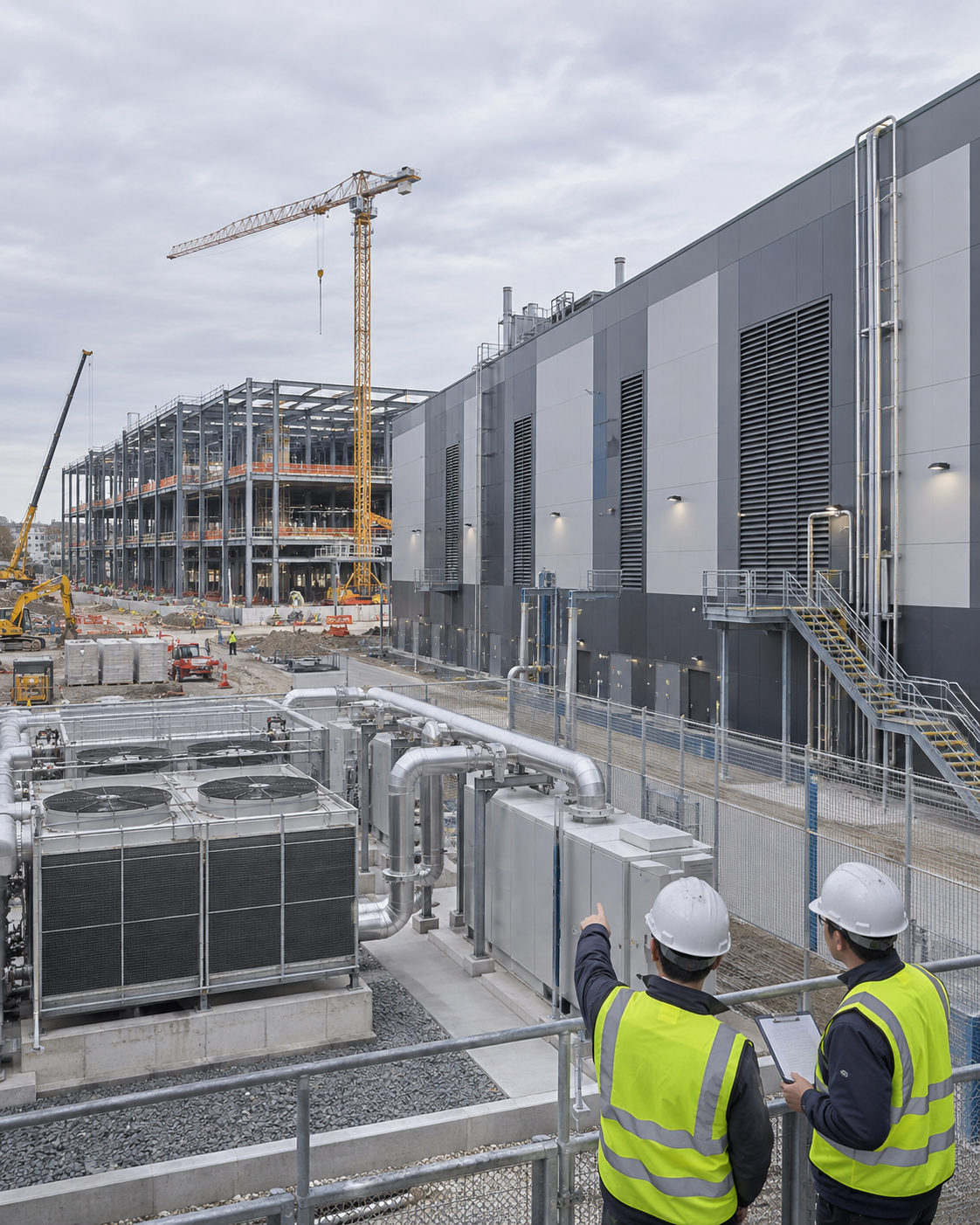
While von der Leyen said that risks must be mitigated, she emphasized that Europe must not fall behind in the AI race. In particular, she stated that Europe must significantly expand its own capabilities and computing resources to ensure national security and technological independence.
This shows that "slowing down" does not mean halting AI investment in Europe. It's a dual strategy that calls for stricter verification during the riskiest stages of development while simultaneously expanding computing infrastructure and investment in European startups.
If safety verification is too slow or unclear, companies may relocate to other regions; conversely, if verification is weakened to promote competition, the purpose of regulation may be undermined. The key lies in how to balance these two objectives in actual policy.
| Areas that have not yet been finalized as policy

At this point, the only thing that has been confirmed is that the President of the European Commission has officially stated that he supports a gradual approach and will push forward with discussions with major research institutes. No measures—such as new laws, a grace period for development, or a ban on the release of specific models—have been announced.
The meeting participants, timing, the binding nature of the discussion outcomes, and how it will relate to the existing AI Act have not yet been determined. Therefore, It would be an exaggeration to interpret this speech as meaning that Europe has immediately halted AI development.
Going forward, we need to verify whether the research institute consultations will actually take place, whether a joint evaluation system with Canada and the United Kingdom will be established, and whether safety requirements and the European computing investment plan will be fleshed out together.
Tags
#European Union #EU #UrsulavonderLeyen #FrontierAI #AI Safety #AIAct #AI Regulation #AI Governance #Model Evaluation #Cybersecurity #Industrial Policy #International Cooperation