
The European Commission has proposed the EU KIDS Act to strengthen online safety for children and adolescents. The key provision is a ban on social media accounts for children under 13, and a requirement that children aged 13 to 15 may only have accounts supervised by their parents.
This proposal isn't limited to social media. It aims to broadly overhaul the design principles for digital services targeting users under the age of 18, including video-sharing services, online games, AI companions, and chatbots.
However, it is not a law that takes effect immediately. This is the proposal put forward by the European Commission on September 17, 2026; the specific provisions may change during the upcoming negotiations between the Council, representing the EU member states, and the European Parliament.
| A Proposal to Categorize Account Usage by Age Group
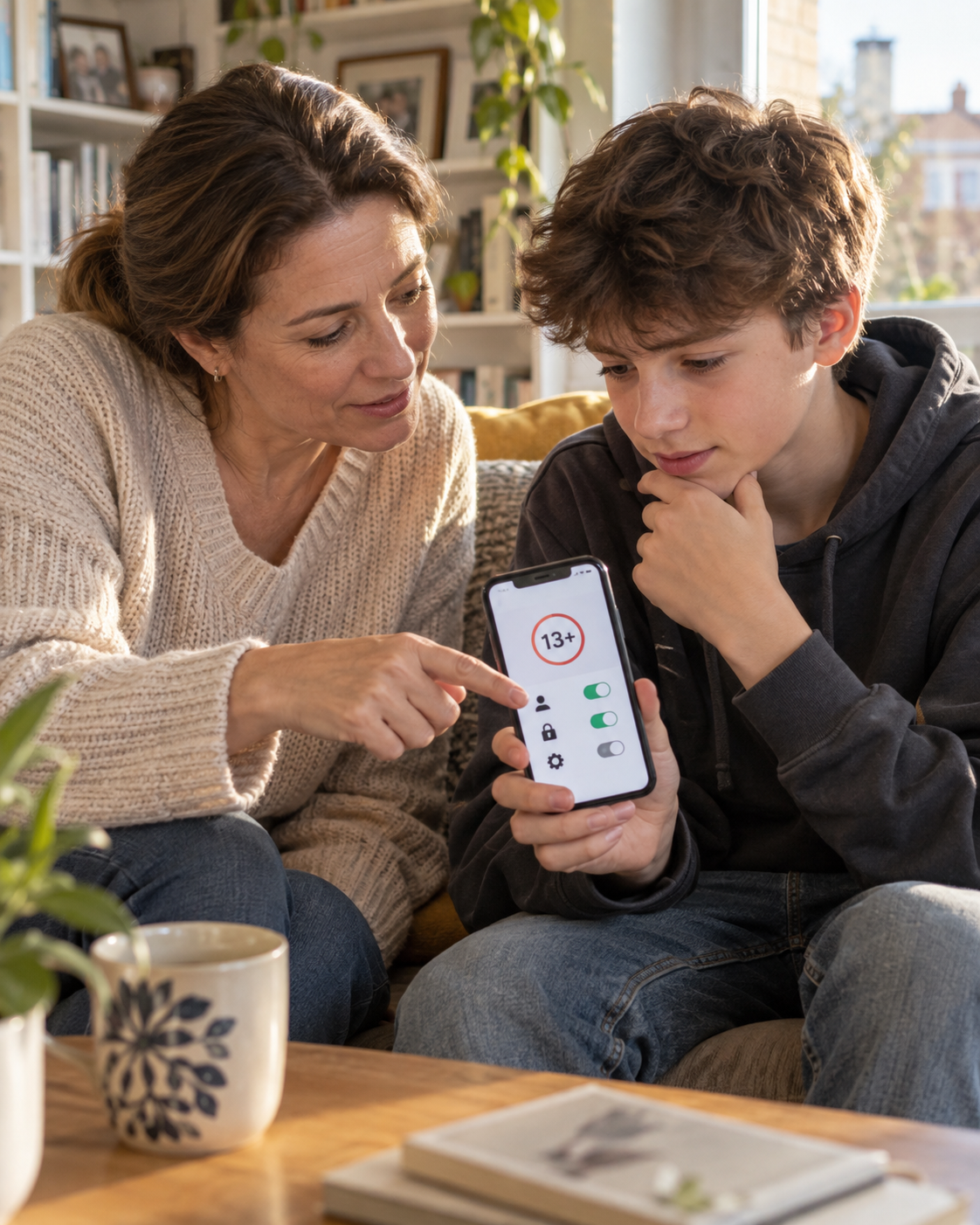
Under the proposed plan, children under the age of 13 would be prohibited from creating social media accounts. A structure is currently under discussion whereby 13- and 14-year-old users would use so-called “mini accounts” managed by their parents, while independent accounts would be permitted starting at age 15.
It’s difficult to ensure effectiveness simply by having users enter their date of birth on the sign-up screen. That’s why the guidelines also require platforms to use age verification tools to confirm users’ ages when they open accounts.
If this change becomes a reality, platforms will have to move away from the current model of providing the same features to all users while imposing certain restrictions only on minors. This means we need to design a separate account structure and secure default settings tailored to children and teens from the very beginning.
| Infinite scrolling and profile-based recommendations are also subject to regulation

The European Commission has targeted addictive features designed to increase usage time as a key focus of regulation. The measures include restrictions on features such as infinite scrolling, reward-based mechanisms, excessive notifications, and unwanted contact from strangers.
Recommendation feeds based on profiling—which analyze user behavior to infer interests—may also be restricted on teen accounts. While the focus until now has been on how long users stay on the platform, the Kids Act can be seen as an attempt to shift the standards of business models so that safety takes precedence over dwell time for minors.
Platforms must also provide children with safe recommendation algorithms, easy-to-use blocking and muting tools, and parental control features. The regulations are quite strict, as they even stipulate that violations could result in fines of up to 6% of global annual revenue.
| AI companions and chatbots are turned off by default

One notable aspect of this proposal is that it treats AI companions and chatbots as a separate risk category. AI companions and chatbots intended for users under the age of 18 must be disabled by default.
This is a more robust approach than optional protection, which allows users to turn it off if they wish. The approach is designed to minimize, from the outset, the likelihood of minors engaging in prolonged interactions with AI or developing an emotional dependence on it until they discover and activate the feature themselves.
However, we will need to review the final wording of the legislation and its enforcement guidelines to determine whether all educational chatbots or general Q&A tools will be treated the same. How the boundaries between AI companions, general-purpose chatbots, and learning assistance services are defined will likely determine the actual scope of application.
| Age verification for safety could pose a new risk to personal information

Age verification is a key tool for enforcing regulations, but it is also the most controversial aspect. This is because platforms may need to handle more personal information than they do now in order to verify users' ages, identities, and relationships with their guardians.
CCIA Europe, a technology industry group, criticized the proposal, arguing that collecting such information on a large scale could make it a target for cyberattacks and might overlap with existing EU laws and requirements. They pointed out that this could create a paradox where efforts to strengthen child protection actually end up expanding the scope of identity data collection.
Therefore, when designing the actual system, it is important to find a way to verify a person’s exact age without sharing unnecessary personal information with the platform. The certification standards for independent age verification methods, the scope of data retention, and the guardian verification process will be key issues.
| Regulations aimed at changing the very design of the platform's products

The significance of the Kids Act lies in the fact that it goes beyond simply requiring the removal of specific harmful content. They are trying to regulate the very structure that keeps users engaged with the service—such as recommendation algorithms, notifications, account privacy settings, and messaging features.
This means it’s difficult for platforms to address the protection of minors solely through post-incident reporting and content review. Age-appropriate safety standards must be applied starting from the service planning and algorithm development stages, and large platforms may also be required to submit compliance plans to regulatory agencies.
On the other hand, issues such as the accuracy of age verification and circumvention of registration requirements, as well as differences in education and parental supervision systems from country to country, could make actual enforcement difficult. Given that Australia’s age verification system has also revealed challenges in its implementation, the key question is whether the EU can ensure both technical effectiveness and privacy protection.
| Points to Check Before the Law Is Finalized

All that has been confirmed so far is that the European Commission has proposed new standards for digital services aimed at children and adolescents. While the Commission has outlined a direction that includes a ban on social media for children under 13, parental control accounts, restrictions on addictive features, and AI chatbots being disabled by default, the final legal wording and implementation timeline have not yet been determined.
Going forward, we will need to determine whether age ranges and exceptions will be maintained in negotiations between the European Parliament and member states, which services will be classified as AI companions, and what technologies will be permitted for age verification. The enforcement framework, including fines and oversight costs, may also be finalized during the negotiation process.
This proposal is significant in that it broadens the scope of child protection from content management to issues of product design and business models. However, for strict regulations to actually lead to improved safety, sophisticated implementation guidelines must be established to ensure that the age verification process does not create new risks to personal information.
Tags
#EU #European Union #KidsAct #Children's Online Safety #SocialMediaRegulation #Age Restrictions on Social Media #AI Chatbot #AI Companion #Platform Regulation #Privacy Protection #DigitalPolicy #Protection of Minors