When discussing the AI semiconductor market, the first companies that come to mind are chip design firms like NVIDIA.
However, to actually produce more AI accelerators, we need foundry production lines, HBM, advanced packaging, and inspection equipment— The entire supply chain...must increase together.
A global semiconductor equipment company Applied MaterialsThe financial results released on August 14, 2026 (Korean time) clearly illustrate this trend. The company Recorded its highest-ever revenue in the third quarterand, The company also reported fourth-quarter revenue that exceeded market expectationsI did.
In particular, the revenue growth forecast for advanced packaging in 2026 has been revised downward from the previous projection of over 50% to 70% or more...has risen again. This means that the benefits of AI investment are extending beyond GPUs to HBM, packaging, and even the equipment used to manufacture them.
| Third-Quarter Revenue Up 25%; Fourth-Quarter Outlook Also Exceeds Market Expectations
Applied Materials' revenue for the third quarter of fiscal year 2026 was $9.115 billionThis represents a 25% increase from the $7.302 billion recorded during the same period last year.
The non-GAAP operating margin was 34.0%, and diluted earnings per share were $3.50. Both revenue and non-GAAP earnings per share reached all-time highs for the company.
|
Category |
Reported Figures |
Comparison Criteria |
|
Third-Quarter Revenue |
$9.115 billion |
A 25% increase from the previous year |
|
Third-Quarter Non-GAAP Operating Margin |
34.0% |
A 3.3 percentage point increase from the previous year |
|
Non-GAAP Earnings Per Share for the Third Quarter |
$3.50 |
A 41% increase from the previous year |
|
Fourth-Quarter Revenue Outlook |
$10.25 billion ± $500 million |
Exceeded market expectations by approximately $9.54 billion |
|
Fourth-Quarter Non-GAAP Earnings Per Share Forecast |
$4.02 ± $0.20 |
Exceeded the market forecast of $3.69 |
The quarterly notation here is based on Applied Materials' fiscal year. While the median forecast for fourth-quarter revenue is about 12.5% higher than the actual third-quarter revenue, it’s important to note that this is a forecast provided by the company and not yet confirmed as actual results.
The market estimates are figures compiled by LSEG and reported by Reuters. Both the company's own outlook and external forecasts reflect strong demand for AI semiconductor equipmentIt can be seen as something that is happening.
| A structure where demand for AI extends from GPUs to manufacturing equipment
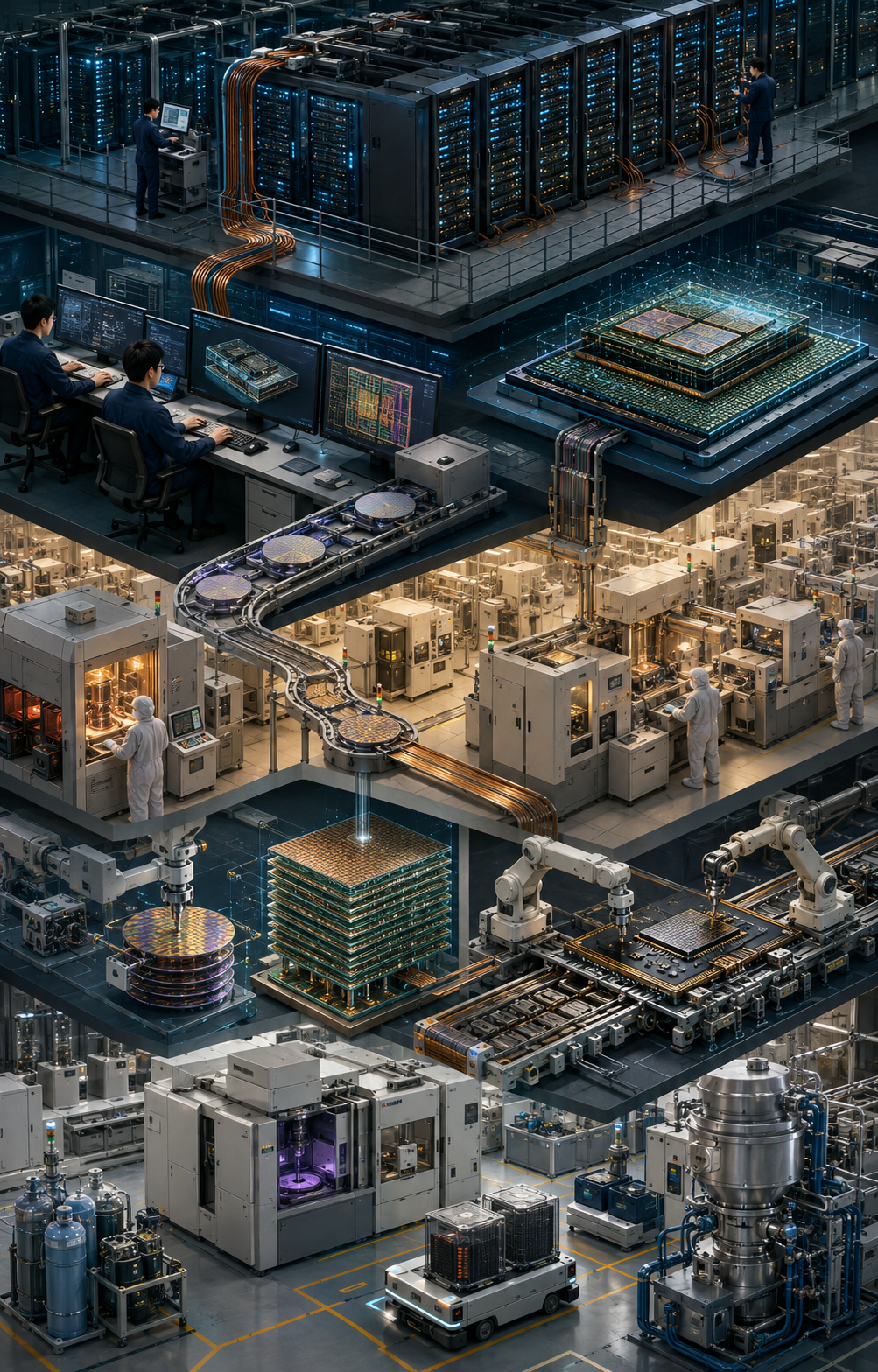
Applied Materials is not a company that designs or sells finished AI chips. It supplies the deposition, etching, ion implantation, planarization, and measurement and inspection equipment—along with the related technologies—needed in the semiconductor manufacturing process.
As demand for AI services grows, the need for greater computing power increases first, which leads to a rise in orders for AI accelerators and HBM. Chip manufacturers must increase production while adopting more complex manufacturing processes and packaging technologies.
In this process, building a new factory or increasing the yield and throughput of existing production lines requires investment in manufacturing equipment. Ultimately, A structure in which investment in AI data centers does not stop at semiconductor design companies but is sequentially channeled to foundries, memory, packaging, and equipment companiesHey.
Applied Materials estimates that cutting-edge foundry logic, DRAM, and advanced packaging will drive approximately 80% of the growth in the wafer fabrication equipment market in 2026 and 2027. While this figure is based on the company’s own analysis, it clearly illustrates where customer investments are concentrated.
| Advanced Packaging Equipment for HBM
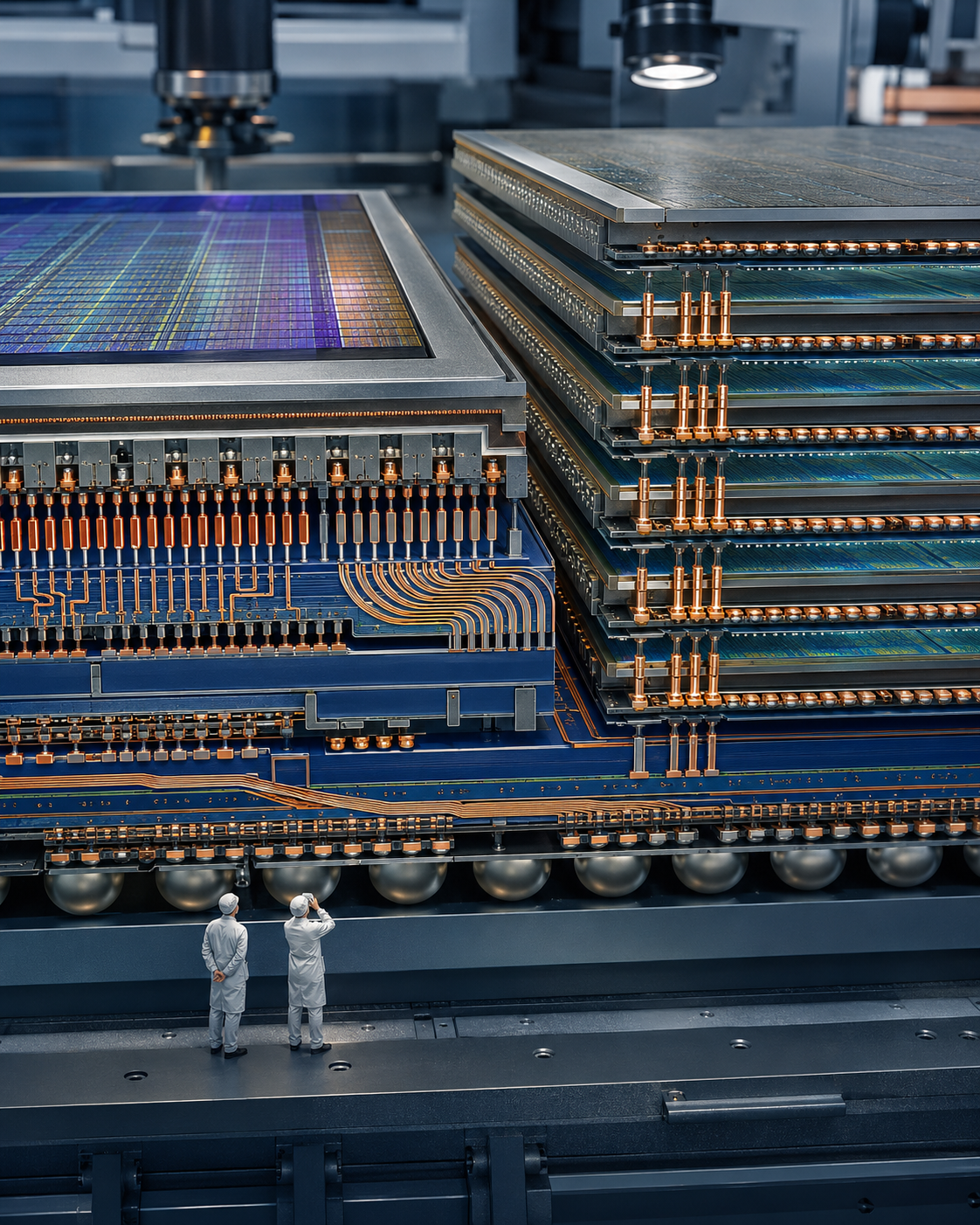
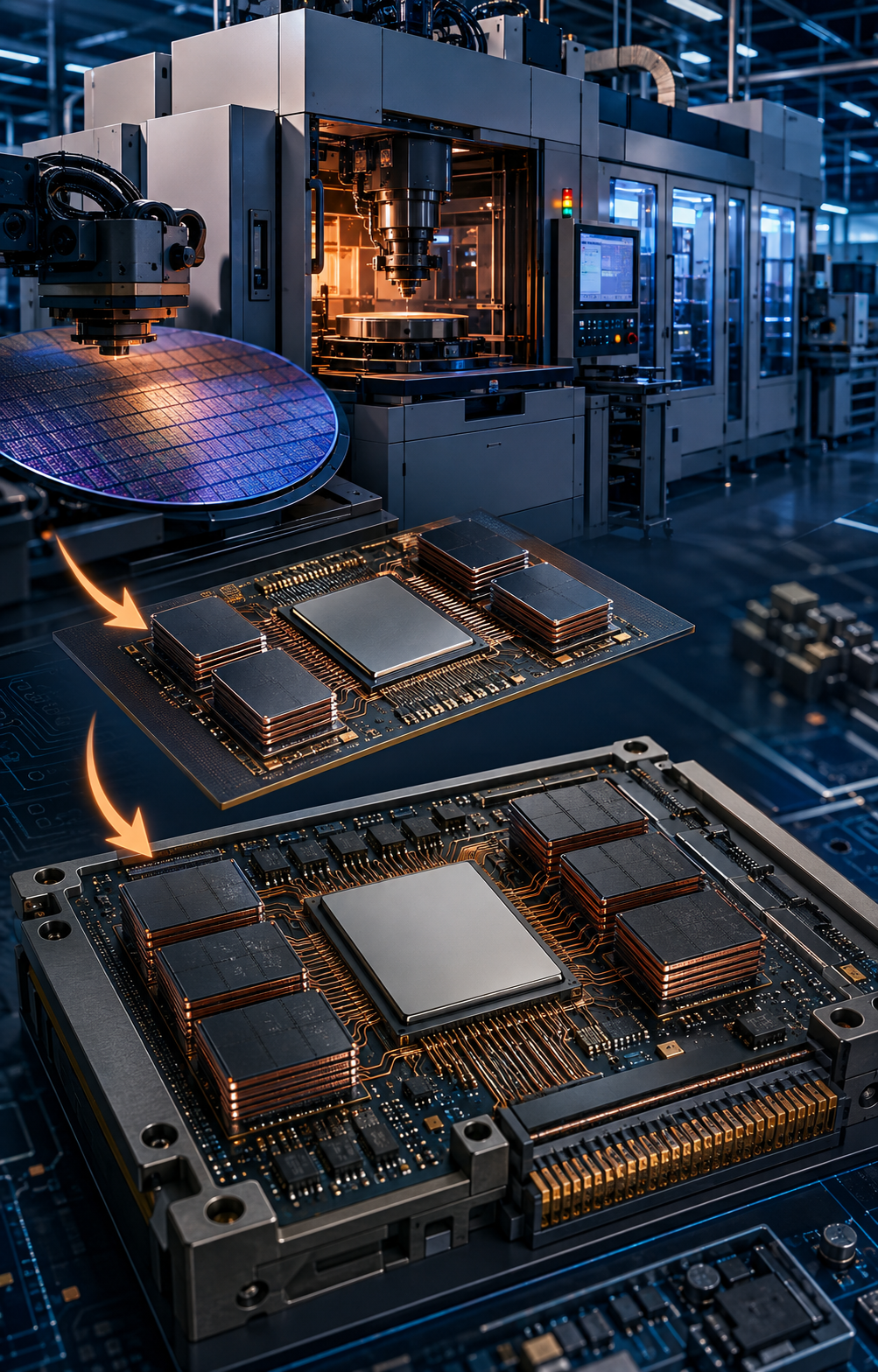
An AI accelerator can't reach its full potential if only the compute chip is fast. To quickly transfer large amounts of data, multiple DRAM modules must be stacked vertically HBMIt needs to be connected close to the processing chip.
The skills needed at this point are Advanced PackagingWow. It involves stacking HBM dies, connecting the compute chips and memory as if they were a single system, and a manufacturing process that reliably creates countless microscopic contacts.
Typical examples include technologies such as through-silicon vias (TSVs), microbumps, hybrid bonding, and 2.5D and 3D stacking. As connection pitches become narrower and stacked structures become more complex, even minor contamination or alignment errors can reduce yield.
As a result, sophisticated deposition, plating, etching, planarization, and defect inspection are now required even during the packaging stage. This is why Applied Materials is seeking to extend the equipment technologies it has established in traditional wafer processes to advanced packaging.
It’s not just that HBM sales are increasing; as the complexity of the processes involved in stacking, connecting, and testing HBM also rises, the value generated by a single piece of equipment is increasing as well.
| 50% or morefrom 70% or morein the sense that it has raised expectations
As recently as last May, Applied Materials had expected its packaging revenue to grow by more than 50% in 2026. In its latest earnings announcement, the company revised that forecast 70% or more...raising it by more than 20 percentage points.
The fact that the outlook has improved again after three months means that A sign that customers' investment plans and equipment demand are taking shape faster than the company had anticipatedHey. The company explained that it has secured a strong position, particularly in HBM and 3D chiplet stacking.
However, there are three things to keep in mind when interpreting the numbers.
70% does not refer to the share of advanced packaging in Applied Materials' total revenue, but rather Forecast for Year-over-Year Revenue Growth in Advanced Packaging...the fact that.
Although quarterly earnings are reported on a fiscal year basis, the 70% growth forecast is As of the 2026 calendar year...the fact that.
Please note that since this is the company’s forecast, the final figures may vary depending on the actual equipment delivery dates and the customer’s investment schedule.
Nevertheless, the very fact that the previous forecast of over 50% has been raised again demonstrates that advanced packaging is shifting from a temporary supporting process to a core pillar of AI semiconductor investment.
| What the Ongoing Customer Discussions Through 2030 Mean
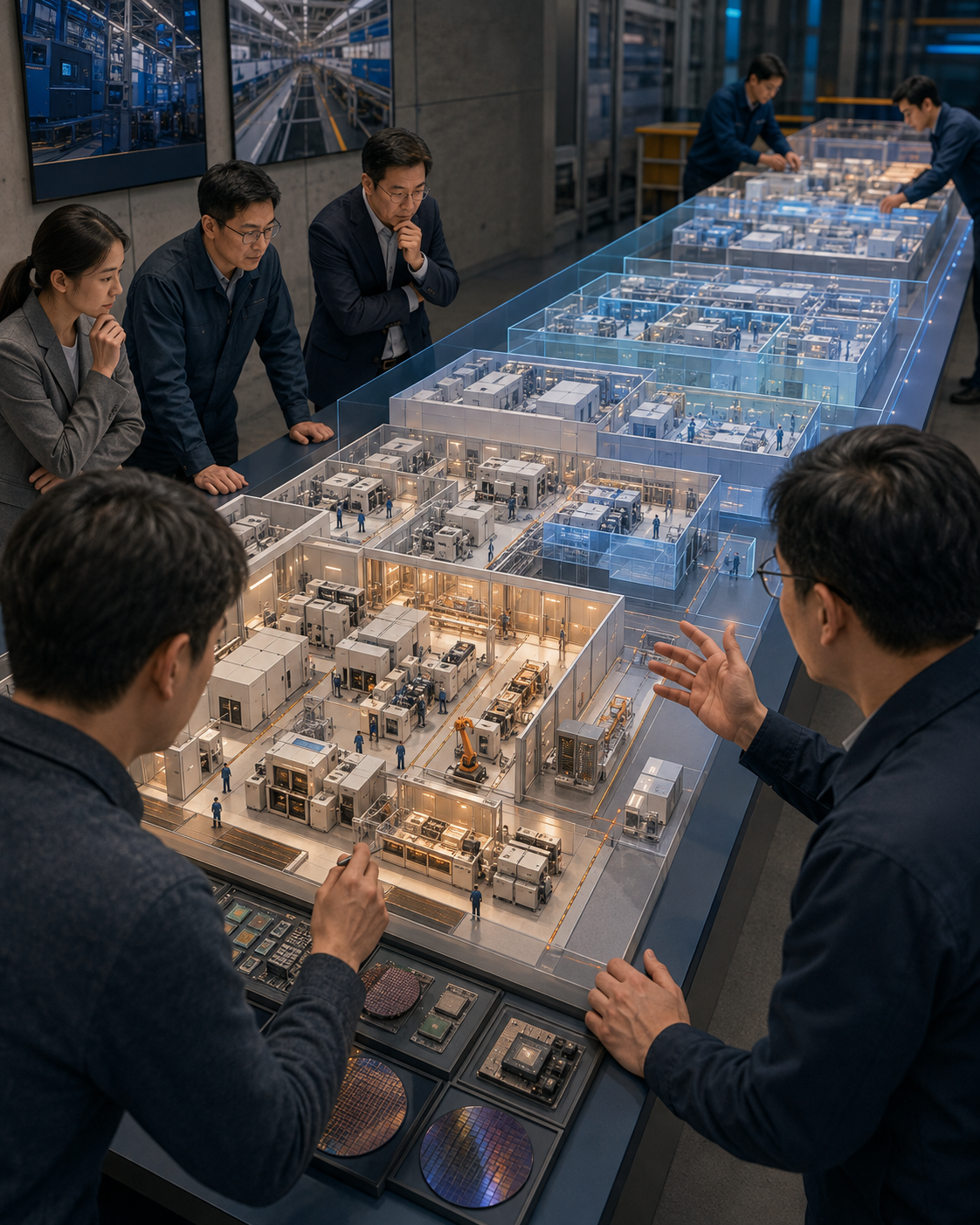
Brice Hill, Chief Financial Officer of Applied Materials, said that customers are sharing their demand forecasts for much longer periods than before, and some discussions are By 2030 He stated that it is continuing.
Semiconductor production capacity cannot be expanded immediately just because orders have increased. This is because it takes a long time to build factories, secure cleanrooms, manufacture and install equipment, validate processes, and stabilize yield rates.
If customers discuss future technology transitions and production capacity with equipment manufacturers several years in advance, Applied Materials can proactively prepare its R&D, production facilities, parts procurement, and service personnel. In fact, the company explained that it has nearly doubled its manufacturing space in recent years, and that customers have announced more than 10 new fab projects this quarter.
However, you shouldn’t interpret the phrase “under discussion through 2030” to mean that revenue through 2030 has already been finalized. It’s more accurate to say that we’re reviewing a long-term roadmap together, and actual orders and revenue may vary depending on economic conditions, technological shifts, and our clients’ investment schedules.
| Why the Stock Price Fell Despite Strong Earnings
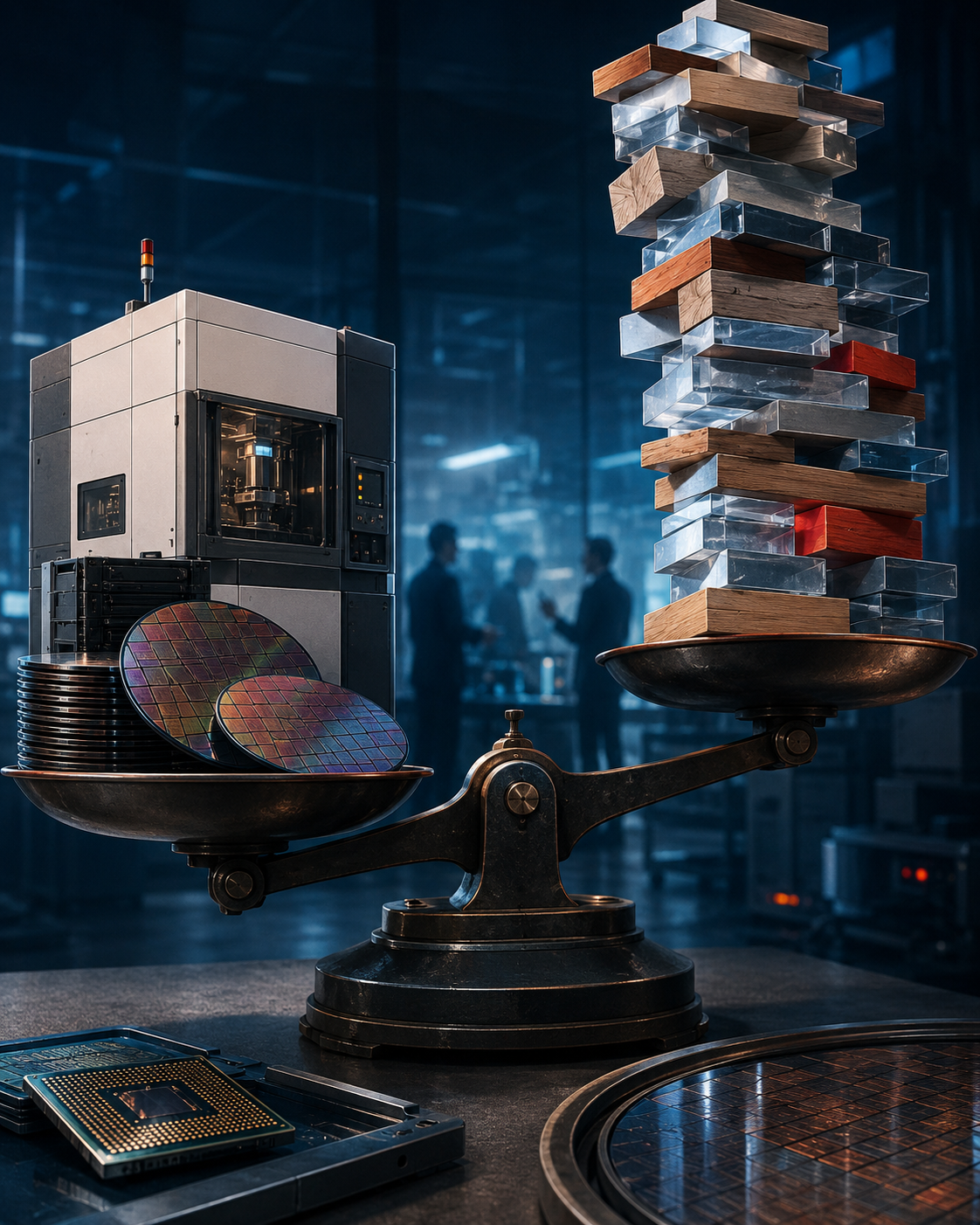
Although the company's earnings and outlook exceeded market expectations, Applied Materials' stock price fell more than 5% in after-hours trading immediately following the announcement. It also dropped about 4% during regular trading hours the following day.
The reason is not so much that performance has been poor, but rather Because expectations were already very highWow. According to Reuters, the company's stock price had more than doubled by 2026 ahead of the earnings announcement, and its competitors, Lam Research and KLA, had also posted strong results.
It appears that investors were expecting not just results that beat expectations, but growth that outpaces competitors or further margin expansion. The fact that demand for AI is strong and the extent to which those expectations are currently reflected in the stock price are two separate issues.
This case serves as an important warning when considering industry trends. Just because the advanced packaging market is growing doesn’t mean that the earnings and stock prices of all related companies will rise at the same rate. It’s essential to also consider the intensity of competition, equipment supply capacity, customer concentration, and expectations that have already been factored into the market.
| Shifts in AI Infrastructure Investment
Recently, the AI infrastructure market has been rapidly expanding beyond the competition for GPUs to include networks, power, storage, and data center operations. Applied Materials’ latest earnings report serves as strong evidence that this trend is now extending to semiconductor manufacturing processes and packaging equipment.
|
Supply Chain Stages |
Changes Driven by Demand for AI |
|
AI Chip Design |
The need for higher computational performance and power efficiency |
|
State-of-the-art foundry |
Expanding Investment to Improve Production Volume and Yield in Advanced Processes |
|
DRAM·HBM |
Increased bandwidth and number of layers require new production capacity |
|
Advanced Packaging |
Expansion of Chiplet and HBM Interconnects and 2.5D and 3D Stacking Processes |
|
Semiconductor Equipment |
Rising Demand for Deposition, Etching, Planarization, and Inspection Equipment |
|
Data Center |
Building and Scaling the Deployment of a Fully Developed AI System |
If a bottleneck occurs at even one stage in this process, it could delay the delivery of the final AI system. That’s why Big Tech and semiconductor companies are monitoring not only GPUs but also HBM supply, packaging production capacity, and equipment delivery schedules.
Applied Materials' growth outlook is just as strong as the scale of AI investment The ability to reliably mass-produce complex chipsThat means it has become important.
| Three Things to Check Going Forward
First, will revenue from advanced packaging actually grow by more than 70%? While the upward revision to the forecast is a strong signal, we need to confirm whether equipment deliveries and revenue recognition went according to plan in the year-end earnings report.
Second, the question is whether investment in DRAM and cutting-edge foundry logic will continue through 2027. Demand for equipment will only broaden if the transition to next-generation DRAM and high-performance logic processes proceeds alongside the expansion of HBM capacity.
Third, we need to see whether the discussions with customers through 2030 translate into actual long-term orders and an expansion of production capacity. Since claims of improved long-term visibility are different from confirmed revenue, we’ll need to continue monitoring explanations regarding orders and supply capacity in future earnings reports.
The key takeaway from this announcement isn't just Applied Materials' strong earnings. The competition in AI semiconductors has now moved beyond chip design performance metrics Supply Chain Competition Spanning HBM, Advanced Packaging, Manufacturing Equipment, and Yield Managementin that it is changing into...
If NVIDIA’s GPUs represent the front end of the AI industry, Applied Materials’ earnings show what kind of investment is taking place behind the scenes to actually produce more of those GPUs and HBM. To understand the AI infrastructure market, we now need to look not only at the finished chips but also at the equipment used to manufacture and connect them.
There's no new IT news today. News from the 14thI brought it!
Thank you for reading ^_^
References
Applied Materials — Applied Materials Announces Third Quarter 2026 Results
Applied Materials — Third Quarter Fiscal 2026 Earnings Presentation
Applied Materials — Powering DRAM and Advanced Packaging Inflections
Reuters — Applied Materials forecasts revenue above estimates, shares fall on high expectations
Reuters — Applied Materials slips as investors seek faster growth after stellar run
#AppliedMaterials #AppliedMaterials #AI Semiconductors #Advanced Packaging #HBM #DRAM #Semiconductor Equipment #Foundry #AI Infrastructure