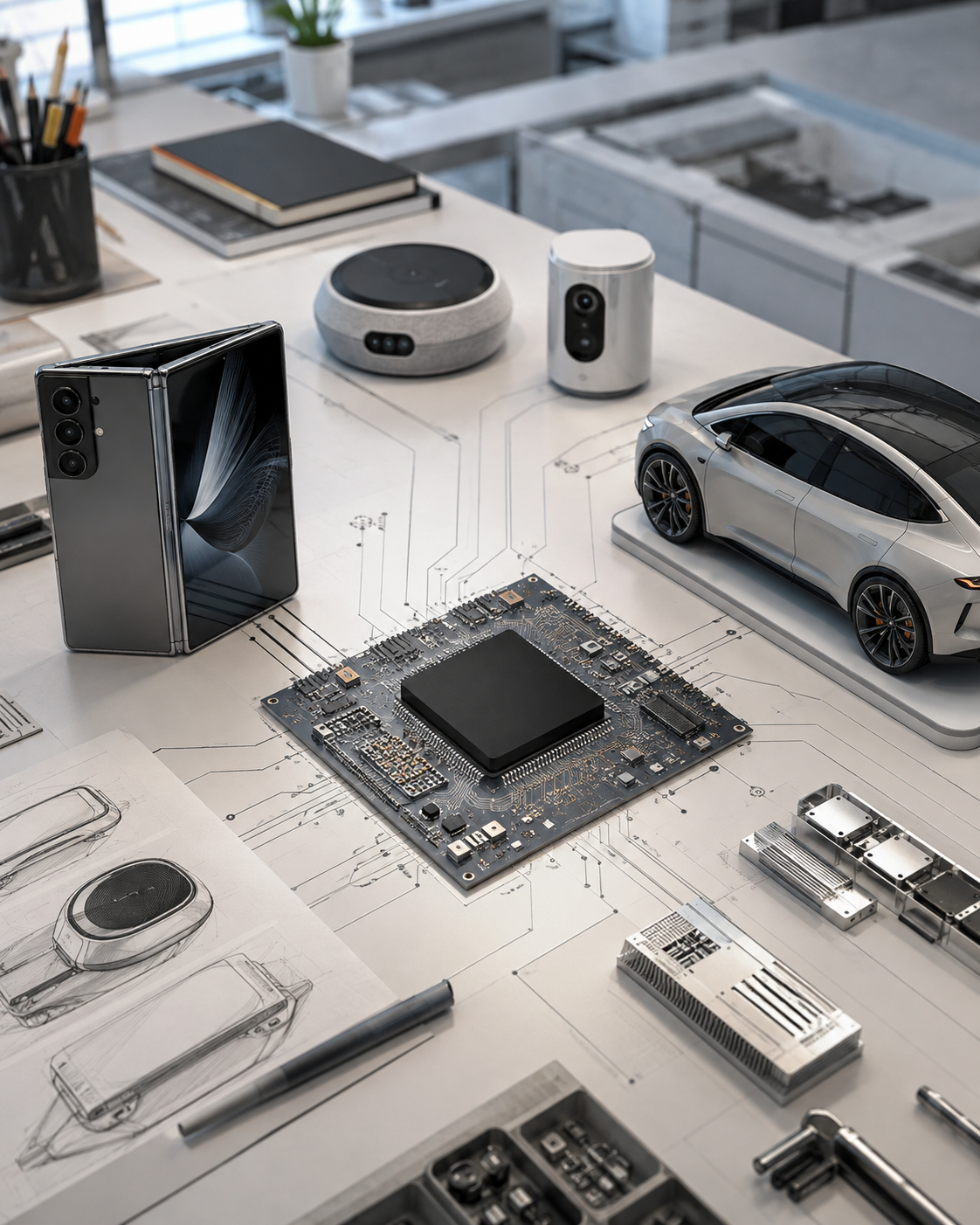
Smartphone manufacturer Xiaomi has significantly expanded the scope of its semiconductor strategy. New Smartphone Processor Xring O3Following the unveiling and the start of mass production, AI Semiconductors for Consumer Devices Xring O100and Semiconductors for Autonomous Driving Xring D100They announced that development has also been completed.
What’s important about this announcement isn’t just that a new smartphone chip has been added. It’s that Xiaomi has made it clear it intends to design the core computing units for its products—ranging from mobile devices like smartphones and tablets to AI-enabled home appliances and electric vehicles—in-house.
| Xring O3: Taking Its In-House Smartphone Chip to the Next Generation
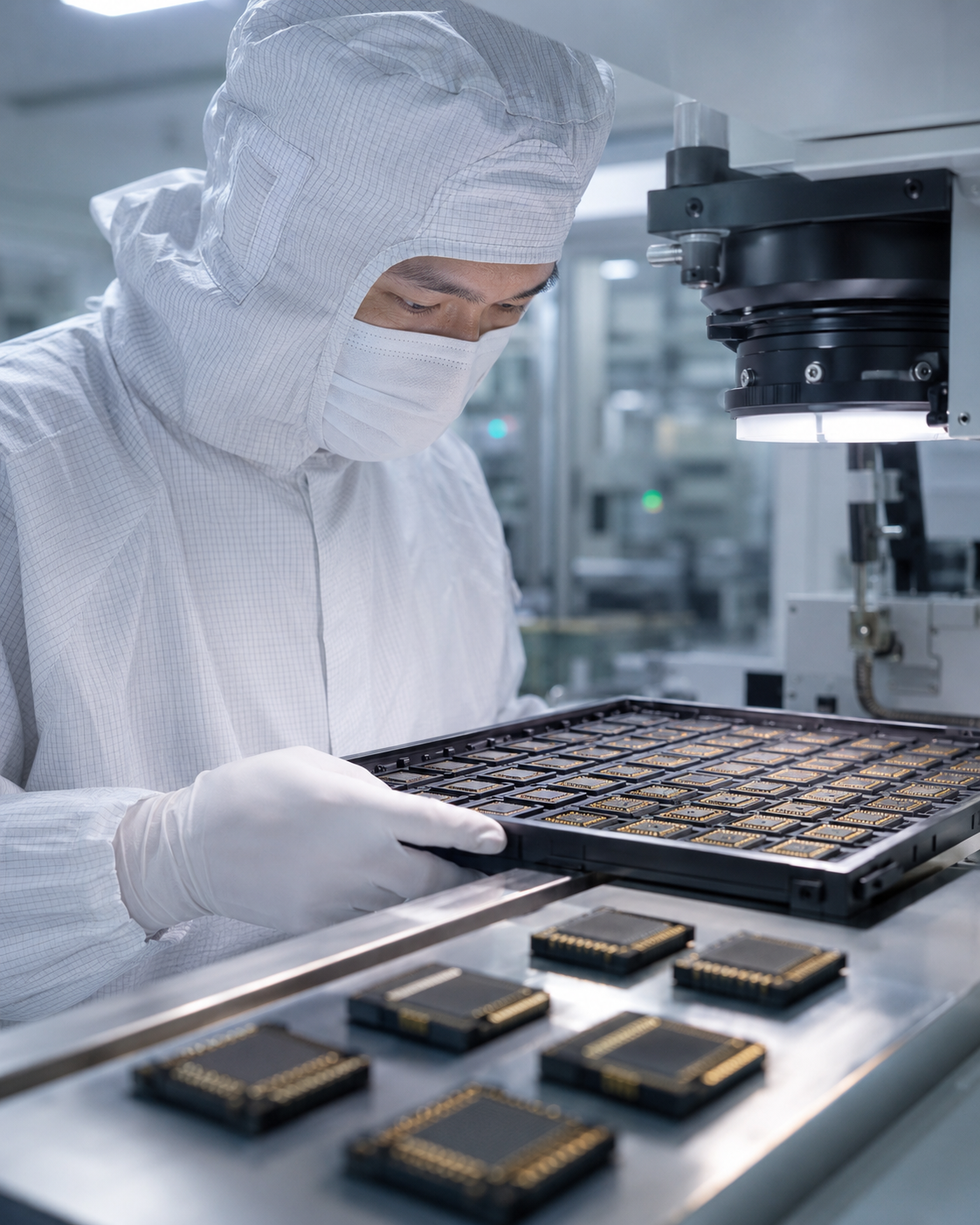
The Xring O3 is the successor to the Xring O1, a system-on-chip for smartphones unveiled in 2025. A system-on-chip is A component that integrates various functions essential to a smartphone—such as the CPU, GPU, AI processing, and camera image processing—into a single semiconductor chipWow.
Xiaomi says the O3 is Already in mass productionThe company announced that it had entered the market. Reuters reported, citing sources, that TSMC is manufacturing the chip using its 3-nanometer process and that it is likely to be featured in Xiaomi’s next-generation flagship foldable smartphone. However, it is important to note that the manufacturing process, the specific product, and the shipment target—reported to be between 200,000 and 300,000 units—have not been officially confirmed by Xiaomi or TSMC but are based on information provided by Reuters sources.
The significance of the O3 lies in the fact that Xiaomi did not treat its in-house smartphone chip as a one-off experiment. Cumulative shipments of smartphones, tablets, and watches equipped with the previous-generation O1 chip have exceeded 1 million units, but according to a Reuters source, smartphones accounted for only about 150,000 of those. While this is not yet on a scale to fully replace Qualcomm or MediaTek chips, it shows that Xiaomi is gaining design and mass-production experience through actual products and moving on to the next generation. You could call it a signal.
| O100

The Xring O100 is manufactured using a 6-nanometer process NPUHey. An NPU is a semiconductor specialized in processing AI computations quickly and power-efficiently, and the O100 is Xiaomi's AI model. MiMoIt is designed to be supported by consumer electronics devices.
Until now, AI features on smartphones have often relied on a combination of computations processed on the device itself and those sent to cloud servers. As the performance and efficiency of dedicated NPUs improve, Opportunities to process frequently used tasks—such as photo editing, audio processing, translation, and personalization features—more quickly on the device itselfIt's growing. It can be used even when the network connection is unstable, and it can also help reduce the amount of data transferred to external servers.
However, it has not yet been disclosed to what extent the O100 can run which MiMo models and features. Therefore, at this point, rather than concluding that it “runs an entire large AI model on the device,” it is more accurate to understand it as a dedicated semiconductor designed to accelerate the AI features included in Xiaomi products.
| D100, Business Expansion Strategy
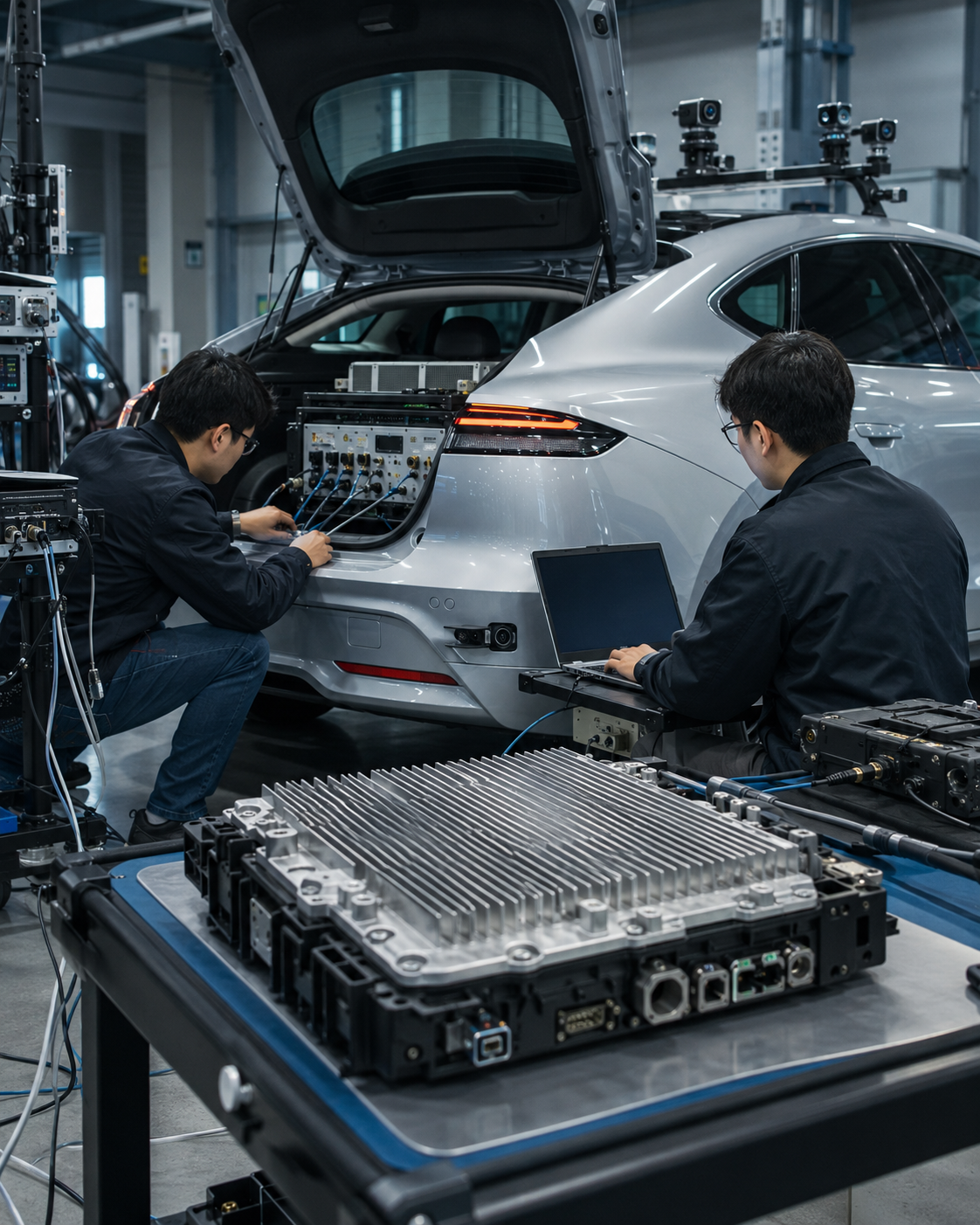
The Xring D100 is designed using a 3-nanometer process Semiconductors for Autonomous DrivingHey. Just like the O100, development is complete, and we're aiming to implement it in actual products by 2027.
Automotive semiconductors must process information from sensors—such as cameras and radar—in real time. It’s important to validate them not only for performance but also for power efficiency, reliability, and long service life. Since their development cycles are longer than those of smartphone chips and safety standards are stricter, the completion of development does not necessarily mean immediate large-scale commercialization.
Still, the fact that Xiaomi has designed its own chips for cars—following its smartphones and AI devices—is significant. Xiaomi is already positioning electric vehicles as a new growth engine. If the D100 is implemented as planned, it will provide greater flexibility to integrate vehicle hardware, the operating system, AI features, and computing chips within a single product strategy.
| Why We Want to Reduce Our Reliance on Qualcomm and MediaTek

The main reason smartphone manufacturers develop their own chips isn't simply to save on component costs. It's also about chip performance, power management, camera processing, and AI capabilities. The fact that it can be designed in conjunction with the company's own operating system and devicesThis is more important.
Apple is integrating its devices and software around its own A and M series chips, and Samsung Electronics and Huawei also have their own semiconductor design capabilities. If Xiaomi expands its Xring product line, it will be less dependent on the release schedules of external vendors and able to implement features unique to its own products more quickly.
In particular, the O3, O100, and D100 are designed for smartphones, consumer AI devices, and automobiles, respectively. This shows that Xiaomi is moving beyond simply manufacturing chips for individual products and is instead building a semiconductor portfolio that connects its various business segments.
| In-House Design and Semiconductor Independence
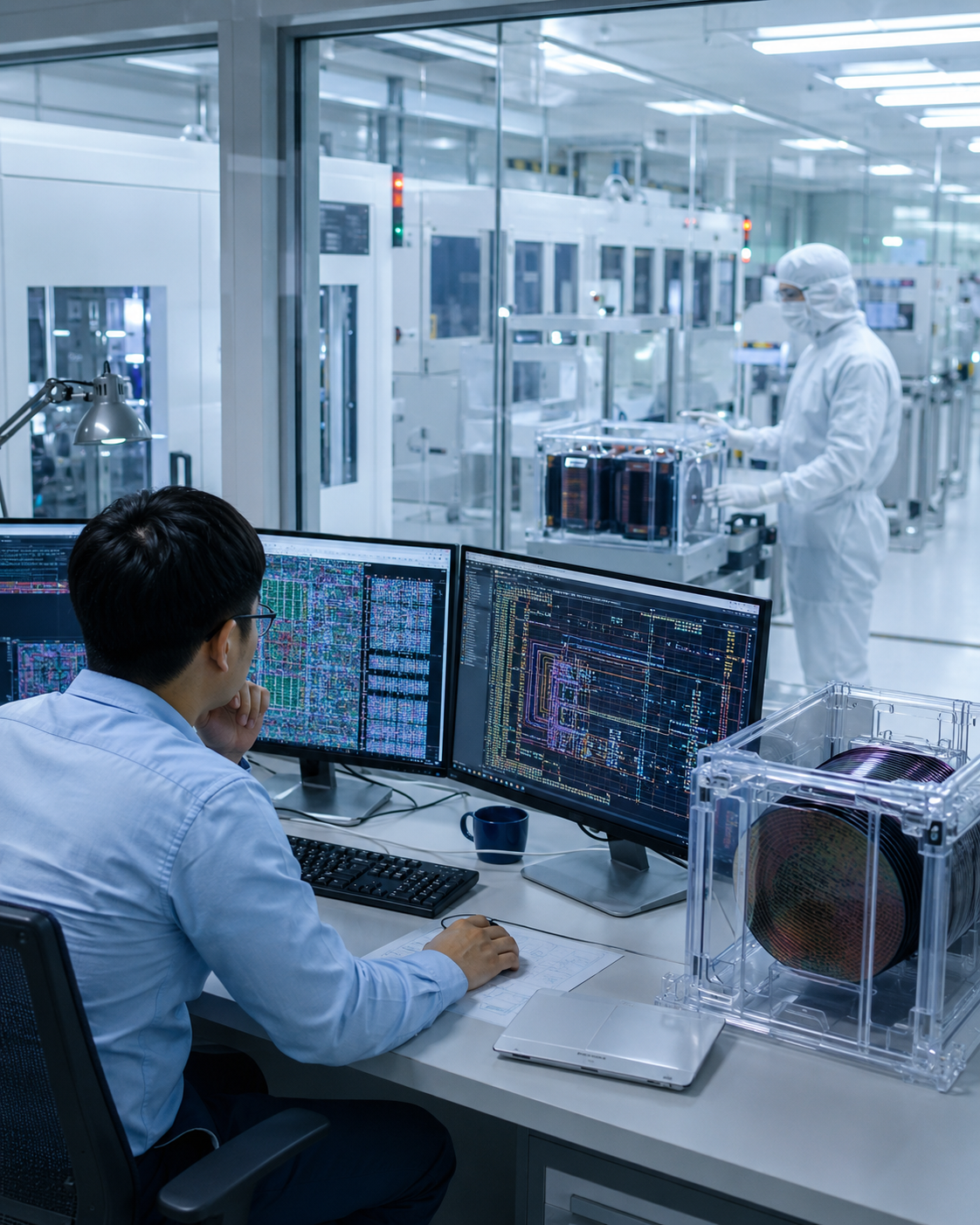
Even if Xiaomi designs its own chips, it doesn't handle the entire production process on its own. Xiaomi announced that it has entrusted the production of the O100 and D100 to TSMC, and Reuters, citing sources, reported that the O3 will also be produced using TSMC's 3-nanometer process. I conveyed that. While Xring can help reduce our reliance on Qualcomm and MediaTek for design and procurement to some extent, we still depend on external foundries and the global supply chain for cutting-edge microprocess manufacturing.
Developing in-house chips involves high development costs and significant risk. Even if the design is successful, companies must ensure sufficient production volume and yield, and verify heat dissipation, battery life, communication performance, and software compatibility in actual products. For the D100 automotive chip, this also requires long-term reliability and safety verification.
Therefore, it is too early to interpret this announcement as meaning that “Xiaomi will soon replace all external chips.” At present, it can be viewed as a process in which the company is gradually expanding the use of its own chips, starting with its core products, to secure control over its technology and supply chain.
| The more challenging the smartphone market becomes,

Xiaomi's investment in chips isn't just an aggressive experiment carried out only when the smartphone market is growing. According to data cited by Reuters, Xiaomi’s smartphone shipments in the first half of 2026 totaled 65 million units, down from 84 million units in the same period of 2025. Rising prices for memory and key components are also weighing on profitability.
In this kind of environment, Whether in-house chips lead to improved product competitiveness and a better cost structure...will become even more important. If the O3 enhances the performance and differentiation of premium smartphones, the O100 provides common AI capabilities across various consumer devices, and the D100 establishes itself as the core computing platform for electric vehicles, Xiaomi will be able to tie its entire product lineup together into a single technology ecosystem.
Conversely, if production volumes are low or performance and reliability fall short of expectations, the massive development costs could become a burden. Ultimately, the success of the Xring strategy depends not on the number of processes or the chip launches themselves, but on how many products the three chips are reliably integrated into after 2027 and whether they deliver a user experience unique to Xiaomi.
| Xiaomi's Business Transition
Although the Xring O3, O100, and D100 serve different purposes, they share the same underlying direction. This reflects Xiaomi’s strategy to design the core technologies for its smartphones, AI devices, and electric vehicles in-house, rather than relying solely on a combination of external components.
O3 has already entered mass production, while O100 and D100 are slated for implementation in 2027. Although the actual performance, the products in which they will be used, and the scale of production still need to be confirmed, this announcement alone makes it clear that Xiaomi’s in-house chip strategy has expanded beyond a single smartphone model to encompass the company’s core businesses as a whole.
There are three key points to watch moving forward: whether the O3 can demonstrate competitiveness in the premium smartphone market; how efficiently the O100 handles MiMo-based functions within the device; and whether the D100 passes rigorous automotive validation and is implemented in actual vehicles. These three outcomes will determine whether Xiaomi can establish itself as a technology company that directly integrates hardware, AI, and automobiles—moving beyond being merely a device manufacturer.
#Xiaomi #Xiaomi #Xring #XringO3 #XringO100 #XringD100 #In-House Chip #Semiconductors #TSMC #On-Device AI #MiMo #Self-Driving #Electric Vehicles #Smartphone Chips #Semiconductor Infrastructure