
Snap has announced a new partnership with Salesforce, NVIDIA, and Amazon Web Services to leverage its augmented reality glasses, SPECS, for business use. The idea is to display information and guidance directly in the user’s field of view during tasks—such as those in retail stores, factories, and field service—where it’s difficult to sit in front of a computer.
A method was proposed that uses Salesforce’s Agentforce to retrieve company data and update workflows, and Amazon Quick on AWS to check inventory and location information via voice commands. An agent based on NVIDIA’s XR AI stack is tasked with understanding the worker’s surroundings, retrieving relevant company information, and providing real-time guidance.
However, this announcement does not mean that all enterprise features have been fully developed and widely deployed. Snap also described this as an early-stage partnership and stated that it is working with relevant companies to establish capabilities for large-scale device management and security controls.
| From Consumer AR Glasses to Business Devices

SPECS are standalone AR glasses that were unveiled in June 2026. The U.S. launch price was announced as $2,195, and Snap stated that it plans to begin shipping in the U.S., the U.K., and France in the fall of 2026.
The core feature of this product is that it displays digital information over the real-world environment without requiring you to constantly look at your smartphone screen. However, given the high price and the fact that the AR user experience is still in its early stages, it may not be easy for the technology to spread rapidly in the consumer market alone.
Enterprise-level expansion is It's a strategy aimed at identifying product value in work environments where workers need to keep their hands free. The main focus is on tasks that require both information retrieval and immediate action, such as troubleshooting, checking store inventory, and providing remote support.
| Connect Workflows with Salesforce Agentforce

Salesforce plans to integrate Agentforce with SPECS. A use case was demonstrated in which employees can identify the equipment or products they are viewing, create service tickets, find relevant information, and update existing workflows.
For example, field staff can check customer or equipment information through their glasses—without having to switch to a separate laptop—and then record the necessary actions. Using eye tracking and voice commands as input methods has the potential to reduce transition time during tasks that require the use of hands.
However, since the camera's field of view is linked to corporate data, access permissions and record management are crucial. We need to define the scope of information each employee can access and establish a system for manual verification to prevent incorrect identifications or automatic updates.
| The Roles Played by AWS and NVIDIA

Snap is working with AWS to integrate SPECS into Amazon Quick, an AI assistant for business use. An example was presented in which a store employee asked about product locations and inventory via voice command and received an answer within their field of view.
NVIDIA is pursuing a collaboration to integrate agents built on its XR AI stack into SPECS. The glasses understand the worker's surroundings, find relevant company data, and provide real-time guidance.
The key to both functions is the process of accurately recognizing on-site information and retrieving the correct answers from corporate data. Future enterprise testing will need to confirm whether it operates reliably under real-world conditions, including noise, lighting, and network conditions.
| Remote Support and Spatial Work Screens

"Tandem," a product from the software company Trifork, is a concept that allows field technicians to share their view with remote experts, who can then help identify parts or add guidance markers to the technician's field of view. Technicians can receive instructions while keeping both hands free.
Hololight aims to use video streaming to turn SPECS into a spatial workstation. A method for viewing documents, tools, and 3D models on-site has been proposed.
While this feature can be useful for maintaining complex equipment and for training, it requires fine-tuning of latency, video quality, and the amount of information that obscures the field of view. Comfort during extended wear and battery life are also key factors for actual field deployment.
| The Key to Enterprise Adoption Is Management and Security

To issue glasses to multiple employees, you'll need features such as mobile device management, security policies, loss response, and remote wipe capabilities. Snap announced that it is building the features needed for large-scale deployments in collaboration with device management providers.
Wearables with cameras and microphones that are always on can also raise privacy concerns for employees and customers. The methods for notifying people that recording is in progress, the scope of video storage, and the criteria for processing facial and work-related data must be clearly defined.
We also need to define the scope of liability so that workers do not simply follow the AI's instructions when they are incorrect. In particular, in manufacturing and repair settings, safety procedures and human verification must take precedence over convenience.
| Enterprise Strategies That Still Need to Be Tested
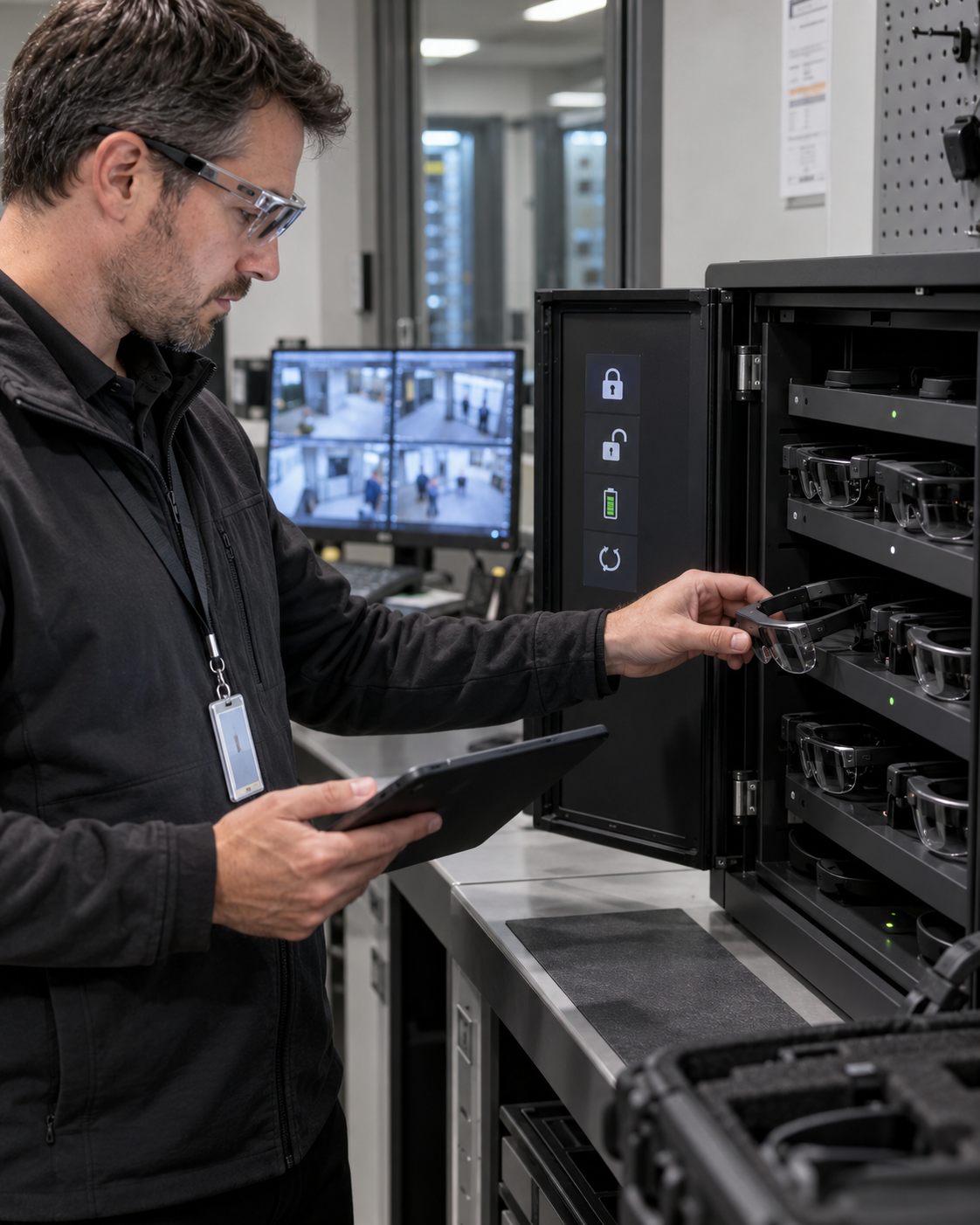
This announcement confirms that Snap is collaborating with Salesforce, AWS, NVIDIA, Trifork, and Hololight to develop enterprise use cases. The financial terms of the partnerships were not disclosed, nor was a release schedule for all features announced.
Field testing at companies is needed to determine whether SPECS actually reduces actual work hours and minimizes errors. Large-scale adoption can only occur if issues such as high device prices, battery life, comfort, network quality, and privacy are all addressed simultaneously.
Although the announcement demonstrated the potential for consumer AR products to become on-site AI interfaces for businesses, the ecosystem is still in its early stages. Going forward, we need to verify which companies have actually implemented the system, the extent of cost savings, and the level of sophistication of its security management features.
References
Tags
#Snap #SPECS #AR Glasses #Augmented Reality #Salesforce #Agentforce #NVIDIA #AWS #AmazonQuick #Wearable AI #Enterprise AI #On-Site Service #IT Applications