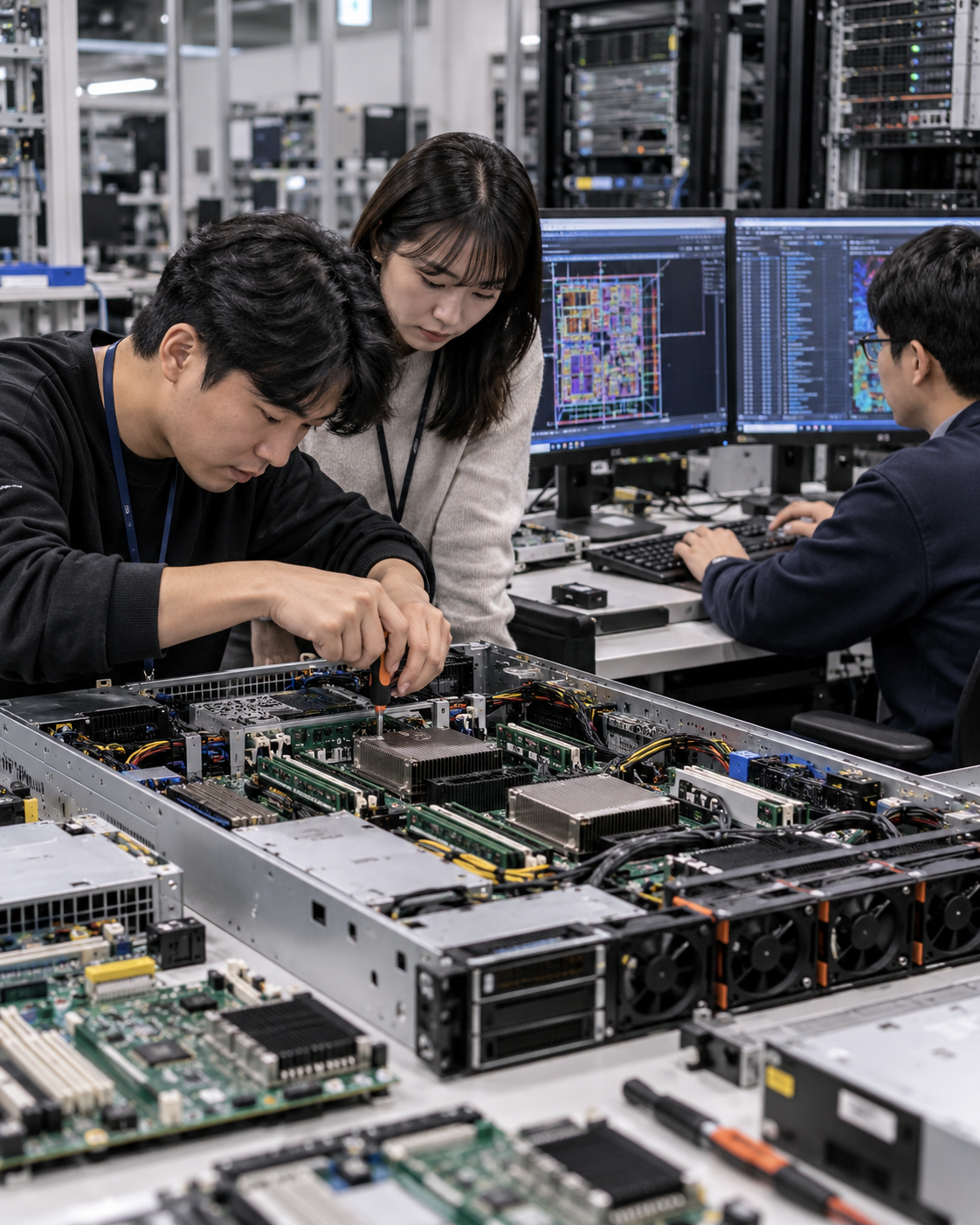
Amazon Web Services has signed a multi-year contract worth over $1 billion with Synopsys to use custom semiconductor design IP for the long term. As AWS continues to increase the proportion of chips it develops in-house—such as the Graviton CPU and Trainium AI accelerator—this agreement represents a deeper partnership with an external specialist provider for the core design blocks required for these chips.
This agreement goes beyond a simple software purchase. Synopsys will provide AWS with semiconductor IP optimized for specific applications, and the two companies have agreed to collaborate on AI-based design automation and the use of cloud infrastructure. This trend—in which cloud companies are evolving from mere providers of servers to companies that design chip architectures themselves—is becoming increasingly clear.
| The Truth Behind the Contract Worth Over $1 Billion

The agreement announced by Synopsys and Amazon is a multi-year silicon IP deal worth over $1 billion. Here, “IP” refers not to a finished chip, but to verified design blocks—such as CPU cores, interfaces, and memory interfaces—that are incorporated into semiconductors. Chip companies can license this IP to reduce development time and minimize verification risks.
Synopsys cited this contract as a prime example of the expansion of its application-optimized IP business. Rather than simply selling generic blocks, the company aims to strengthen a business model that optimizes designs for specific customers’ chips and applications and ties royalties to production volume.
| Why AWS Makes Its Own Chips

AWS has already been expanding its portfolio of proprietary silicon, including the Graviton CPU, Trainium AI accelerator, and Inferentia inference chip. Because cloud providers operate servers on a massive scale, even a slight improvement in chip performance or power efficiency can make a significant difference in overall data center costs. This is why there is a strong incentive to design chips tailored to specific workloads rather than relying solely on off-the-shelf chips from third-party vendors.
In AI services, in particular, the cost of accelerators directly affects cloud operating costs. By expanding its use of in-house chips like Trainium, AWS can offer customers a wider range of price and performance options while reducing its reliance on specific third-party GPU vendors.
| How Synopsys IP Reduces Development Time

If you design a cutting-edge chip from scratch—every single block—the scope of what needs to be verified becomes too vast. By leveraging IP blocks that have already been validated in silicon, development teams can focus more on key areas of differentiation. There is no need to repeatedly redesign interfaces or standard functions from scratch, and we can receive support from specialized suppliers for verification tailored to process changes.
For companies like AWS that need to rapidly release multiple generations of their own chips, the development cycle is critical. Entering into a long-term contract with Synopsys offers the advantage of establishing a consistent IP supply and a joint optimization framework, rather than having to negotiate separately for each project.
In addition, in-house chips offer the advantage of allowing for the simultaneous optimization of hardware and cloud software. When a single company coordinates the operating system, compilers, network, and accelerators, it can fine-tune the power efficiency and throughput of a specific service.
| Synopsys Shifts to a “License + Royalty” Model

Through this agreement, Synopsys aims to expand its silicon IP business using a model that combines licensing and royalties. Initially, the company will receive payment for the use of design IP, and as actual production volumes increase, it will generate additional revenue. Since the structure ensures that suppliers also profit as their customers' chips become more successful, there is a strong incentive for long-term collaboration.
Reuters reported that Synopsys' IP licensing revenue for the most recent fiscal year totaled $1.75 billion. A single multi-year contract worth over $1 billion can be seen as a significant indicator of the company's strategy to expand its IP business.
| A collaboration on AI-based EDA was also included in the agreement

The two companies have agreed to expand their collaboration not only on silicon IP but also on AI-based engineering software. Synopsys plans to utilize AWS’s computing and storage resources, as well as Amazon Bedrock, in its product development, and to optimize its own software to better suit the Trainium and Graviton environments.
This structure is interesting. AWS leverages Synopsys’ IP and design technology, while Synopsys uses AWS’s cloud and AI infrastructure to develop its products. In essence, the relationship between the supplier and the customer is shifting from a one-way purchasing arrangement to an interdependent one in which each uses the other’s platform.
| This should be viewed as “expanding options” rather than a replacement for NVIDIA
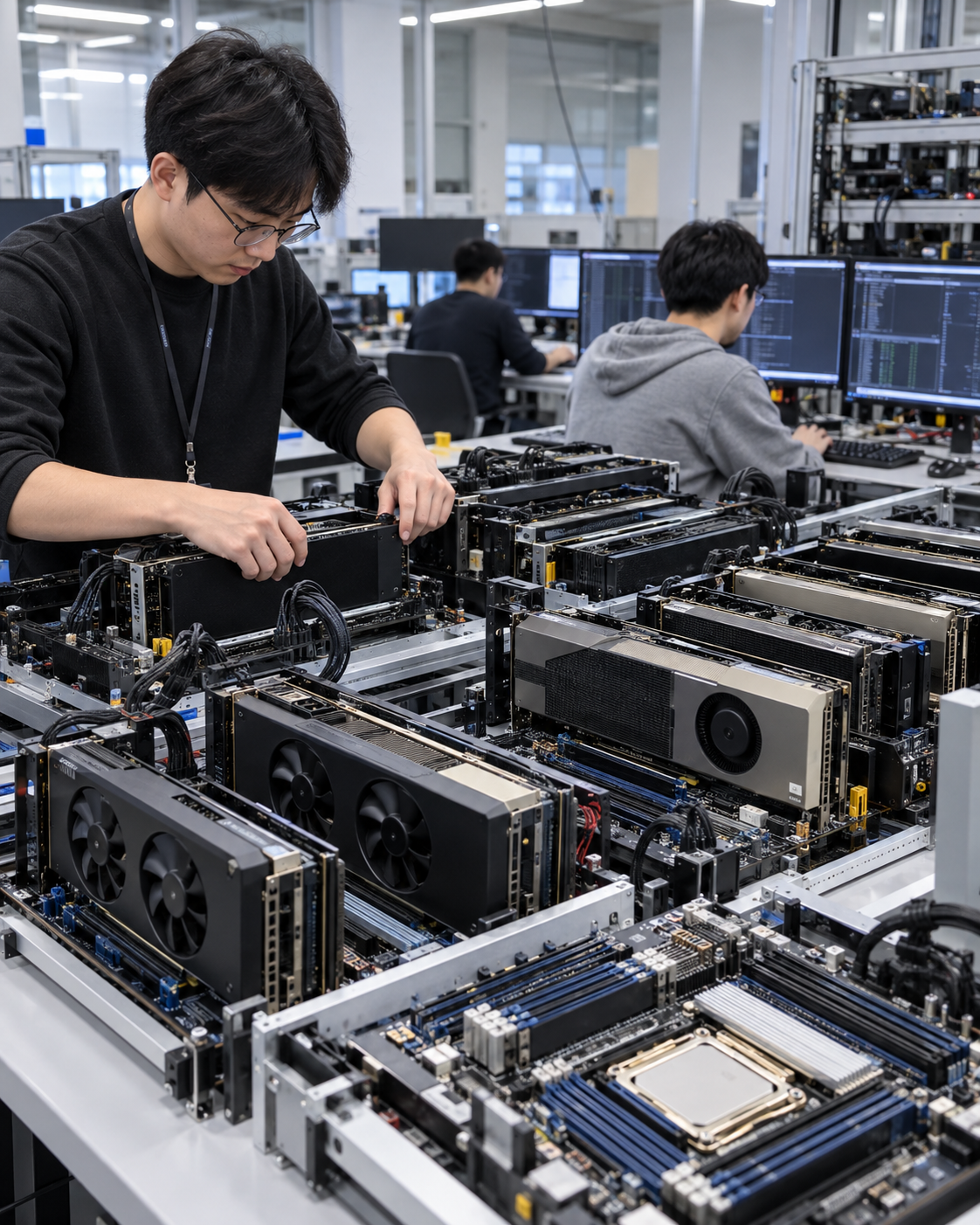
It would be an overstatement to interpret AWS’s expansion of its in-house chips as a strategy to completely replace NVIDIA right away. Many AI customers will continue to need NVIDIA GPUs due to the CUDA ecosystem and compatibility with existing software. AWS is also offering a variety of third-party accelerators while continuing to develop its own Trainium in parallel.
A key change is that customers now have a wider range of accelerators to choose from depending on their workloads. Depending on the nature of model training or inference, combining GPUs, Trainium, and CPUs can reduce costs, and AWS has greater control over these options within its own platform.
| Competition in custom silicon is spreading across the entire cloud sector

Major cloud companies—such as Google with its TPUs, Microsoft with its Maia series, and AWS with its Trainium and Graviton chips—are expanding their investments in custom chips. This is because, as data centers grow in scale, the economic benefits of designing silicon tailored to the service architecture become greater than those of using off-the-shelf general-purpose hardware.
This trend also presents opportunities for EDA and IP companies. Since not every cloud company needs to develop every aspect of semiconductor design in-house, proven design assets and automation tools from specialized companies like Synopsys may become even more important.
Ultimately, the focus of competition may shift from which chip is absolutely the fastest to which combination best balances the overall cost of cloud services and ease of development.
| What to Watch for Going Forward: Actual Chip Generations and Royalty Effects
The currently disclosed contract does not specify which IP is included in any particular generation of Graviton or Trainium. Therefore, the actual scope of the agreement, future production volumes, and the royalty structure are more important in the long run than the total contract value of $1 billion.
It will be interesting to see how quickly AWS scales up its use of its own chips and whether Synopsys expands its application-optimized IP business to other major customers. This agreement demonstrates that the competition in AI infrastructure is deepening into a race for vertical integration—one that encompasses not just GPU purchases, but also CPUs, accelerators, design IP, and EDA software.
References
Tags
#AWS #Amazon #Synopsys #Trainium #Graviton #Custom Chip #Semiconductor IP #AI Accelerator #Cloud #Data Center #EDA #AI Infrastructure