When temperatures drop significantly in winter, the true performance of heating appliances becomes apparent.
In particular, those that draw heat from the outdoor air Air-Source Heat Pumpis highly efficient under normal conditions, but, The lower the outside temperature, the harder it is to maintain heating performance and efficiencyYeah. This is an issue that must be resolved if we want to expand the adoption of heat pumps in regions where severe cold lasts for long periods, such as North America and Northern Europe.
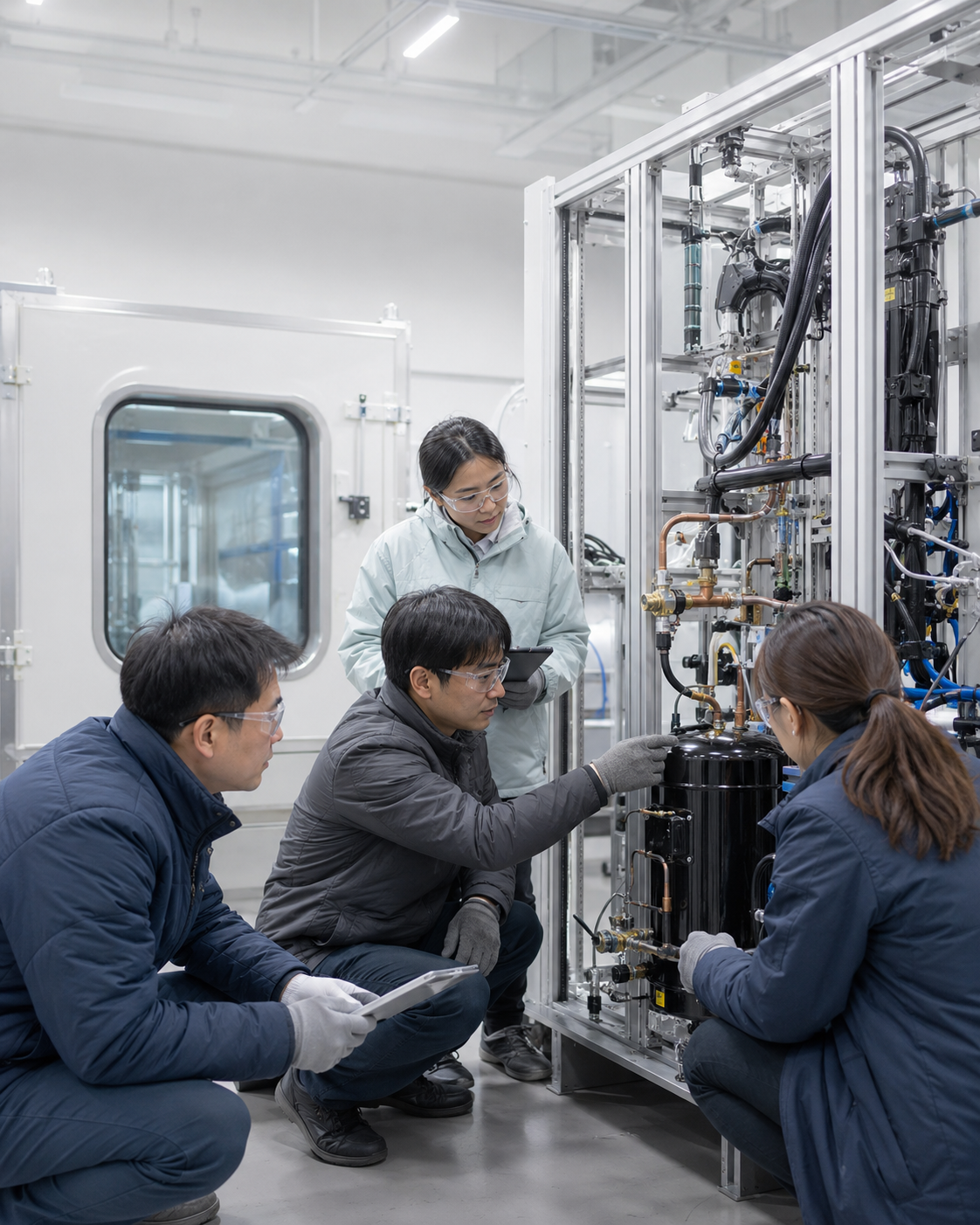
To tackle this challenge, Samsung Electronics has launched a joint research project with Oak Ridge National Laboratory, part of the U.S. Department of Energy. The goal is to develop a system that can reliably provide heating and hot water at temperatures below -30°C using a single compressor. Next-Generation Vapor Compression TechnologyThat's what we're implementing.
The research will continue through the first half of 2027, after which the system's performance and reliability will be tested in the harsh real-world environment of Fairbanks, Alaska.
| What will Samsung Electronics and ORNL develop?
The title of the joint research project announced by Samsung Electronics on August 9, 2026, is Development of Vapor-Compression Heating Systems and Multi-Solution Systems for Cold RegionsWow.
To summarize the key points:
|
Category |
Content |
|
Collaborating Research Institutions |
Samsung Electronics and Oak Ridge National Laboratory (ORNL) |
|
Development Goals |
Delivers efficient and reliable heating performance even at temperatures below -30°C |
|
System Architecture |
Single-compressor-based |
|
Core Technologies |
Rotary Scroll Compressor · Flash Injection |
|
Features Provided |
Heating, Cooling, and Hot Water |
|
Research Schedule |
By the first half of 2027 |
|
Field Test Site |
Field Test Lab at the National Laboratory of Rocky Mountain (NLR) in Fairbanks, Alaska, U.S. |
|
Future Products |
HVAC products, such as dual-purpose air conditioners for heating and cooling and heat pump boilers |
ORNL is a research institution under the U.S. Department of Energy that has long conducted research on building energy technologies such as vapor compression cycles, heat pumps, heating and cooling equipment, and water heaters. This collaboration aims to expand the operating range of systems designed for cold climates by combining Samsung Electronics’ product development expertise with ORNL’s experimental and analytical capabilities.
However, this announcement isn't about the release of a finished product. The stage at which development goals and research and demonstration plans have been disclosedWe need to look at that point separately.
| How does a heat pump heat a house?
Heat pumps operate differently from electric heaters, which generate heat directly using electricity. They are more like devices that circulate refrigerant to transfer heat from outside into the room.

The heating process can be broken down into four main steps.
The refrigerant inside the outdoor unit absorbs heat from the outside air Absorption
The compressor compresses the refrigerant to a high-temperature, high-pressure state Compression
The heated refrigerant transfers heat to the indoor air or water through the heat exchanger Delivery
As the refrigerant, having released heat, absorbs heat from the outside again, Circulation Repeat
If you reverse the flow of the refrigerant, you can cool the room in the summer by expelling the heat from inside. If you connect it to a water tank, it can even supply hot water for daily use, and you can create a system that handles heating, cooling, and hot water all in one.
The International Energy Agency explains that, on average during the heating season, a typical heat pump can deliver about 3 to 5 units of heat for every 1 unit of electricity consumed. However, actual efficiency varies depending on outdoor temperature, building insulation, installation method, and product performance.
| Why is -30 degrees a challenging condition?
Even cold air still contains thermal energy. The problem is that as the temperature drops, the amount of heat that can be extracted from the outside decreases, and the compressor must create a greater pressure difference to transfer that heat into the warm indoor space.
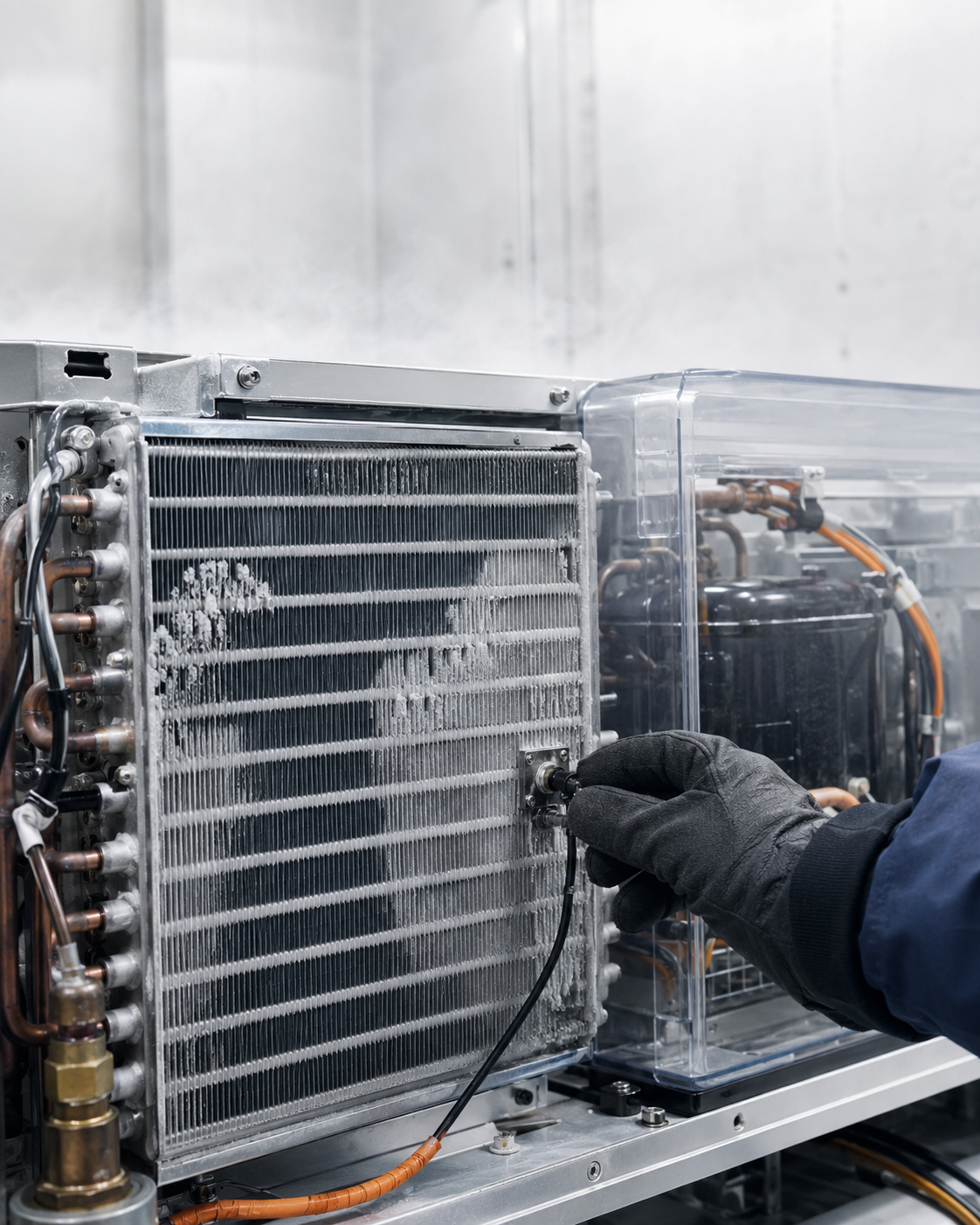
Several problems may arise simultaneously during this process.
Heating Capacityand energy efficiency may decrease.
The operating load on the compressor and Discharge Temperature...may increase.
In the outdoor heat exchanger, To the castleIf this happens, it can reduce airflow.
If the defrost cycle is repeated, the actual time spent heating may decrease.
The colder it gets, the more heating energy a building needs, but the output of conventional heat pumps can actually decrease. That’s why heat pumps designed for cold climates are not simply Whether it worksNot just looking, but Heating output, power consumption, and long-term stability at low temperaturesYou need to check that as well.
This is why Samsung Electronics has set a target of -30°C or lower. If stable performance can be ensured in this temperature range, it will go beyond typical winter conditions North AmericaWow Northern EuropeEven in regions with extreme cold Scope of ApplicationIt's because it allows you to expand [...].
| Rotary Scroll Compressor
The compressor is a key component in a heat pump that circulates the refrigerant and increases its pressure. If you think of it in terms of the human body, it’s like the heart that pumps the refrigerant.
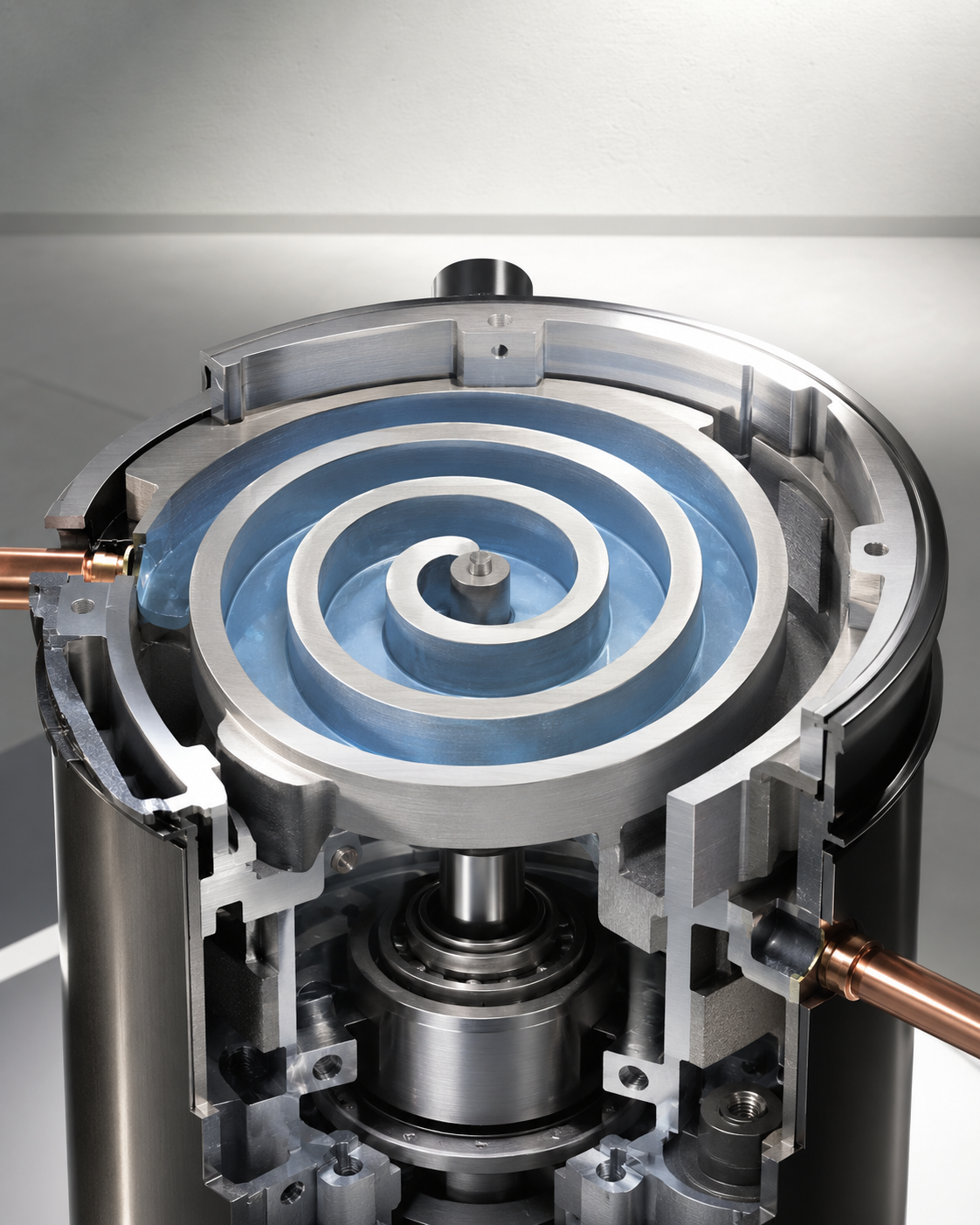
Samsung Electronics plans to apply a rotary scroll mechanism to this research. A structure in which two interlocking helical scrolls move together, gradually narrowing the space where the refrigerant is contained to compress itG.
Compared to a system where the piston moves back and forth in a straight line, this design allows for a more continuous flow of refrigerant and is more effective at reducing vibration and energy loss. Samsung Electronics is leveraging these characteristics to improve the compressor’s performance and stability, even in cold regions where prolonged heating is required.
In particular, the condition emphasized in this study is Single CompressorHey. If we can achieve cryogenic heating performance using a single compressor—rather than combining multiple compressors—it could help simplify the product’s structure and control system. However, we’ll need to see during the demonstration and commercialization phases just how much the actual product’s size, price, and maintainability will improve.
| Flash Injection
When the outdoor temperature drops significantly and the heat pump runs for an extended period, the load on the compressor and its temperature may increase. Flash injection is the technology used to maintain stable performance in such situations.
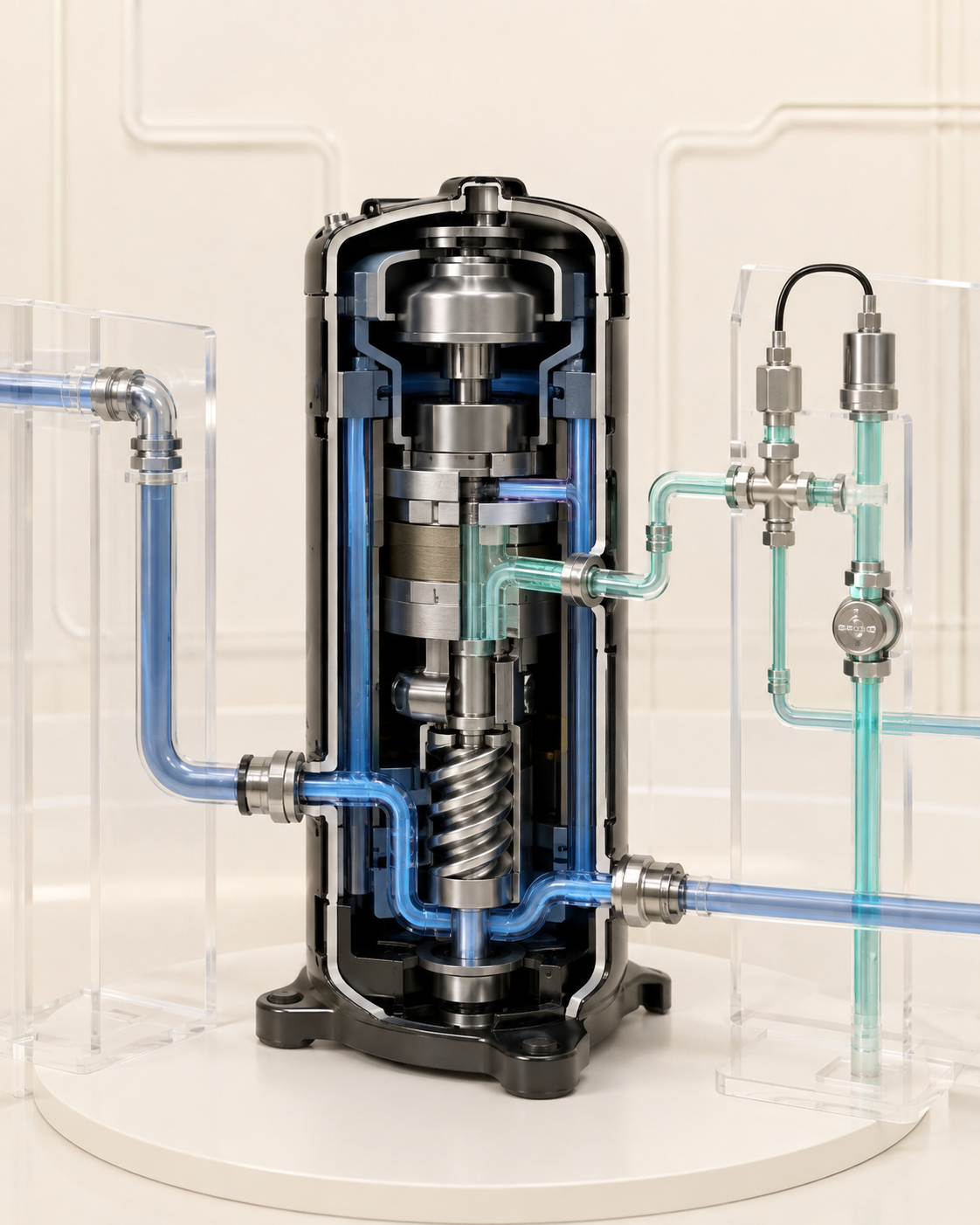
The method described by Samsung Electronics is A system that injects additional refrigerant into the compression process when the unit detects a decline in thermal efficiency during prolonged operationHey. The goal here is to prevent the compressor from overheating and to optimize refrigerant flow and heating performance.
Simply put, while the rotary scroll compressor is the basic mechanism that efficiently compresses the refrigerant, flash injection can be viewed as an auxiliary technology that helps the compressor maintain stable operation under extreme cold conditions and during prolonged operation.
Ultimately, the combination of these two technologies is key. It’s not just about increasing the mechanical efficiency of the compressor; it’s about using sensors and refrigerant control together to Responding to actual weather changesThat's because that's the way I want to do it.
| Testing Whether It Can Withstand a Real Alaskan Winter
The temperature set in the lab differs from that in an actual residential environment. This is because conditions that affect product performance—such as wind, snow, humidity, a building’s heating load, and users’ hot water consumption—are constantly changing.

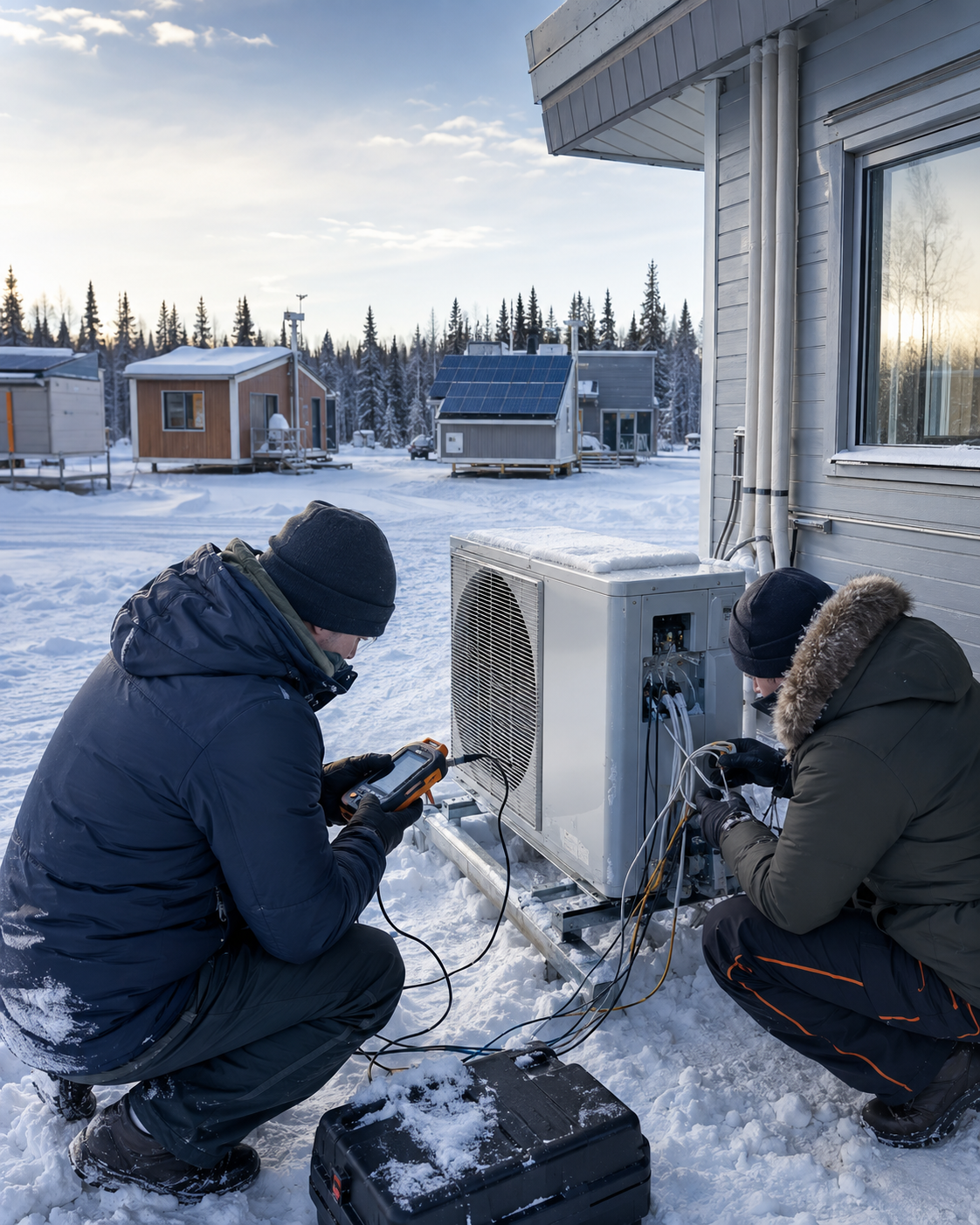
Samsung Electronics plans to conduct research with ORNL through the first half of 2027 and then demonstrate the new technology at the field test lab of the Rocky Mountain National Laboratory in Fairbanks, Alaska.
The Alaska campus of the Rocky Mountain National Laboratory is conducting research on building technologies for extreme climates and air-source heat pumps. According to official data, local temperatures drop to 40°F below zero—approximately 40°C below zero Celsius—and the facility features test environments that utilize climate chambers replicating these conditions as well as actual buildings.
In the pilot study, we plan to comprehensively examine the following items.
Does it maintain the required heating output at extremely low temperatures?
What is the level of heating efficiency relative to power consumption?
Whether the compressor and system remain stable even during long drives
Does it provide a stable supply of hot water along with heating?
Does it adapt to recurring changes in temperature and usage in a real-world residential environment?
The reason this step is important is that you can’t judge a product’s quality based on just its minimum operating temperature. There’s a world of difference between a product that turns on briefly at very low temperatures and one that efficiently provides the necessary heat throughout the winter.
| Why Heat Pumps Have Become a Global Technology Competition
Countries around the world are switching from fossil fuels to electricity for heating Electrification of HeatingAs this initiative moves forward, the importance of heat pumps is also growing.
Unlike boilers that burn gas or oil directly inside a building, electric heat pumps provide heat by transferring heat from the outside. While total carbon emissions—including those from electricity generation—vary depending on the local power mix, the carbon reduction effect can increase as the share of renewable energy rises.
The International Energy Agency has projected that, under a scenario in which countries’ climate commitments are met, the share of electricity used for heating in buildings and industry will double from about 8% in 2021 to 16% in 2030. Heat pumps are not just seasonal appliances, but Key Infrastructure for the Energy TransitionThat's why it's regarded as such.
However, to replace existing boilers in cold regions, a heat pump must provide sufficient heat without relying too heavily on supplemental heating, even during cold snaps. Ultimately, performance and reliability in cold climates are key competitive advantages that determine the scope of the heat pump market.
Samsung Electronics' development of cryogenic technology in collaboration with U.S. government research institutions can be interpreted as a move to secure a leading position in global HVAC technology and verification standards, going beyond simply selling products in the North American market.
| Samsung Electronics' home appliance business also Energy Solutionsexpanding to
Samsung Electronics plans to apply the research findings to a variety of HVAC products, including dual-purpose heating and cooling system air conditioners and EHS heat pump boilers.

The key point here is that, rather than selling a single device, the building’s A move toward integrating cooling, heating, and hot waterThis means the scope of the business is expanding. If heat pumps are connected to a building’s power management system, renewable energy sources, or energy storage systems, they could become part of the building’s energy infrastructure—going beyond mere household appliances.
From Samsung Electronics’ perspective, this presents an opportunity to integrate smart home systems, central air conditioning, and heat pump boilers into a single energy management ecosystem. Conversely, as products become more complex, the challenges also grow, requiring consideration of installation quality, maintenance, regional electricity rates, and even building insulation levels.
This study is significant because it directly addresses ultra-low-temperature heating, which is one of the most challenging conditions for such long-term strategies.
| Things to Check Going Forward
You shouldn't assume, based solely on this announcement, that Samsung Electronics has already completed the development of a product designed for temperatures as low as -30°C. It is still in the stage prior to joint research and field testing.
Going forward, we need to check the following points.
Whether the research will be completed as planned in the first half of 2027
What are the actual heating output and power consumption at temperatures below -30°C?
How well does it maintain performance with a single compressor and no auxiliary heating?
Does efficiency and comfort remain even when defrosting and hot water use occur simultaneously?
Under what time frame and conditions is the Alaska field test conducted?
When and where will products incorporating this proven technology be launched?
In particular, an indicator that is more important than the operating temperature is Actual Heating Capacity and EfficiencyWow. Once a commercial product is released, you’ll need to look not only at the minimum outdoor temperature but also at the heating capacity at different temperatures, power consumption, noise levels, and conditions for using auxiliary heat sources to accurately assess its performance.
Conclusion
A joint research project between Samsung Electronics and Oak Ridge National Laboratory aims to address the performance of heat pumps at extremely low temperatures, which has long been considered their biggest weakness.
The goal is to reduce energy loss and the strain of prolonged operation using a rotary scroll compressor, and to control refrigerant flow and compressor status via flash injection, thereby ensuring heating and hot water performance down to -30°C or lower with a single compressor.
It is also important that the product will be tested in real-world winter conditions in Alaska following its development in the lab. If its performance and reliability are confirmed as planned, Samsung Electronics could lay the groundwork for expanding its heat pump product lineup in the cold-climate markets of North America and Northern Europe.
However, we haven't reached the commercialization stage yet; we're still in the early stages of development and validation. The test results, which will be released in the first half of 2027 or later, will serve as the first benchmark for assessing the competitiveness of this technology.
I'm posting this a little late today.
Thank you for reading!

References
Date of Verification: August 9, 2026
#Samsung Electronics #Heat Pump #Next-Generation Heating #Heating, Ventilation, and Air Conditioning #HVAC #Oak Ridge National Laboratory #ORNL #Electrification of Heating #Energy Efficiency #IT News