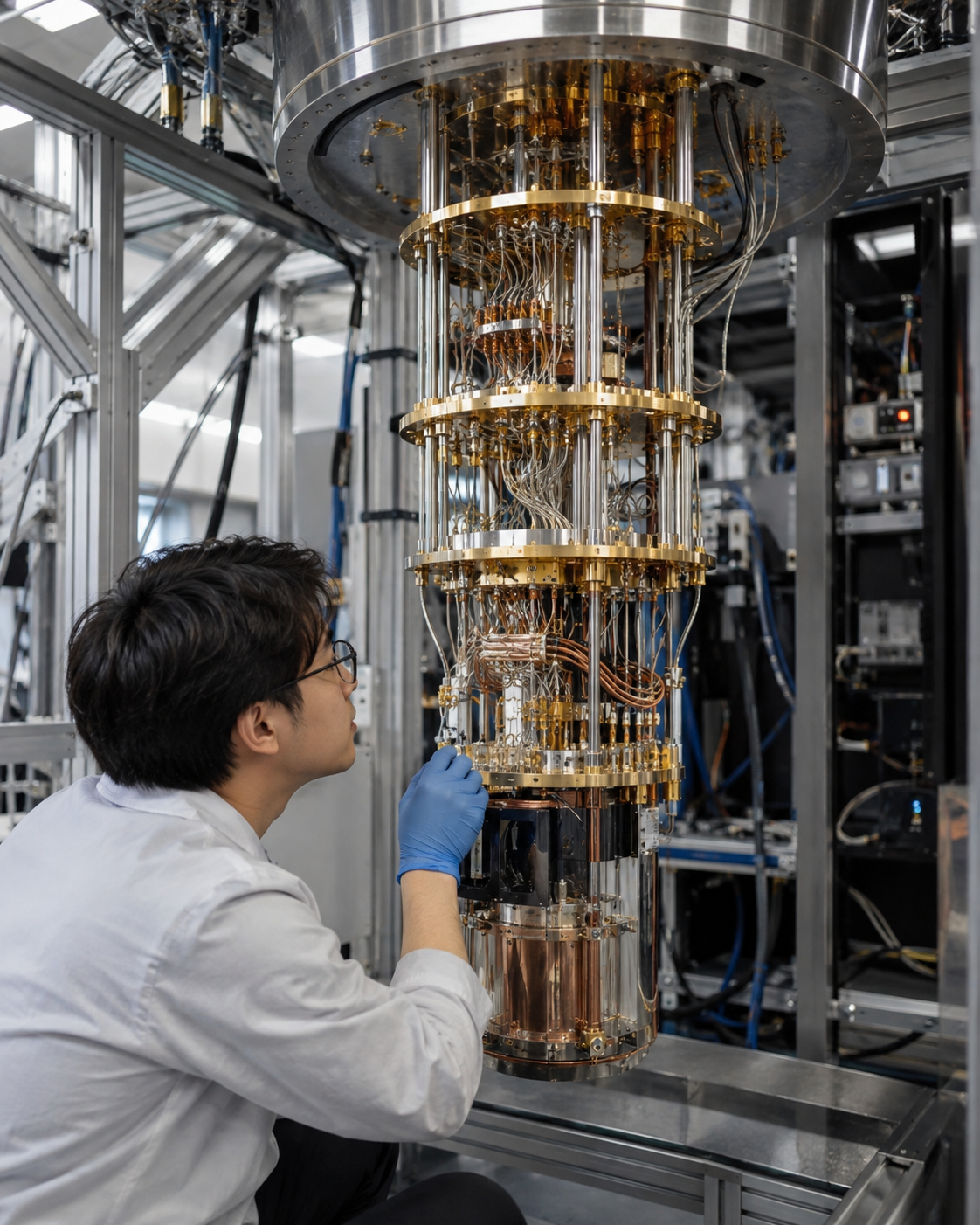
Quantum computers are beginning to move beyond standalone equipment in research labs and into general cloud infrastructure.
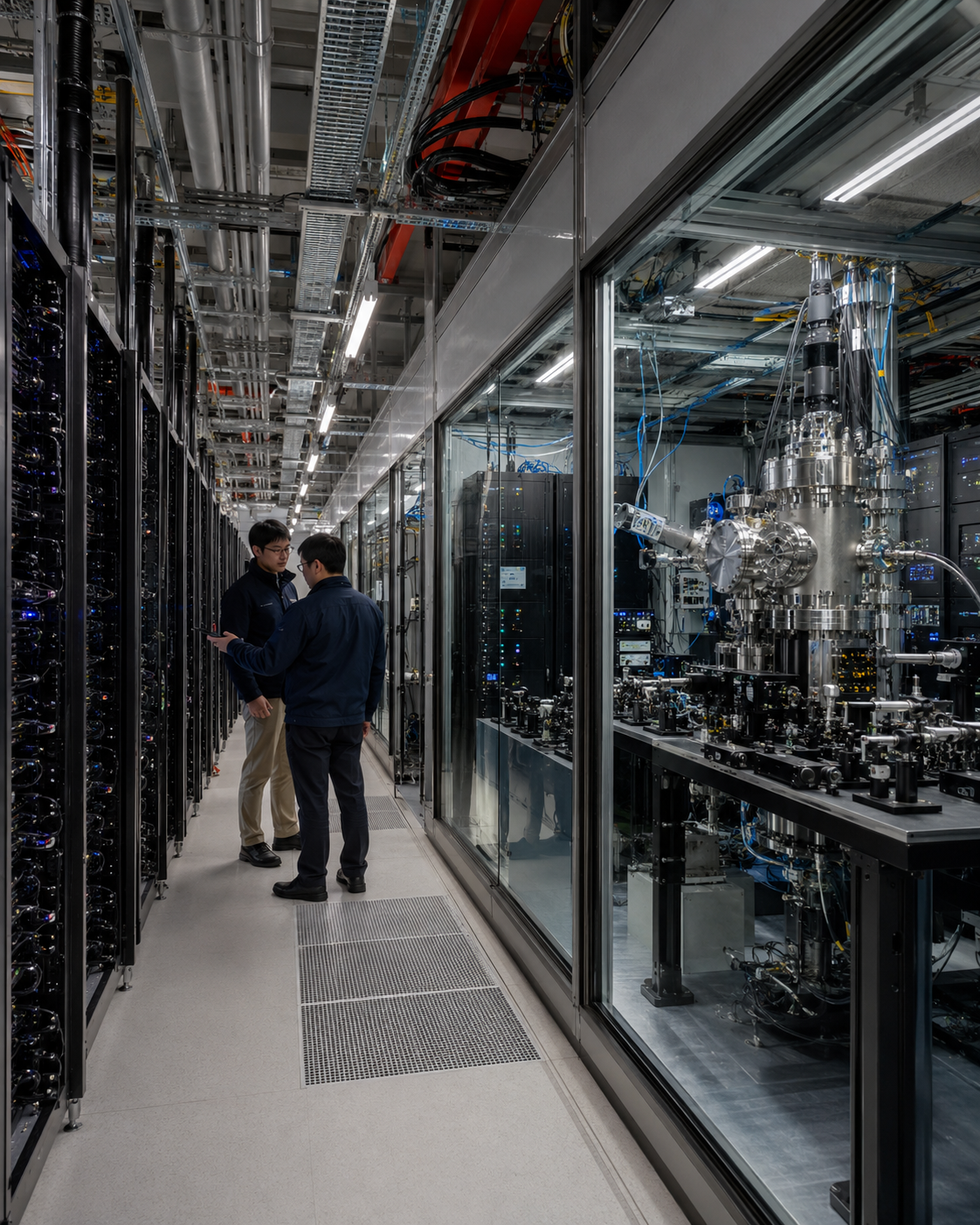
Oracle and Quantinuum have formed a long-standing strategic partnership, and Quantinuum's quantum computer HeliosWe've decided to deploy it to the Oracle Cloud Infrastructure (OCI) AI data center in the U.S.
The key point of this announcement isn't that quantum computers will replace GPUs. An attempt to connect CPUs, GPUs, high-performance computing (HPC) systems, and quantum processing units (QPUs) within the same data center to divide and process a single taskThat's the important point.
| The key point of the presentation is that quantum computers AddressWhat It Means to Change
Reuters released this news on August 11, 2026, at 8:02 p.m. (UTC). In Korean Standard Time, that is 5:02 a.m. on August 12.
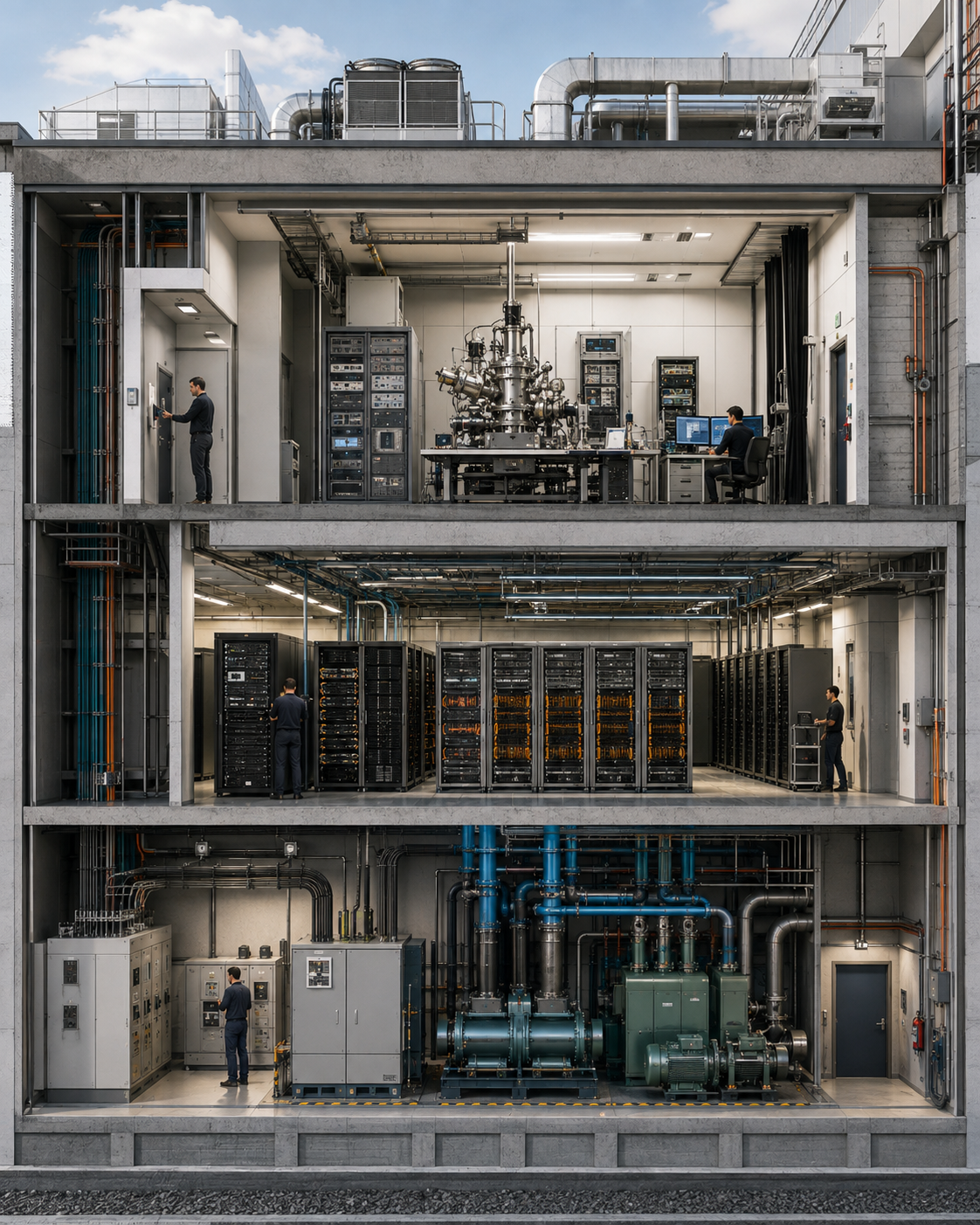
According to announcements from both companies, Helios will be installed directly in OCI AI data centers in the United States, and customers will be able to use the Access this equipment through OCI Quantum ServicesYou'll be able to do that. You can also use the GPU and HPC infrastructure within the same OCI.
Oracle plans to preview its OCI quantum services within the next few months. However, the actual deployment date for Helios, the official launch date, pricing, and contract details have not yet been disclosed.
So this doesn't mean that anyone can run Helios on OCI right now. A multi-year partnership and deployment plan have been announced, and it's more accurate to say that the service for developers is in the pre-preview stage.
| How is it different from existing quantum clouds?
This isn't the first time a method for using quantum computers over the internet has been introduced. Since its commercial launch in November 2025, Helios has been available through Quantinuum's cloud service and on-premises deployment.
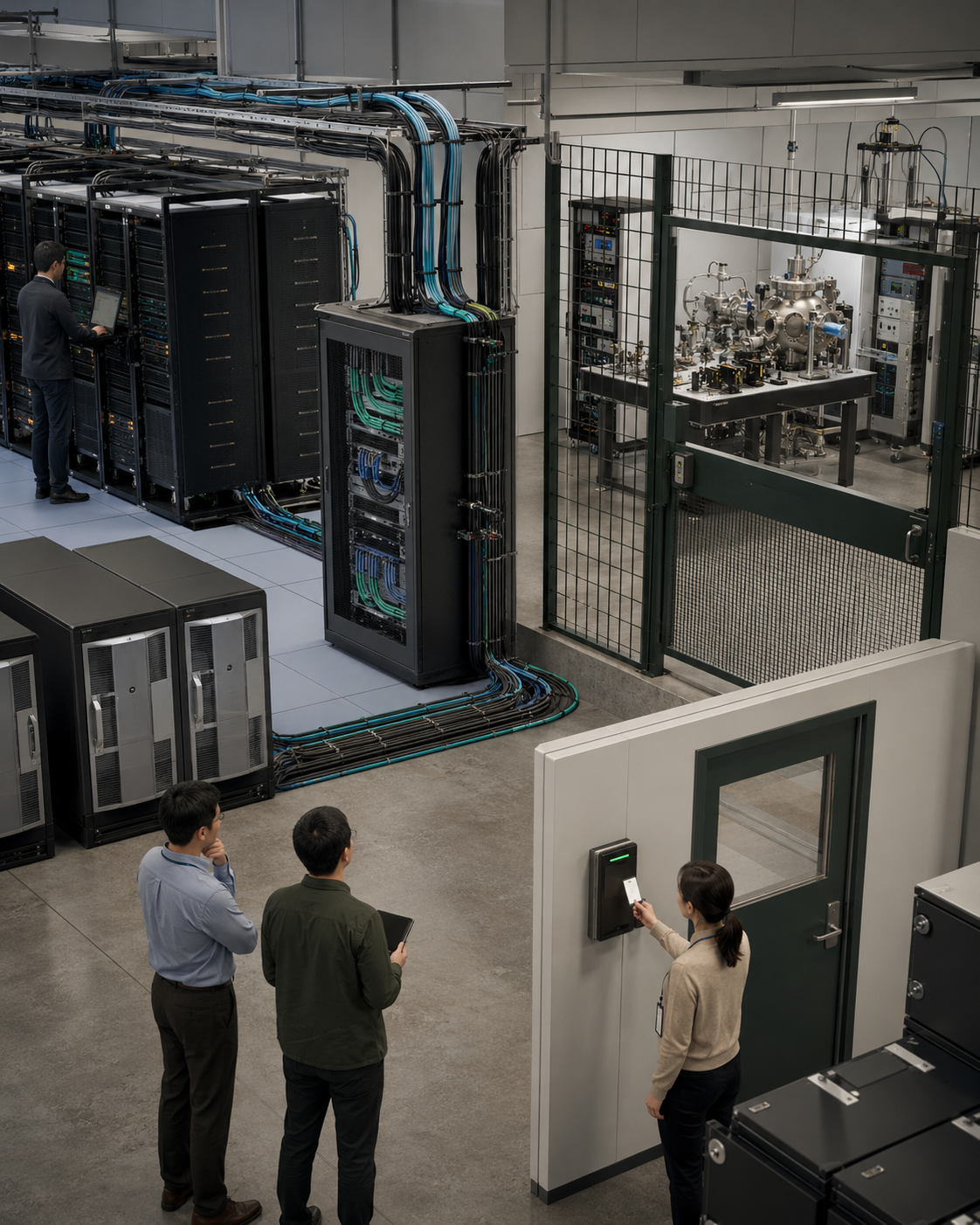
The key change in this collaboration is Helios’s physical location and operating environment. Rather than simply connecting to a separate external quantum system, the equipment will be operated within an OCI data center Integration with existing computing, networking, storage, authentication, and data servicesThat's what I'm going to do.
The two companies proposed a framework that would allow OCI customers to jointly manage quantum resources under the governance and access controls they were already using. From a corporate perspective, this effectively provides a way to test actual QPUs without having to purchase and install separate quantum computers and specialized facilities themselves.
If this architecture is implemented as planned, it could make it easier to manage data migration, task management, and user permissions all within a single cloud environment. However, the benefits of integration and performance will have to be evaluated once the service is actually launched.
| Helios—A quantum computer using 98 physical qubits
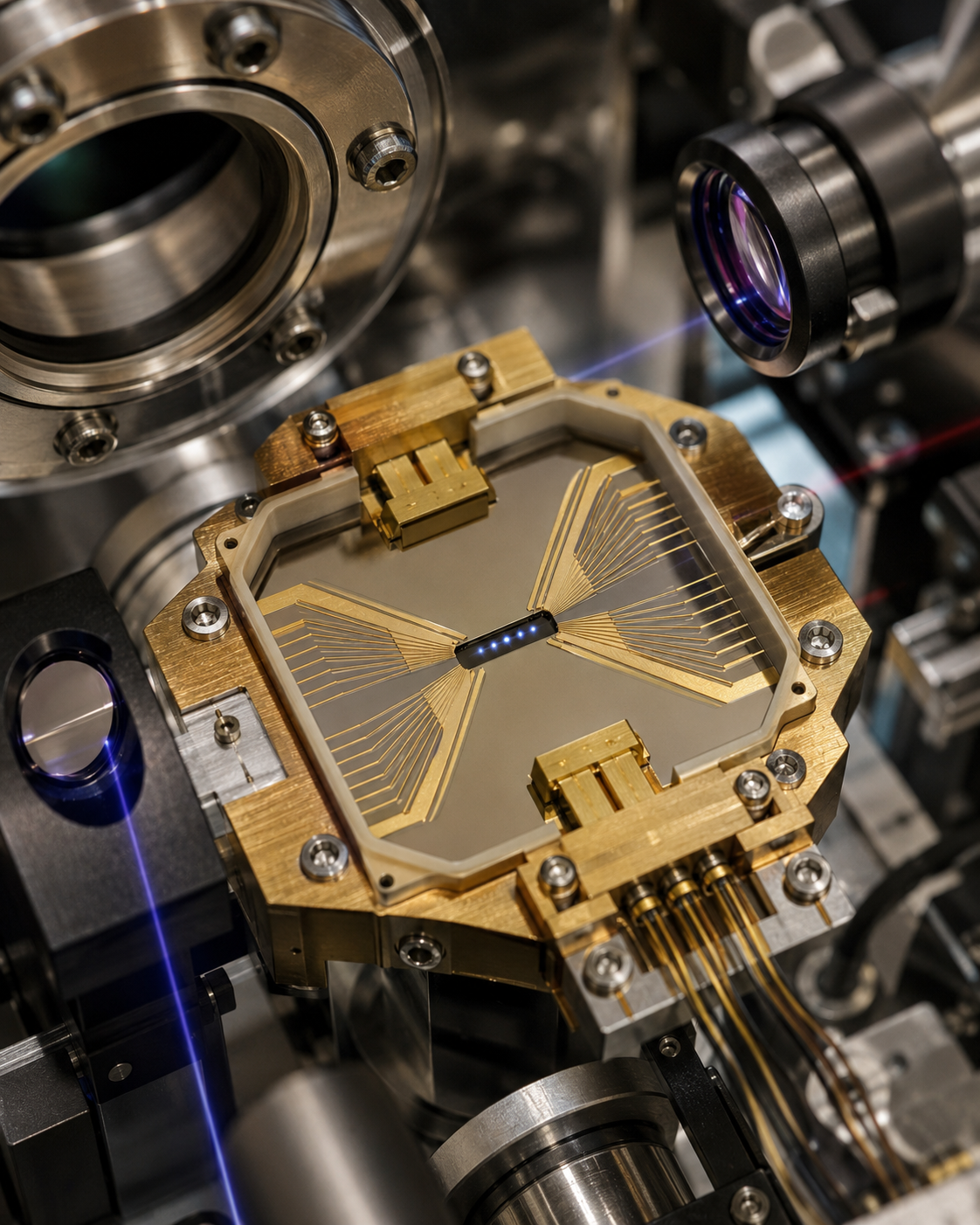
Helios is a third-generation general-purpose quantum computer developed by Quantinuum, 98 physical qubitsUsing trapped-ion methodIt's the system.
The trapped-ion method is Trapping atomic ions using an electromagnetic field and utilizing the quantum state of these ions in calculationsRight. Quantinuum's architecture is designed to move ions within the device so that the necessary qubits can perform operations on each other.
Based on the company's publicly available data, Helios's average 2-qubit gate fidelity is 99.921%Hey. Another one that uses 98 physical qubits to reduce errors... 48 logical qubitsAn experiment involving [...], was also revealed.
Physical qubits are the actual computational units that make up the hardware, while logical qubits are a conceptual grouping of multiple physical qubits that are treated as a single computational unit with greater error resilience. Because these two metrics have different meanings, you shouldn’t judge a quantum computer’s performance simply by comparing the number of qubits.
Not only accuracy and connectivity, but also Depth of implementable circuits, error correction methods, development time, and development toolsYou have to look at it all together to really understand its practical applications.
| A structure in which the CPU, GPU, and QPU share the workload

As mentioned in this announcement, Hybrid ComputingIt's not a system where all calculations are offloaded to a quantum computer. It's more like a structure where each processing unit handles the tasks it excels at, and the results are exchanged back and forth.
|
Computing Resources |
Primary Responsibilities |
The Significance of This Structure |
|
CPU·HPC |
Comprehensive job control, data preprocessing, and large-scale classical simulations |
Computations and Workflow Management Before and After Quantum Computation |
|
GPU |
AI Training and Inference, Parallel Computing, and Simulation Acceleration |
Quickly generate candidates and process large amounts of data |
|
QPU |
Quantum Circuit Execution Using Superposition and Entanglement |
A computational exploration of certain problems in chemistry, materials science, and optimization |
For example, A workflow in which AI first generates a large number of molecular candidates, HPC organizes the data, and then a QPU calculates the quantum properties of some of the moleculesYou can think of it that way. The calculation results are fed back into the classical system and used for analysis and subsequent tasks.
At this point, the QPU is less of a successor to the GPU and more like a specialized accelerator designed for specific computations. Not all programs run faster on a quantum computer, and, Most of the actual work will continue to be handled by the CPU and GPUIt's very likely to happen.
| Pharmaceuticals, Materials, Finance, Optimization
Oracle and Quantinuum are New Drug Development, Materials Research, Financial Modeling, Large-Scale Optimization...were cited as the main areas of application.

In new drug and materials research, calculating the complex interactions between molecules and electrons is a major challenge. We use AI to narrow down the list of candidate compounds, and An approach that uses HPC and quantum computers together to examine certain quantum chemistry calculationsThis is currently being studied.
In the financial sector, Complex Scenario Analysis and Modeling, In industrial settings, Testing optimization problems such as logistics routes and resource allocationIt's possible. This is significant because it allows universities and research institutions to access actual quantum hardware without having to operate the specialized equipment themselves.
However, the areas mentioned here represent the intended applications of the service. This announcement did not demonstrate that Helios can solve these problems faster and more cost-effectively than existing computers.
| What Oracle and Quantinuum Stand to Gain
From a strategic perspective, Oracle can expand OCI from a GPU-centric AI cloud into a comprehensive computing platform that offers a variety of accelerators.
Cloud environments that allow remote access to quantum computers already exist. Oracle appears to be positioning itself by highlighting the fact that it houses actual Helios hardware within OCI AI data centers and deeply integrates it with its existing cloud services.
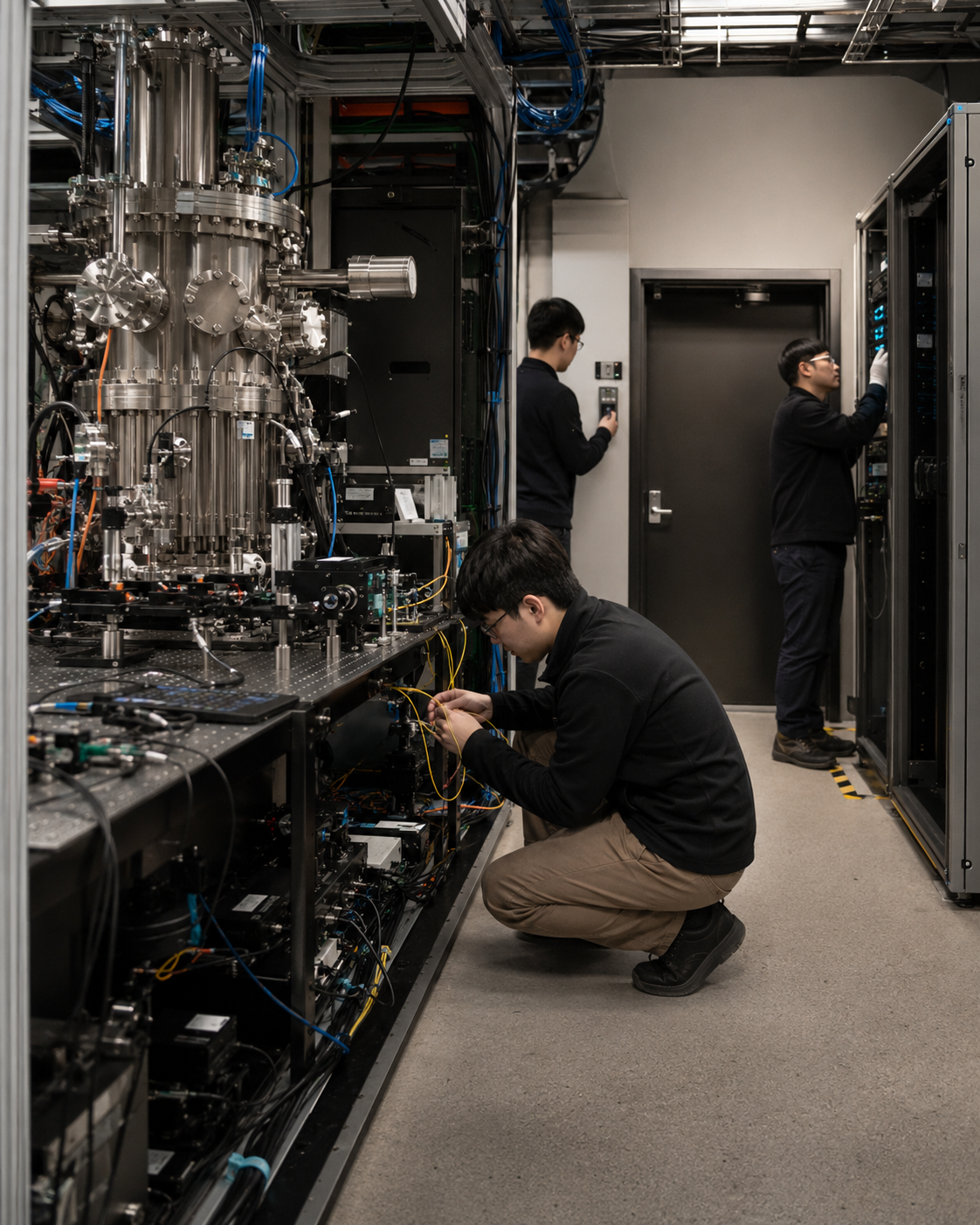
Quantinuum has access to Oracle’s enterprise customers and data center infrastructure. By moving beyond simply demonstrating the performance of quantum computers and enabling companies to test Helios within the data and AI tools they already use, it can help lower the barriers to commercialization.
In the end Oracle needs to differentiate its cloud services, while Quantinuum needs broader customer reach and integration with actual enterprise workflows.Wow. You could say this partnership is the result of two needs coming together.
| It's Not About Popularizing Quantum Computing
While this announcement marks a significant plan that will change the approach to quantum computing, it does not mean that large-scale commercialization will happen immediately.

First, the exact deployment date for Helios and the official launch date for OCI Quantum Services have not been announced. We also need to confirm the target audience and terms of use for the preview scheduled to take place in the coming months.
Second, having 98 physical qubits and high gate fidelity alone does not guarantee a practical advantage for all industrial problems. Actual value must be assessed by considering problem-specific algorithms, error management, and the cost of communication with classical systems.
Third, specific details regarding pricing, wait times, data transfer methods, the scope of security and regulatory compliance, and actual customer use cases have not yet been disclosed. Deploying equipment to the cloud and creating a service that companies will use repeatedly are two different stages.
So, rather than marking the arrival of a fully developed quantum cloud, this news is more about, The Start of a Commercialization Trial to Integrate Research Equipment into the Existing Data Center Operations Frameworkis close to.
| The Next Step for AI Data Centers
Until now, the competition among AI data centers has centered on the number of GPUs and securing power. This partnership means that data centers will no longer be simply spaces filled with GPUs, but rather environments where CPUs, GPUs, and QPUs can be selected and connected depending on the task. Heterogeneous Computing Hubshows the possibility that it will change into .
There are three things we need to check going forward. The actual preview timeline and target users for OCI Quantum Services, how Helios integrates with existing OCI services, and verified results showing that it has reduced time and costs in actual customer workloadsHey.
Only once these three elements are confirmed can we conclude that this deployment has evolved from a symbolic demonstration into a repeatable cloud service.
This is why the announcements from Oracle and Quantinuum are so significant. It’s not that quantum computers are set to replace GPUs right away, but rather that this signals they are beginning to be incorporated as one of the components of next-generation data centers.
Thank you for reading!

References
Reuters — Oracle, Quantinuum partner to bring quantum computing to cloud
Quantinuum — Introducing Helios: The Most Accurate Quantum Computer in the World
Quantinuum — Helios: A 98-qubit trapped-ion quantum computer
#Oracle #Quantinuum #Helios #Quantum Computers #OCI #Cloud Computing #AI Data Center #GPU #QPU #HPC #Quantum AI #IT News