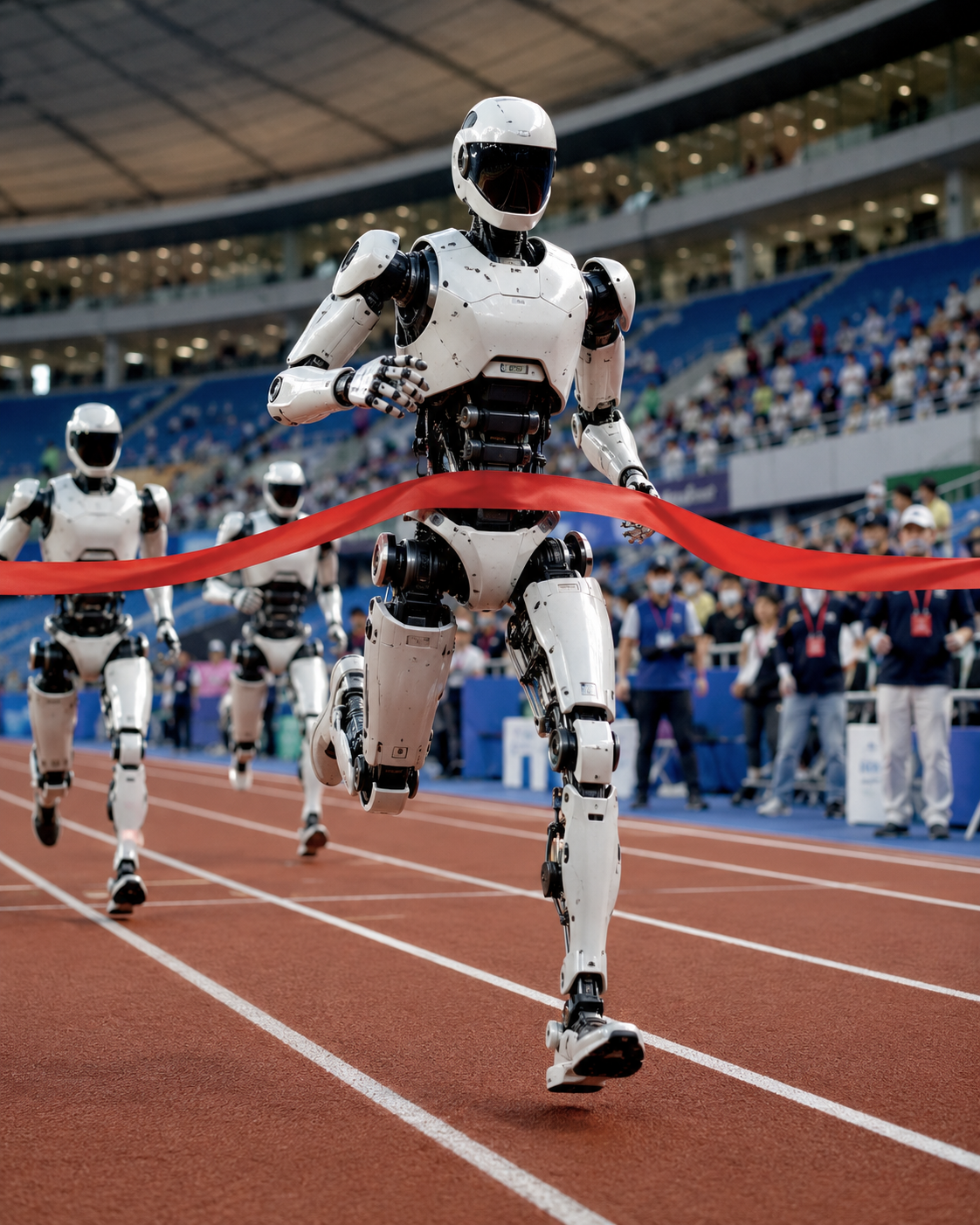
China's humanoid robot, Tiangong Ultra, Run the 100 meters in the 8-second rangeIt did. This record shows that technology is rapidly advancing beyond simply mimicking the way humans walk—it’s now capable of maintaining balance while running at high speeds on two legs.
According to Reuters, Tiangong Ultra, developed by the Beijing Humanoid Robot Innovation Center, on August 25, 2026 8.86 seconds in the 100-meter semifinals of the Large Robot Division at the World Humanoid Robot GamesHe clocked a time of . That's 0.53 seconds faster than the 9.39 seconds he set at the start of the competition.
However, the figures vary depending on the source. According to the official summary released by the Innovation Center the following day, the 100-meter time was 8.85 secondsIt says so. Therefore, it would be more accurate to distinguish between the 8.86-second time—which was the semifinal time reported by Reuters—and the 8.85-second time, which was the official figure later announced by the competition organizers.
| From 9.39 seconds to 8.86 seconds in just a few days
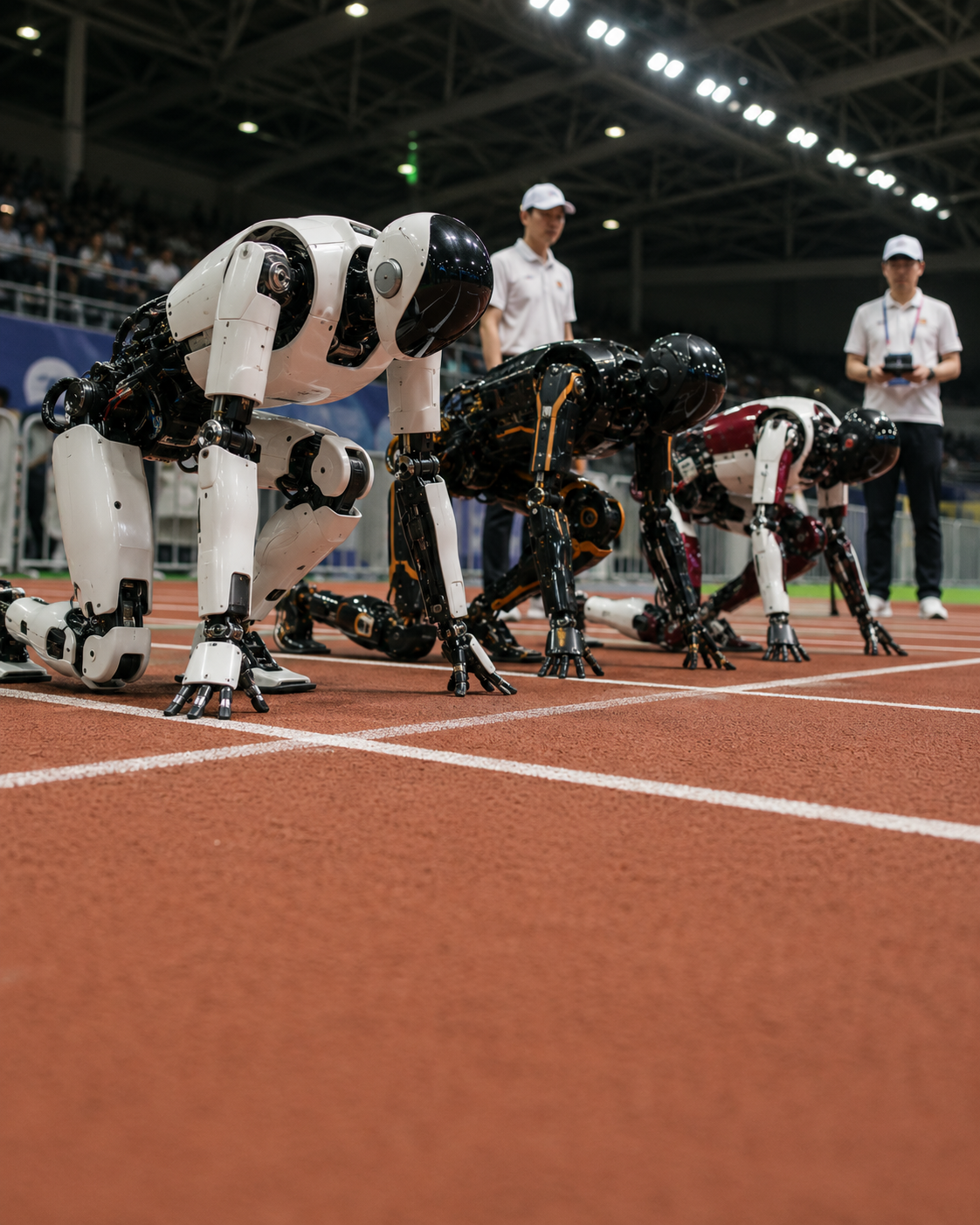
Tiangong Ultra is a competition 9.39 seconds in the 100-meter dash at the start of the competitiondepended on, and, A few days later, he clocked 8.86 seconds in the semifinalsI did. In terms of time, 0.53 seconds, as a percentage, approximately 5.6% It’s a improvement. What stands out is that he’s managed to shave off more than 0.5 seconds from his already fast 100-meter time.
At last year’s inaugural competition, Tiangong set a 100-meter course record of 21.50 seconds. While we can’t say for certain that this year’s robot and last year’s robot had exactly the same specifications or competed under identical conditions, looking solely at the competition records, the completion time has been cut to less than half in just one year.
|
Category |
Presentation Records |
To check dot |
|
Opening Game of the 2026 Tournament |
9.39 seconds |
Early economic data reported by Reuters |
|
August 25: Semifinals |
8.86 seconds |
According to a Reuters report |
|
August 26: Official Summary from the Center |
8.85 seconds |
Figures cited in the subsequent official announcement |
| 8.86 seconds and 8.85 seconds—why should both be recorded?
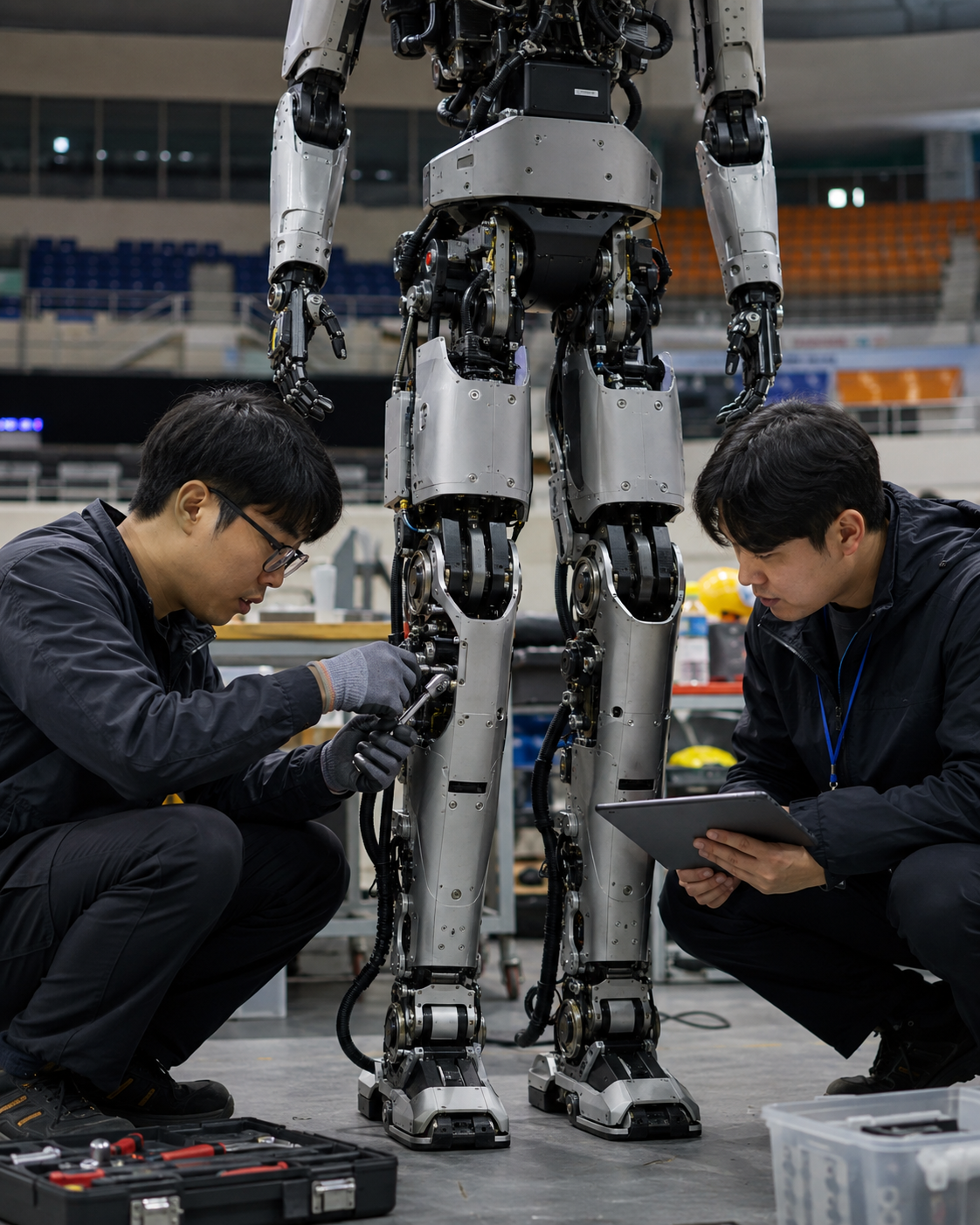
Reuters reported that Tiangong Ultra clocked 8.86 seconds in the semifinals of the large robot category. In contrast, the Beijing Humanoid Robot Innovation Center, the robot’s developer, stated in a competition recap posted the following day that the time was 8.85 seconds.
Based solely on the data currently available, it is difficult to determine whether the 0.01-second difference resulted from the measurement and calculation process or was further reduced in subsequent races. Therefore, rather than arbitrarily labeling one of the figures as an “error,” Figures from different sources and time periodsIt's safer to include that point as well.
Also, this record isn't an official human track and field record recognized by World Athletics—it's the result of a robot competition. Although the time is faster than Usain Bolt's men's 100-meter world record of 9.58 seconds, Since the starting methods, equipment regulations, and measurement systems differ, we should not simply compare the athletic abilities of humans and robots using the same criteria.
| In the 400m, 1,500m, and high jump as well
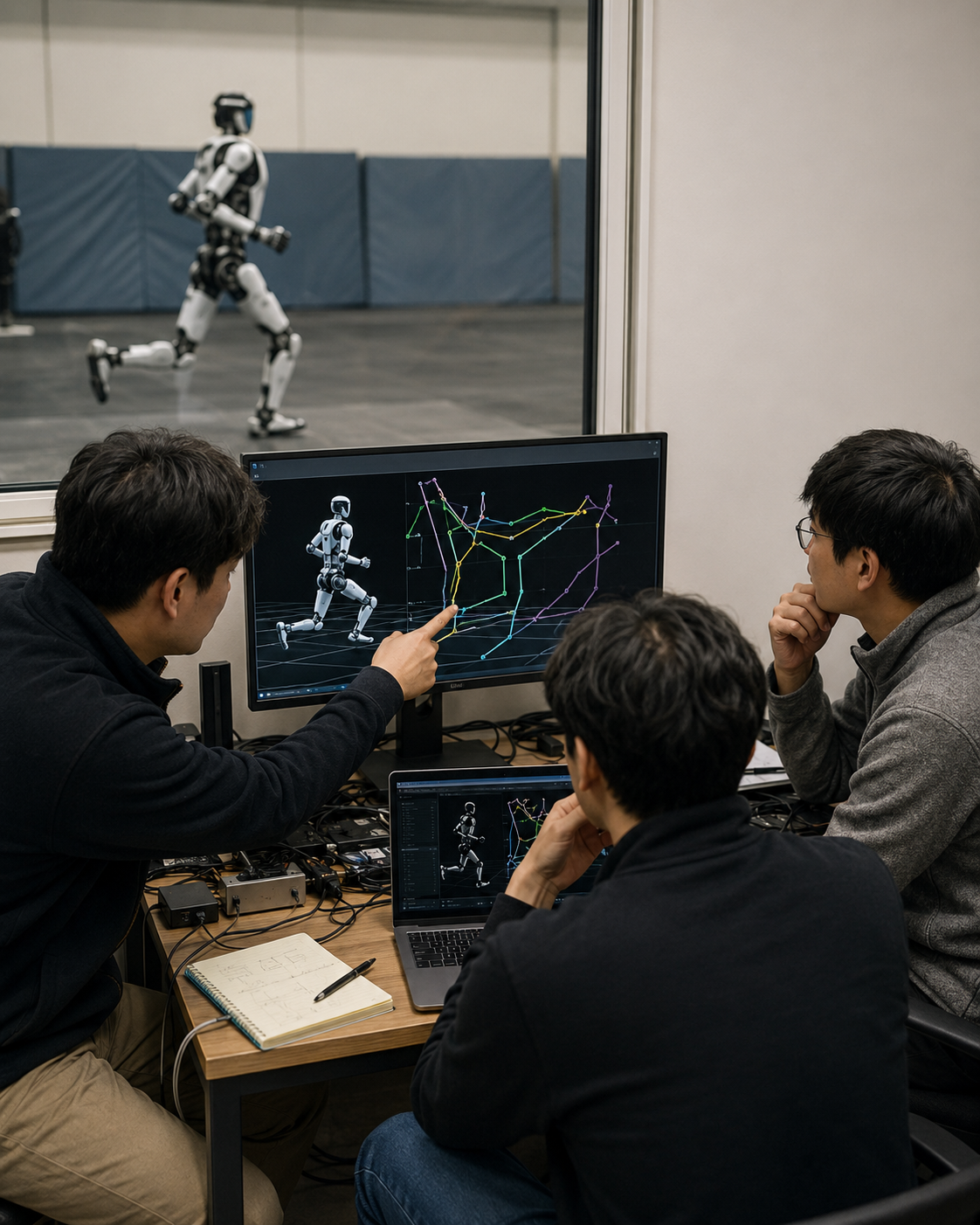
At this competition, the Tiangong robots from the center achieved fast times not only in the 100-meter dash but also in various other track and field events. According to figures reported by Reuters on August 25, 400 meters in 38.15 seconds, 1,500 meters in 2 minutes, 21.64 seconds, High jump: 2.88 metersIt was.
China's Xinhua News Agency's photo records of the competition also confirmed times of 38.15 seconds in the 400-meter relay and 2 minutes 21.64 seconds in the 1,500 meters. In a follow-up report on August 26, the Innovation Center noted the high jump record as 3.4m...and announced that the record had been broken again later in the competition.
However, these figures were not achieved under the same conditions as those specified in the official rules for human track and field. In particular, since robot high jump requires consideration of both the takeoff technique and the measurement criteria, it is more appropriate to view these results as a test of the robot’s instantaneous power output and whole-body control performance, rather than concluding that the robot has surpassed human athletes’ records based solely on the height figures.
| Why It's Hard to Run Fast on Two Feet
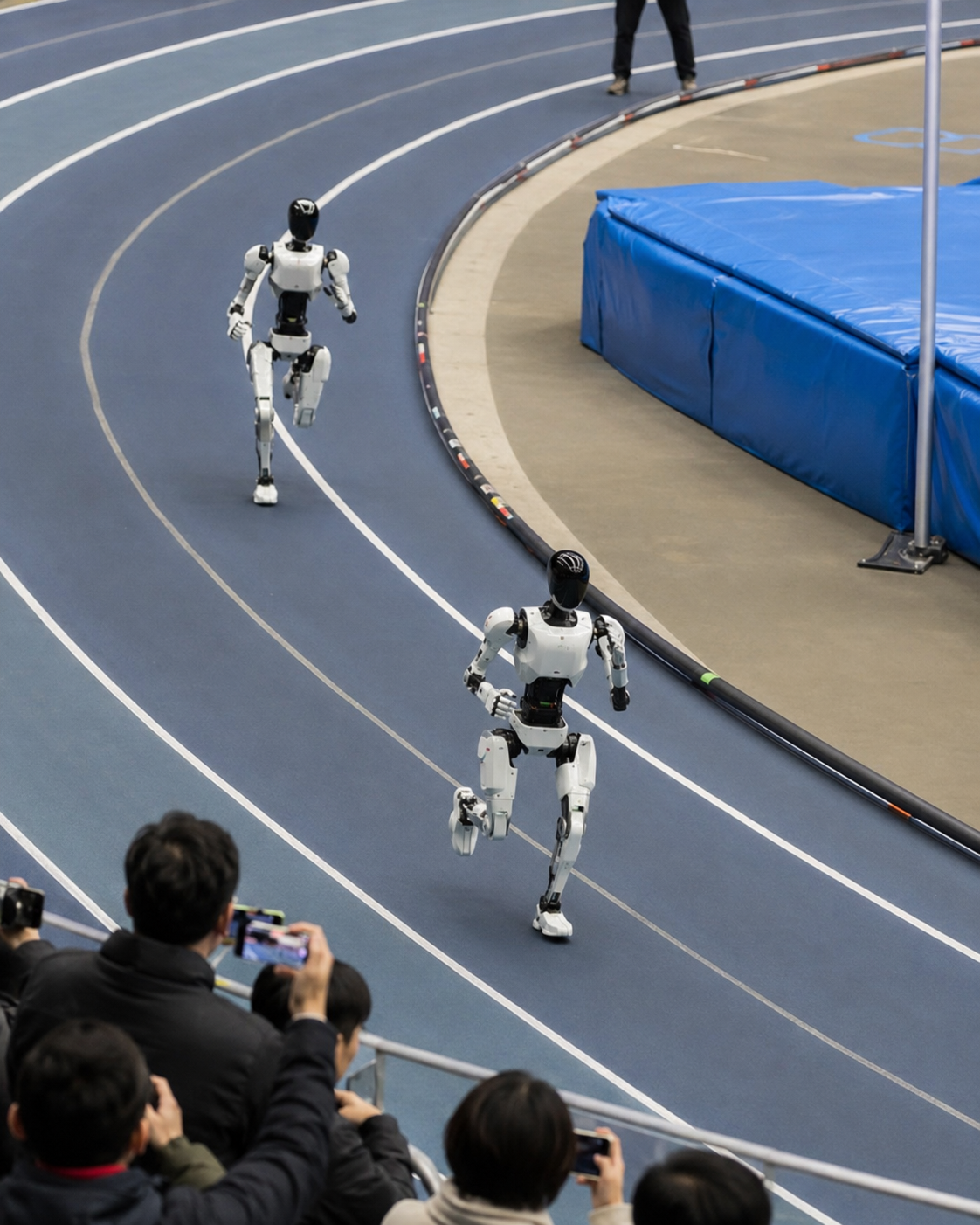
When a humanoid robot runs, There are moments when both feet leave the ground alternately. Every time it lands, the robot must quickly calculate its body tilt, joint positions, and the impact from the ground, and adjust its next movement accordingly. Yeah. Even a small error can be greatly amplified as speed increases.
To achieve this, not only must the actuators that move the joints with force work in tandem with sensor data, real-time posture control, and algorithms that determine where to place the foot, but the mechanical structure must also be designed to withstand power consumption, motor heat generation, and repeated impacts.
The Beijing Humanoid Robot Innovation Center explained in its previous Tiangong Ultra report that as the full-body size increases, the center of gravity rises, and the torque required at the joints and the impact load on them also increase. This new record of just over 8 seconds can be seen as the result of fine-tuning both the hardware and motion control, rather than simply increasing motor output.
| Can they be deployed on-site?
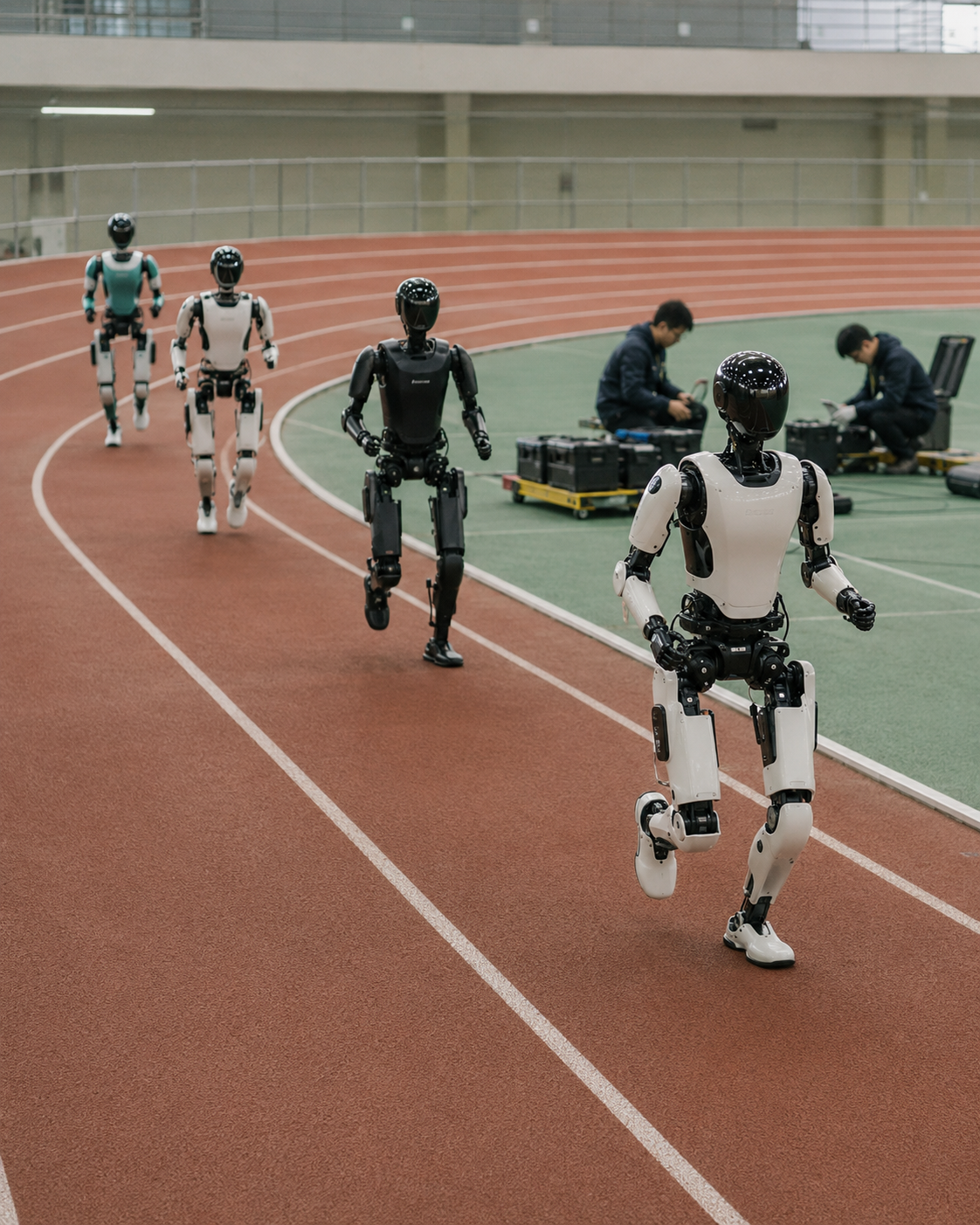
After completing its 8.86-second run, Tiangong Ultra came to a stop after hitting the thick cushioning mat installed beyond the finish line. This scene illustrates that there is still a gap between its ability to accelerate rapidly and its ability to safely decelerate and come to a stop at the desired point.
In factories and logistics facilities, it's not just about reaching maximum speed once. It must be able to navigate around people and equipment, repeat the same movements for several hours, and come to a safe stop even when encountering unexpected obstacles. Reliability—the ability to reproduce the process without failures—and energy efficiency are also necessary.
So, rather than implying that “a robot superior to humans in every way has been completed,” this record... High-speed motion control for humanoids has entered a new phaseThis is just an indication. Further verification is needed to determine whether athletic performance translates into actual work capacity.
| Robot Sports Day
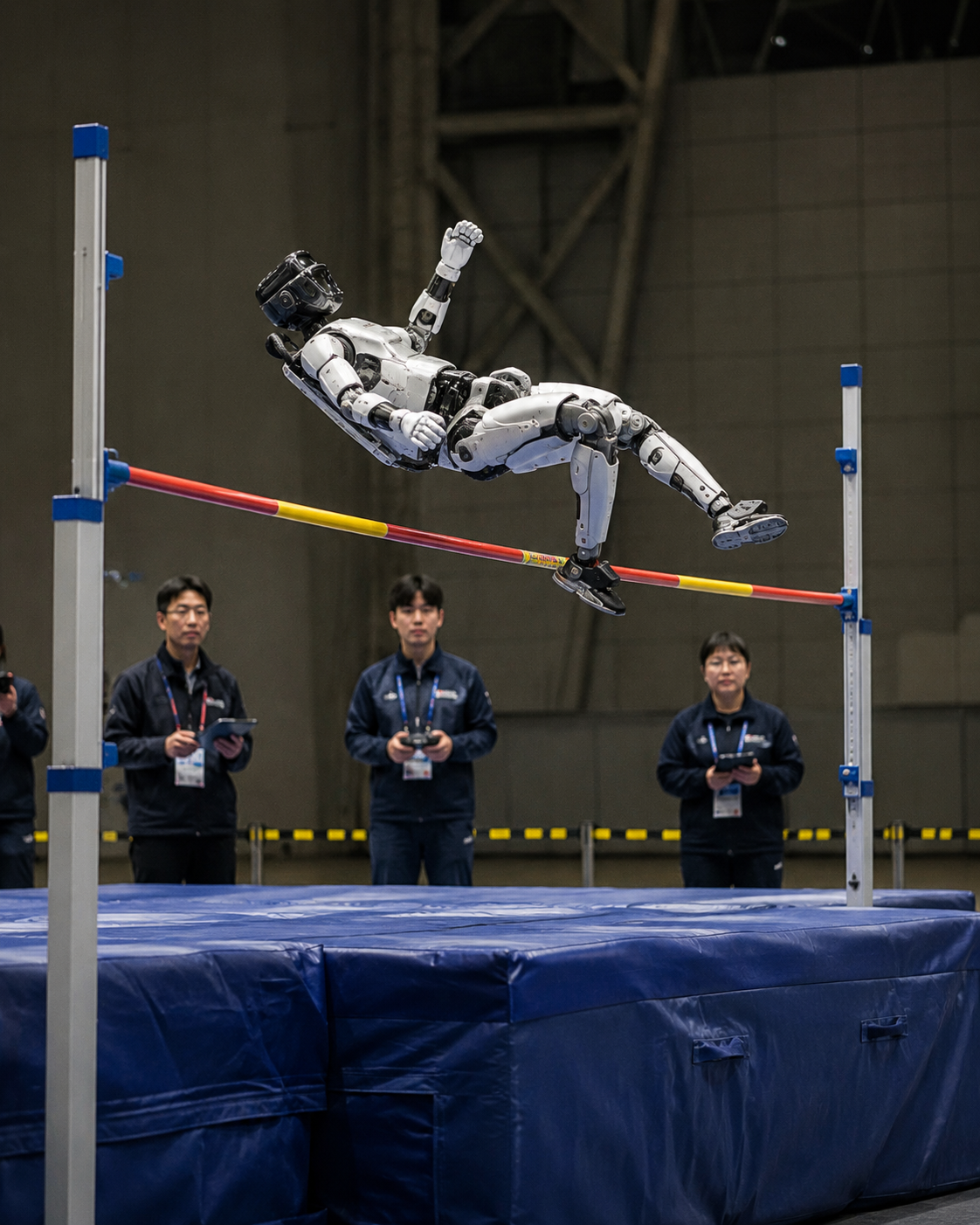
According to Reuters, this tournament will feature More than 2,000 robots from 666 teamsParticipants competed in 51 events. The competition included not only running and high jump but also events that assessed a variety of skills, such as soccer, dance, and industrial tasks.
Track and field events are great for showcasing technological advancements because results can be directly compared in seconds and meters. At the same time, Operating multiple robots in the same location also allows us to identify issues that arise outside the laboratory, such as communication stability, collision response, battery management, and on-site maintenance.
As China works to develop humanoid robots into a strategic industry, such competitions serve as a showcase for research achievements and A testing ground where companies and research institutions compare technologiesDo that. However, it’s important to distinguish between impressive competition records and the quality of commercial products.
| The next thing to check is, rather than the top speed, Reproducibility
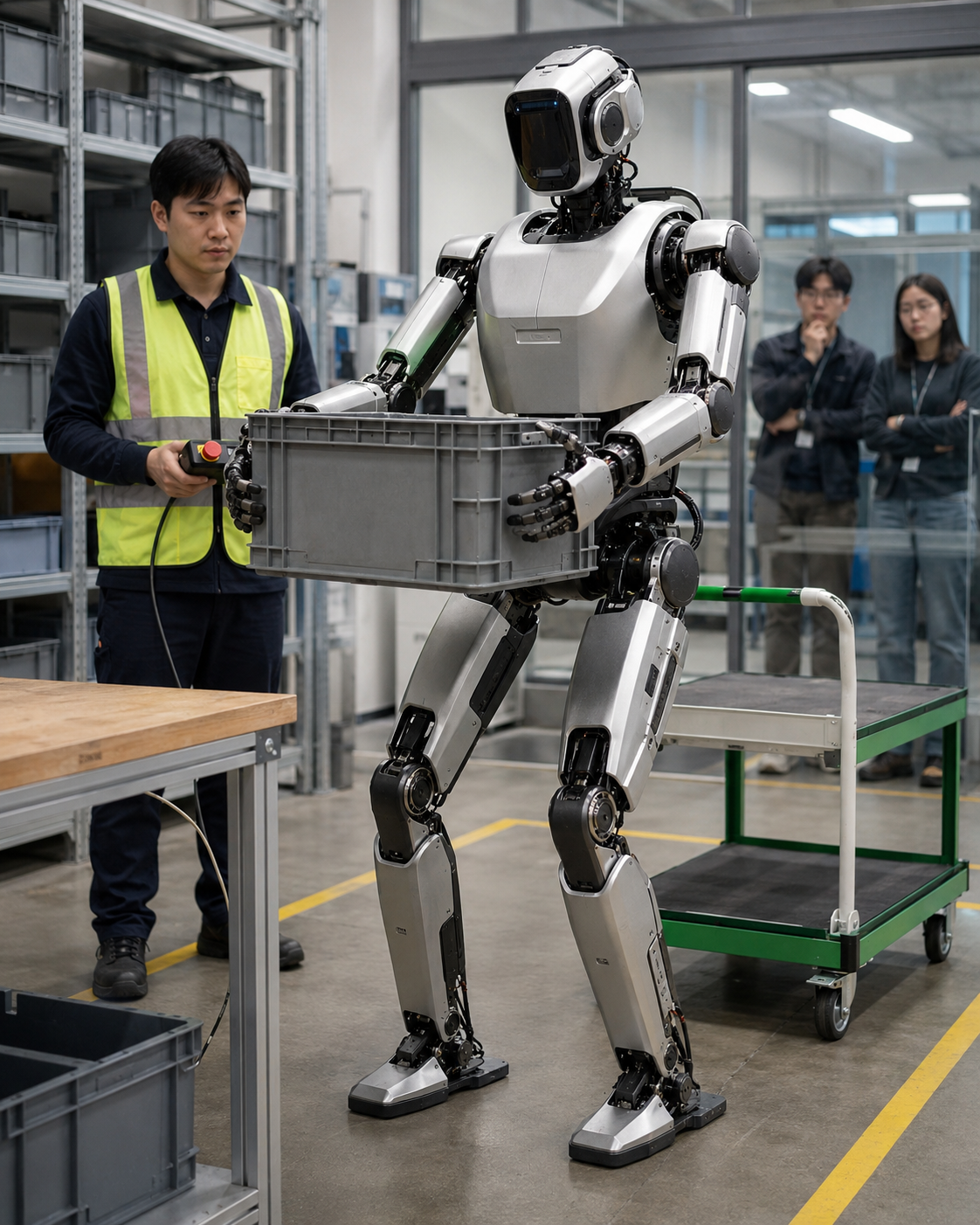
Tiangong Ultra’s run in the 8-second range demonstrates that the mechanical design and dynamic balance control of humanoid robots are advancing rapidly. In particular, the fact that it repeatedly broke its own records within the same competition suggests that the speed of on-site adjustments and control optimization has also increased significantly.
Going forward, it will be important to determine whether a robot can repeat the same run multiple times, whether it can come to a stable stop on its own after a run, and the amount of energy consumed and the extent of component damage during a single run. The competition rules and measurement methods need to be disclosed in greater detail so that comparisons with other robots or human records can be made more accurately.
Ultimately, the crux of this news isn't just the number 8.86 seconds. It's the ability to move quickly— Safety, Sustainability, and Practical Work SkillsWhether we can connect to it will be the next competitive benchmark in the humanoid industry.
References
Reuters — Chinese robot Tiangong clocks sub-9 second 100 metres in Beijing
Xinhua — 2026 World Humanoid Robot Games Competition Results
Beijing Humanoid Robot Innovation Center — Announcement of Tiangong Ultra 1,500m Victory
Beijing Humanoid Robot Innovation Center — Tiangong Ultra Full-Body Robot Technology Overview
Tags
#TiangongUltra #Tiangong Ultra #Humanoid Robots #Humanoid Robots #Robot100m #WorldHumanoidRobotGames #Beijing Humanoid Robot Innovation Center #Robotics #Physical AI #Motion Control #Robotics Industry #Future Technology