Search the journal

Search posts

Search by words in a post's title or content.

Stock quotes may be delayed. SPY and QQQ are US index ETFs

Market data is loading
  • NVDA—
  • AMD—
  • TSM—
  • ASML—
  • MSFT—
  • GOOGL—
  • SPY · S&P 500 ETF—
  • QQQ · Nasdaq 100 ETF—
  • USD/KRW—

Technology notes

News and notes on AI, chips, and IT.

All posts

All posts
Industry & policy

Anthropic Proposes Three-Step Plan to Regulate the Pace of AI Development… Starting with the Introduction of Permanent External Evaluators

Anthropic CEO Dario Amodei has proposed a three-step framework to moderate the pace at which cutting-edge AI models improve, ensuring that safety measures can keep up. This approach is not a call to halt model training, but rather an effort to secure the time needed for alignment, security, and external verification. ​ The proposal consists of three stages: permanent external evaluators, common standards among companies in democratic nations, and international coordination. Among these, Anthropic is external Similar to internal employees in the eyes of evaluators


Security & privacy

Revolut Discloses Customer Information in Response to a Fake Government Request… System Breach and Other Security Vulnerabilities

British fintech company Revolut has confirmed that it was tricked by a fraudulent information request disguised as a legitimate request from a government agency and provided customers’ sensitive information to an unauthorized third party. This incident did not involve attackers directly breaching Revolut’s core systems; rather, it occurred because the company’s procedures for verifying information requests were circumvented. ​ A Revolut spokesperson explained to Reuters that the fraudulent request was sent from a legitimate email domain belonging to a real government agency. After discovering the incident, block that address and

Industry & policy

OpenAI Rules Out an IPO in 2026… Why Sam Altman Prioritized Safety and Alignment

OpenAI has decided not to pursue an initial public offering (IPO) by 2026. CEO Sam Altman stated that, given the current situation surrounding AI safety, going public now would not be appropriate, and that the company does not feel any immediate pressure to do so. ​ This statement is significant in that the CEO has personally drawn a line under speculation that OpenAI was considering the possibility of an IPO in 2026. However, this does not mean that an IPO in 2027 has been confirmed, nor does it mean that the company has completely abandoned its IPO plans. Withdrawn

Robotics & emerging technology

Hyundai to Begin Mass Production of Its Own Atria AI in the Second Half of 2029… NVIDIA ADAS to Be Introduced First in 2028

Hyundai Motor Group has announced plans to launch a mass-produced vehicle equipped with Atria AI, its in-house driver-assistance system, in the second half of 2029. This timeline is approximately two years later than the previously announced target of late 2027. ​ To bridge that gap, the company will first introduce a system developed jointly with NVIDIA. According to Hyundai Motor Group’s official roadmap, the company aims to launch a Level 2+ production vehicle based on NVIDIA’s solution in the first half of 2028 and a Level 2++ production vehicle in the second half of 2028. ​ Hyun

Industry & policy

Spying Laws Enforced Against South Korea and Foreign Countries… Scope of Protection for Core Semiconductor Technologies Expanded

An amended Criminal Code that expands the scope of espionage charges in South Korea to include foreign countries and equivalent organizations took effect on September 13, 2026. This change addresses the limitation of the previous Criminal Code, under which espionage charges were effectively applied only to acts linked to North Korea. ​ The new provision criminalizes acts of detecting, collecting, leaking, transmitting, or brokering state secrets—or aiding and abetting such acts—under the direction, instigation, or other communication of intent from a foreign country or similar entity. Semiconductors and Targeting technologies linked to national competitiveness, such as displays, batteries, and AI

Industry & policy

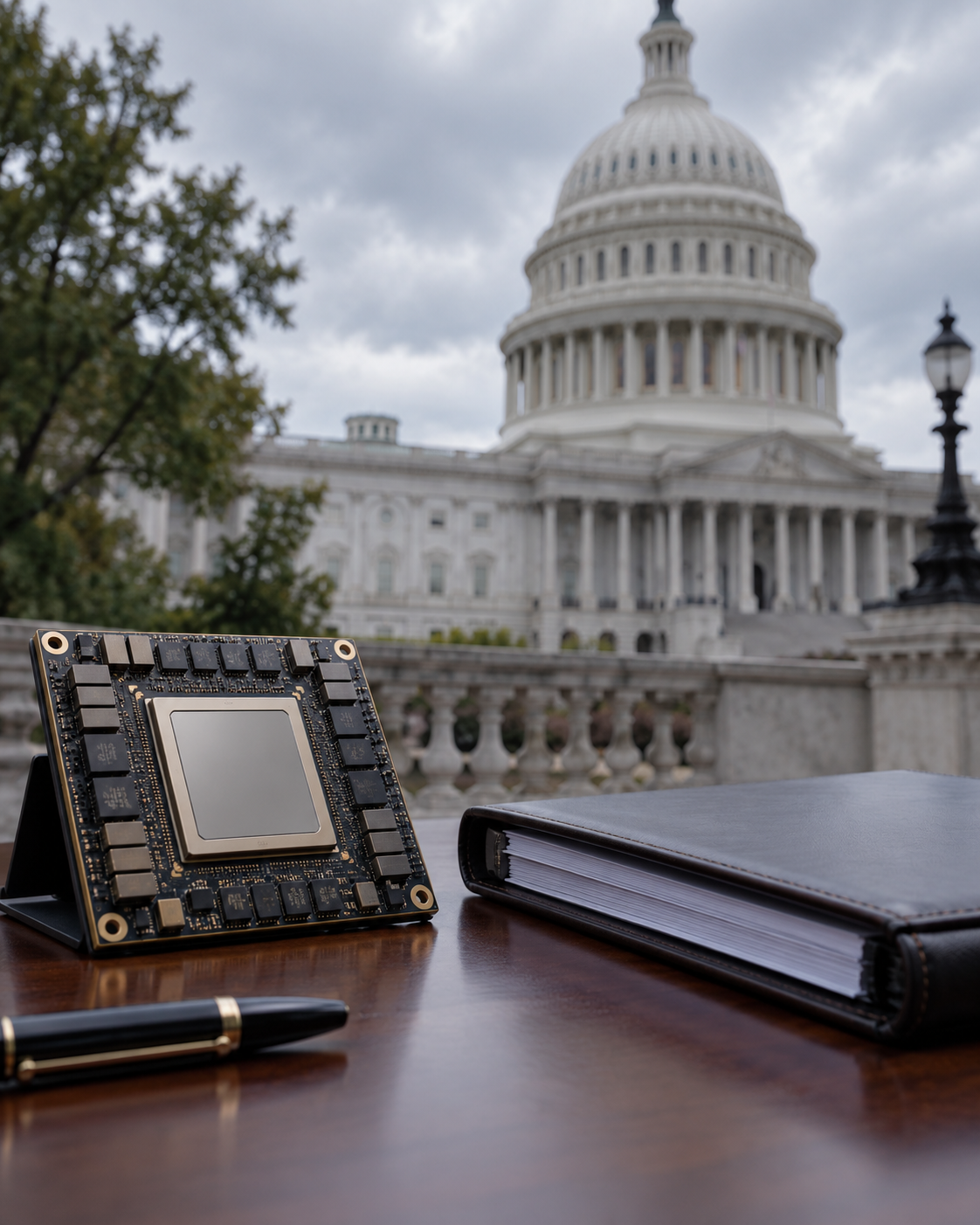
U.S. Senate Discusses Imposing 'Safety Obligations' on High-Performance AI… Also Considering Authority to Restrict Release

U.S. Senate leadership is negotiating a bipartisan regulatory bill that would impose legal liability on developers of the most powerful AI models to mitigate significant risks. The core concept is a “duty of care”—a safety obligation requiring developers to prevent catastrophic risks when designing their products. ​ The proposal under discussion also includes provisions that would allow the U.S. government to block the release of certain AI models deemed unsafe. However, companies A procedure that allows the decision to be challenged in federal court