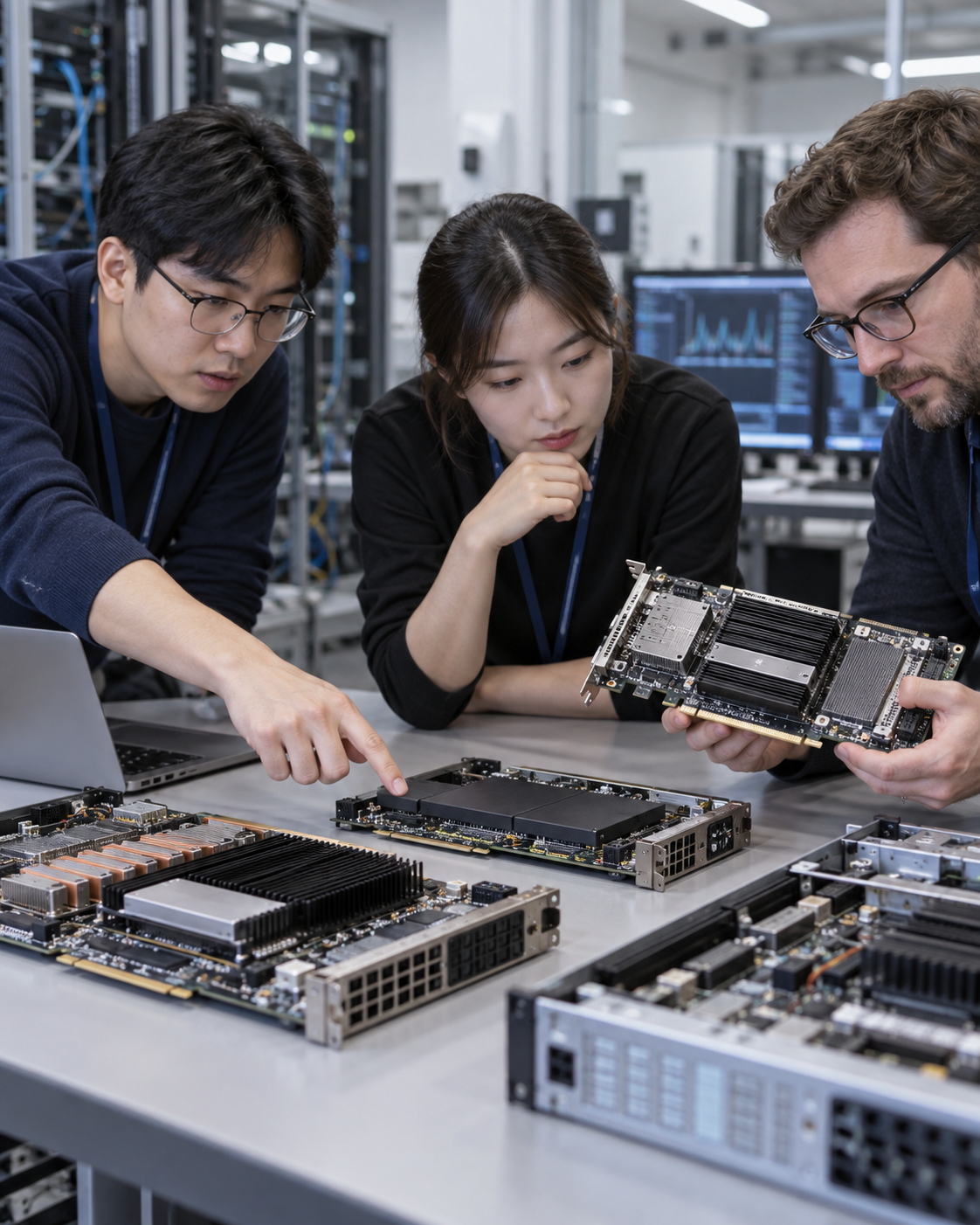
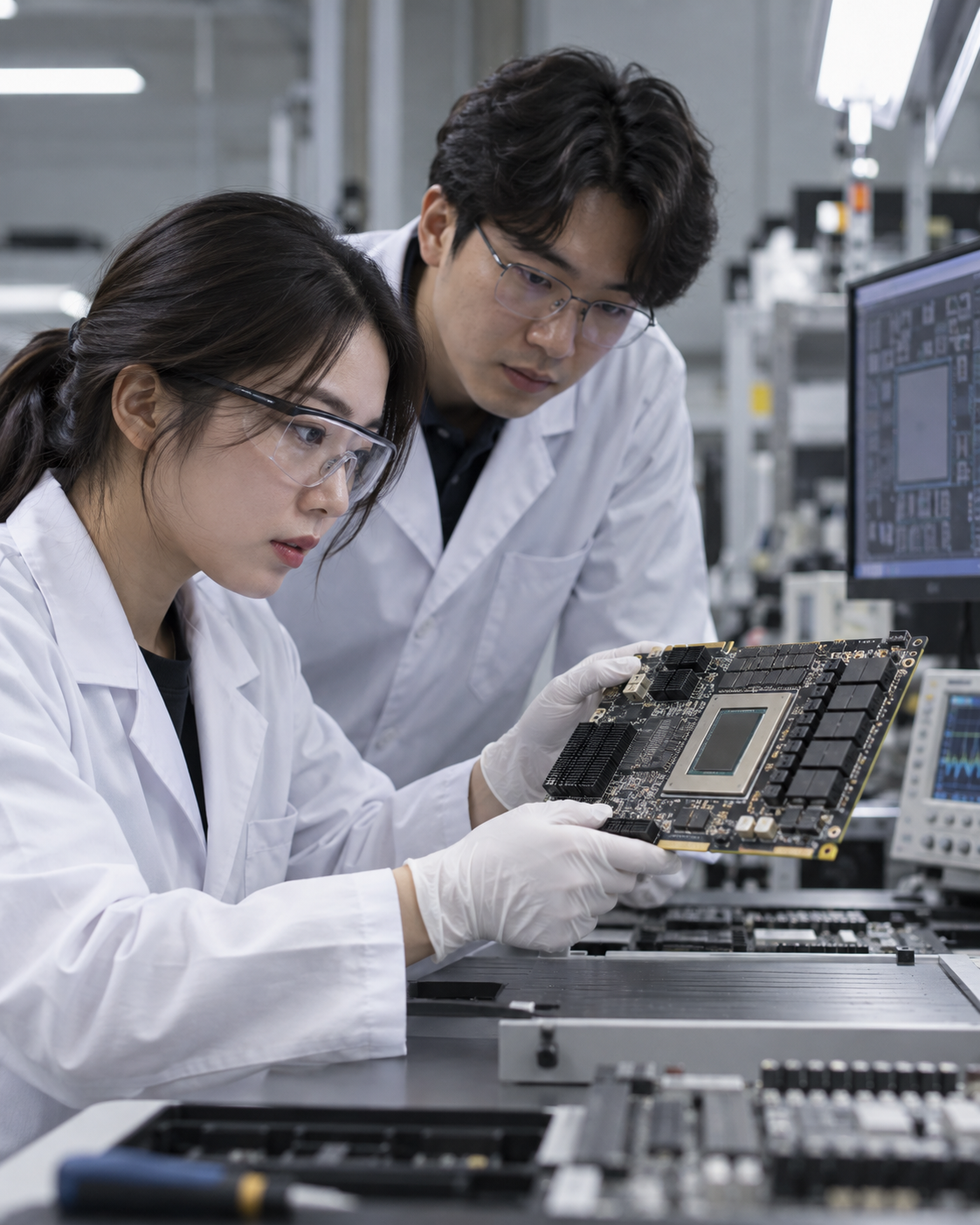
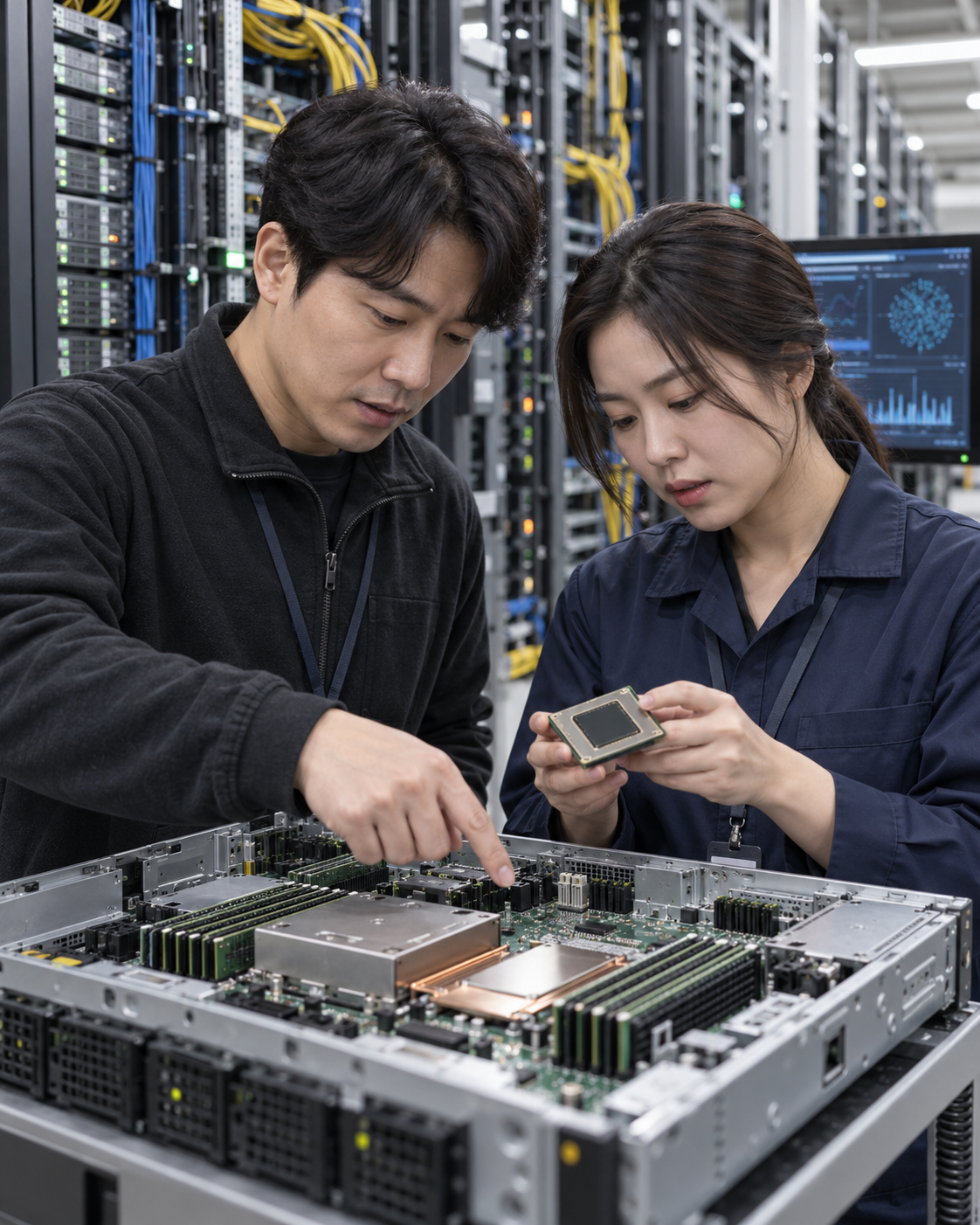
Supermicro announced its results for the first quarter of fiscal year 2027, that is, July to September 2026. Revenue was about $19.9 billion, almost quadrupling from about $5 billion in the same period last year. Net profit was about $1.594 billion. You can see in the sales that the demand for building servers and data centers for AI is strong. But the gross margin went down from 17.5% to 12.7% in the last quarter. with more server orders and with each order, and how much profit you leave
AMD recorded revenue of $13.377 billion in the third quarter of 2026. That's a 45% increase from the same period last year. GAAP operating profit was $2.832 billion and net profit was $2.428 billion. At the center of this performance is the data center business. Our quarterly revenue in this segment was about $8.5 billion, up 97% from the same period last year, which drove our overall growth. AI over the traditional image of the manufacturer of processors for PC As an infrastructure provider,
Open Time: October 28, 2026 01:01 KST Google and Oracle have decided to offer Google's own AI Accelerator TPU on Oracle Cloud Infrastructure as well. This will be the first time that a large cloud provider outside of Google will supply Google TPUs. The actual service is planned to start from 2027, so it does not mean that you can use TPU in Oracle right now. AI Semiconductor Competition
Open Time: October 28, 2026, 01:01 KST Oracle and NVIDIA announced that they are expanding their collaboration on cloud AI infrastructure. Oracle Cloud Infrastructure has started offering NVIDIA Vera Rubin NVL72 systems and Vera CPUs in general, and plans have been made to expand the AI supercluster to several gigawatts in the future. The important thing is that the product I have already started offering is different from the total capacity I will build in the future
Open Time: October 27, 2026, 22:15 KST AMD has announced that it is investing $1 billion in a public offering of shares in Meta. At the same time, he disclosed that the rack-unit AI system Helios is already running on the Meta infrastructure, and that EPYC server processors are supporting Muse AI agents. The key point of this announcement is that we have moved from the cooperation plan to the actual system operation. In large AI infrastructures, GPU-unit performance, as well as CPU, network,
Open Time: October 27, 2026, 15:08 KST NVIDIA has announced that it will invest $3 billion in a public offering of shares in Meta. At the same time, we decided to expand technical cooperation with Meta's AI agent Muse to learn and execute related models more efficiently. As important as the investment itself is, the server configuration required to operate the AI agent on a large scale has been specified. Vera Rubin, Vera CPU, Spectrum-X Ethernet, B
Public Time: October 28, 2026, 08:49 KST SK Hynix announced sales of 104.6155 trillion won and operating profit of 83.3338 trillion won in the third quarter of 2026. It's the first time in the company's history that quarterly sales exceeded 100 trillion won. As the demand for memory entering AI servers overlaps with the increase in product prices, the revenue structure has changed dramatically. If you look at this announcement as a simple performance record, you will miss an important part. HBM4 sales expansion, DDR5 for servers and For Enterprise
We've been told that AI semiconductor demand is strong, but we need to separately check how well it has performed in the actual manufacturing field. TSMC's Q3 2026 results, which were released on October 15, are an important indicator of that trend. TSMC announced revenues of $1.4942.44 trillion and net income of $763.66 trillion in the third quarter. Net profit was 68.7% higher than YoY, and 2nm process share wafers of sales
The semiconductor industry is moving in the direction of making AI chips and using AI in the process of designing and producing semiconductors. In a local public announcement on October 14, NVIDIA unveiled the CUDA-X library and partner use cases for semiconductor design, manufacturing, and inspection. In particular, the figures provided by the company are prominent. The new cuPotential accelerates existing GPU optimization tasks by an additional two to three times in the initial of Synopsys.
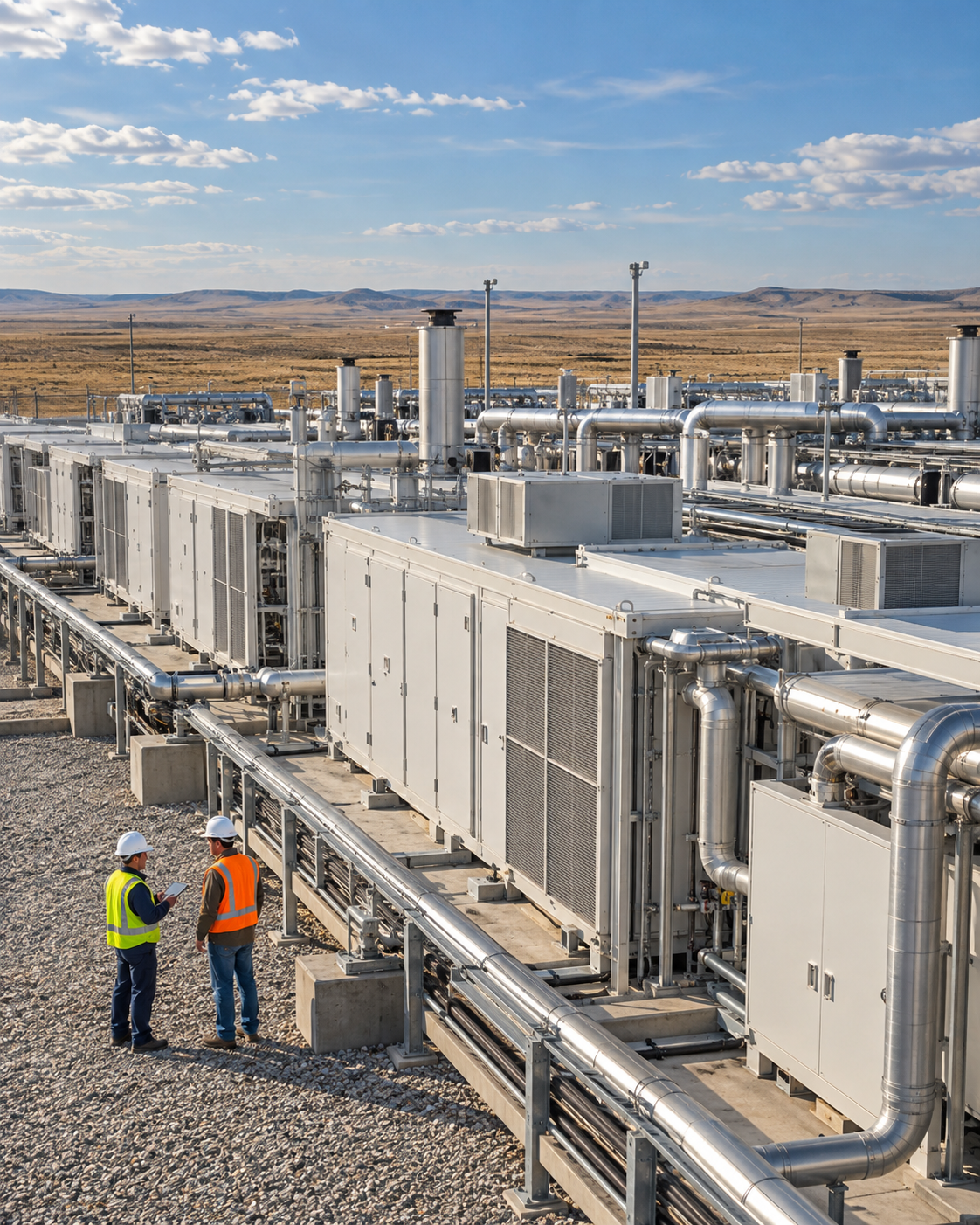
Companies that increase AI data centers are as focused on securing power as servers and semiconductors. American Electric Power (AEP) announced on October 14 that it plans to invest approximately $4 billion to build a 702-megawatt (MW) fuel cell power plant near Cheyenne, Wyoming. In particular, the project is linked to Google's 20-year Power Purchase Agreement (PPA), which agreed to purchase power from the new facility for a long period of time. I have it.
The heat of AI semiconductor investment is leading to the performance of real equipment companies. Dutch exposure equipment company ASML announced on October 14 that its revenue in the third quarter of 2026 was 11.662 billion euros and net profit was 4.96 billion euros. The number of new equipment sales increased compared to the previous quarter. It's not just this quarter's numbers that are the focus. ASML has some customers interested in ordering equipment in 2029 and 2030, and the current supply capacity in 2027-2028
The company that will take over the actual operation of the US-Japan cooperation project worth up to $21 billion that will build two semiconductor factories in New York State. U.S. semiconductor contract manufacturing company GlobalFoundries (GF) has been selected as a technology provider and operator for its Malta, New York, site, Oct. 14, he said. The most important word when reading this announcement is "max." The large size of the announcement means that both factories are either starting right away or $21 billion What has already been executed is not
Model performance isn't the only thing that matters as the competition for AI services grows. How many answers you can generate at the same power and cost will also determine your profitability. There's this problem behind Microsoft's unveiling of its next-generation self-accelerator Azure Maia 300. Microsoft announced the design and system configuration of the Maia 300 on October 12 and said it will begin multi-gigawatt deployments in 2027. materialized
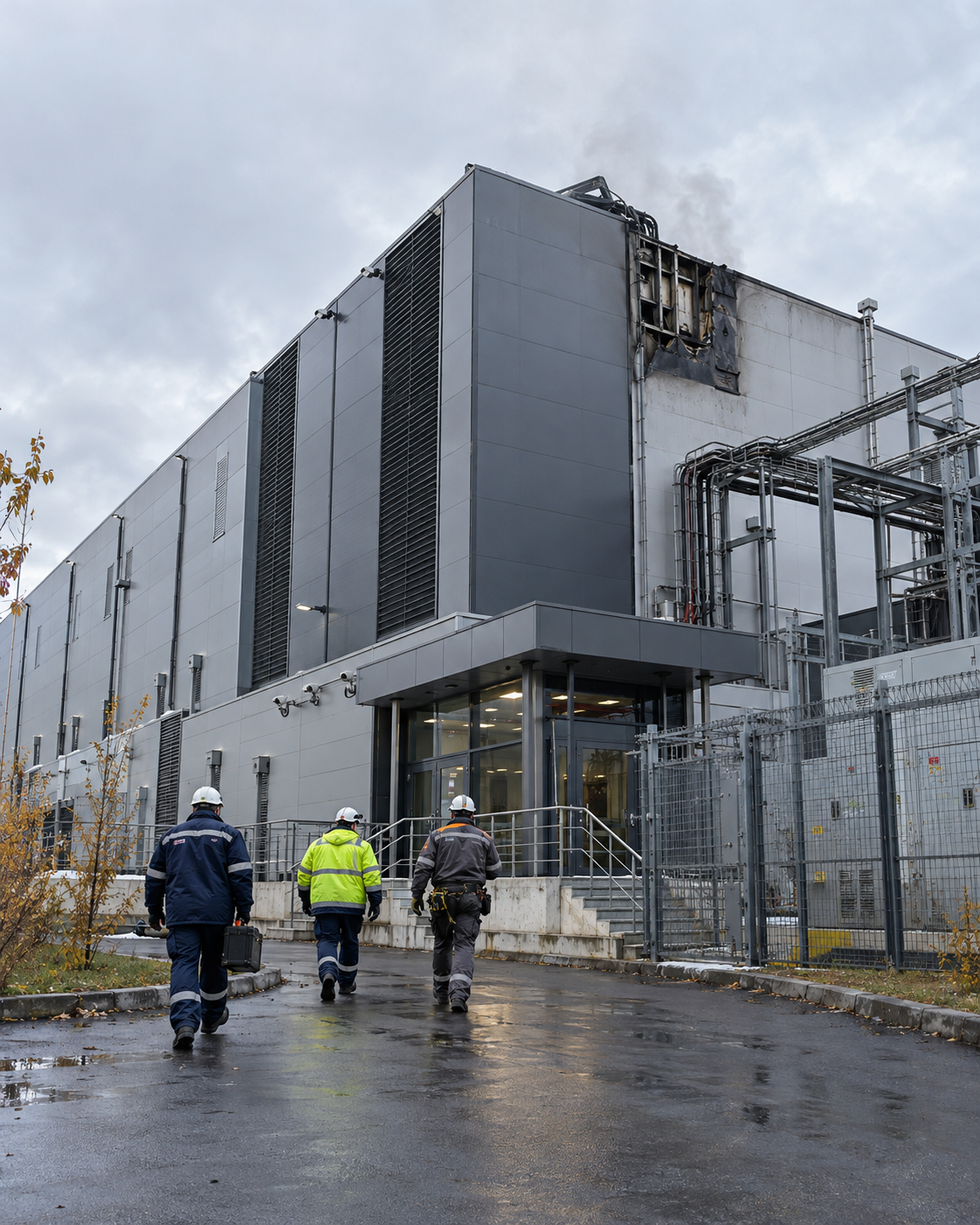
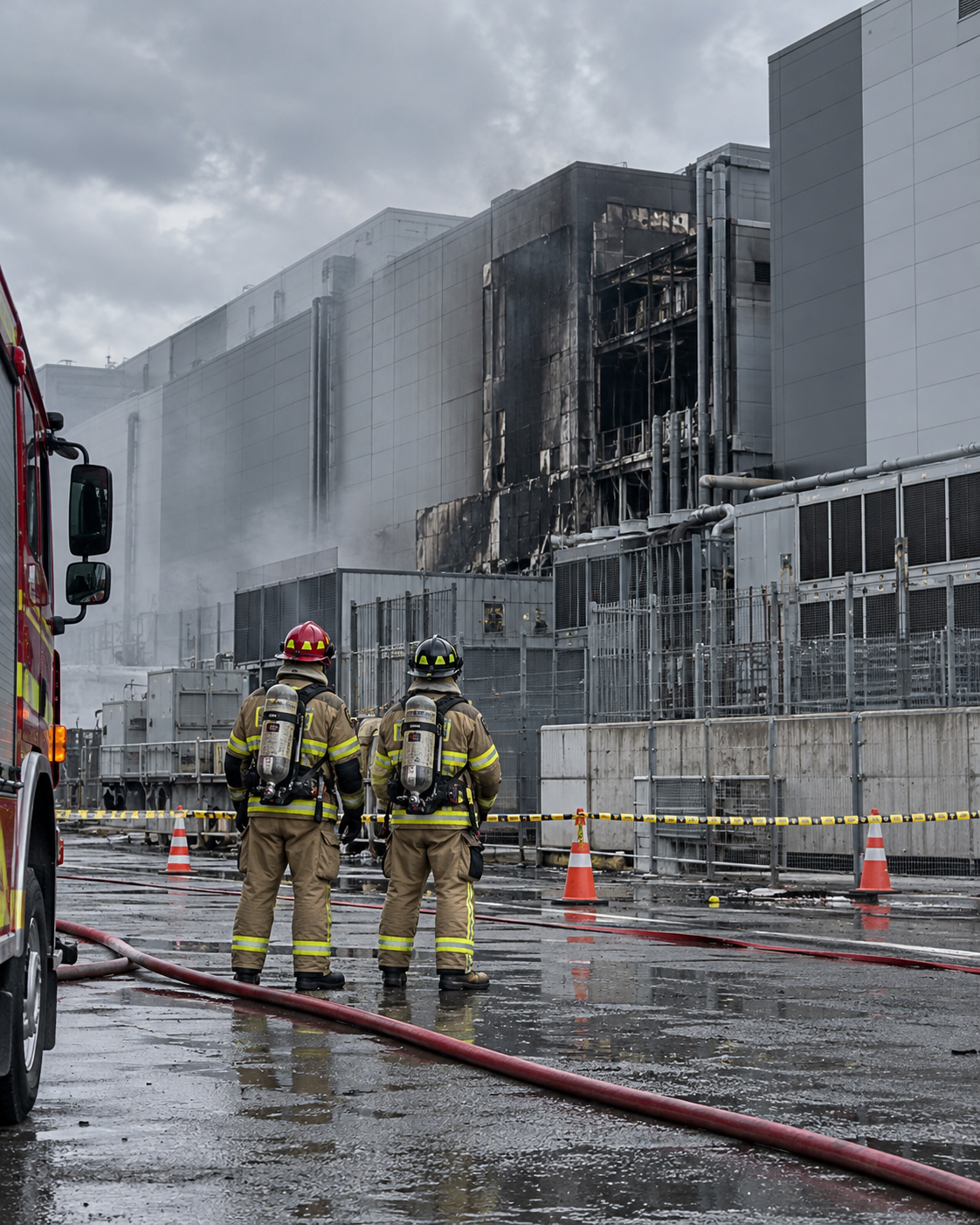
If you are deeply connected to a single corporate infrastructure, from search and mapping, to calling taxis, to payments, to artificial intelligence, how much impact will stopping one data center have? The question became a real issue when Russian technology company Yandex was attacked by drones in three data centers in a matter of days. On October 11, Yandex confirmed that the infrastructure of the data center in the Vladimir region had been damaged and had completely shut down. Sasovo facility completely shut down, Kaluga City
Do AI data centers have to use only accelerators made by the same company? As environments where GPUs and various specialized accelerators are used together become more common, the network connecting these different devices becomes just as important as purchasing chips with high computational power. Upscale, a networking company backed by NVIDIA, announced “Token Fabric” on October 8. It is an open networking architecture designed to connect GPUs and XPUs from multiple manufacturers, featuring switches From chips to equipment and operating software
In the race for AI dominance, data centers are more than just places to store servers. They are critical infrastructure that houses the computing resources needed to train models and operate online services. That’s why, if a power outage or fire occurs, a problem in a single building can spread to multiple digital services. On October 8, Russian tech company Yandex announced that its Sasovo data center had been attacked by a drone. Operations at the facility were suspended due to a fire, and Some services also experienced problems. Afterward, the company took
The competition among AI data centers isn’t limited to securing new land and constructing massive buildings. There’s also a growing trend of transforming sites that already have industrial-grade electricity and infrastructure into new computing hubs. This is because location is particularly critical for AI infrastructure, which requires massive amounts of power and cooling. French AI infrastructure company Sesterce is converting the former Kaipola paper mill in Jämsä, Finland, AI investing more than 10 billion euros in the site
When assessing how rapidly the AI semiconductor market is growing, actual revenue figures can provide a more direct indication than individual companies’ forecasts. In particular, revenue from TSMC—the world’s largest foundry—draws attention because it reflects the production trends of its diverse semiconductor customer base. On October 8, TSMC reported its revenue for September 2026. When combined with revenue from July and August, third-quarter revenue is estimated at approximately 1.49 trillion New Taiwan dollars. Year-over-year An increase of about 50% compared to the same period last year
Building cutting-edge AI semiconductors requires more than just high-performance GPUs. Actual system performance can only be achieved by rapidly connecting multiple chips and memory within a single package. This is why advanced packaging capabilities have become so important in the semiconductor industry recently. On October 8, GlobalFoundries (GF) announced a $2 billion manufacturing contract with TSMC. GF will supply silicon interposers from its production facility in Malta, New York, to support TSMC’s Supporting the CoWoS ecosystem
Samsung Electronics’ quarterly operating profit has surpassed the 100 trillion won mark. According to the preliminary third-quarter 2026 results released by Samsung Electronics on October 8, revenue totaled 195 trillion won, and operating profit reached 107.4 trillion won. Given that this scale of earnings has rarely been seen in the quarterly results of domestic companies, the figures themselves made headlines. However, it’s difficult to dismiss this announcement simply as “Samsung Electronics made a lot of money.” Artificial intelligence data centers are Just how much pressure is being put on the memory supply chain,
Black Hills, a U.S. power company, has signed a final agreement to supply power to the data center Google plans to build in Cheyenne, Wyoming. The agreement took effect on September 30, 2026, and will remain in force through 2048. Black Hills plans to provide up to 590 MW of grid-connected power services for the data center and manage approximately 2.1 GW of third-party power resources through a separate private microgrid. The largest new investment is in natural gas. It's power generation equipment.
Google has signed a long-term power purchase agreement with Constellation Energy, one of the largest nuclear power plant operators in the U.S., to increase the output of existing reactors and add 890 MW of new nuclear generation capacity to the PJM power grid. The key to this initiative is the “uprate” method—improving existing reactors and facilities to increase efficiency and output—rather than building new nuclear power plants from scratch. This agreement demonstrates how the power demand from AI data centers is changing even the way investments in the power grid are made, As an example of this,
As the expansion of AI data centers accelerates, the focus of power-related issues is shifting. While the initial concern was whether sufficient power could be secured, the question of who will bear the costs—as large data centers drive up investment in transmission grids and power generation expenses—has now become a major point of contention for local communities and regulatory agencies. Oracle has established a power purchase arrangement in Wisconsin whereby it acquires a portion of the electricity generated by the existing Point Beach nuclear power plant, Participate and bear the additional costs, estimated at approximately $300 million
As AI coding tools begin to build applications in place of humans, the way databases are used is also changing. Whereas it used to be common for a single service to operate a few long-term databases, we’re now seeing a rapid increase in the practice of AI agents quickly creating and using independent databases for each task, user, or sandbox. Supabase secures $150 million in new funding The announcement of the Turso acquisition at the same time was a direct response to this change
In the competition among AI data centers, what matters most isn’t the announced power capacity, but how quickly the computing capacity actually available to customers can be brought online. Even if you plan a campus with a capacity of hundreds of megawatts, that power isn’t computing infrastructure that generates revenue until the substation, cooling, power distribution, and server room commissioning are all complete. Applied Digital has brought an additional 75 MW at Polaris Forge 1 in Ellen Dale, North Dakota, to “Ready for Service” status. Converted
South Korea's September exports shattered records, driven by demand for AI infrastructure. According to the September 2026 import and export trends released by the Ministry of Trade, Industry and Energy, total exports reached $120.94 billion, an 83.5% increase from the same month last year, and surpassed $120 billion for the first time on a monthly basis. Semiconductors played the biggest role. Semiconductor exports totaled $60.3 billion, a 262.8% increase from the same month last year, marking the first time a single product category has exceeded $60 billion. Computer exports also $7 billion, 435
Amazon Web Services has signed a multi-year contract worth over $1 billion with Synopsys to use custom semiconductor design IP for the long term. As AWS continues to increase the proportion of chips it develops in-house—such as the Graviton CPU and Trainium AI accelerator—this agreement represents a deeper partnership with an external specialist provider for the core design blocks required for these chips. This agreement goes beyond a simple software purchase. Synopsys will provide semiconductor IP optimized for specific applications—
Increased investment in AI data centers is completely transforming the memory industry. Micron announced that its revenue for the fourth quarter of fiscal year 2026 reached $54.23 billion, approximately 4.8 times the $11.32 billion reported in the same period last year. The company also reported that the value of its long-term supply agreements rose from $22 billion in June to $32 billion. The key point is not simply that the company posted strong results for a single quarter. Customers are securing the memory they will need in the future over the long term We are increasing the number of contracts for this purpose, and,
On September 25, 2026, Nscale, a U.K.-based AI cloud company, announced a $3.36 billion funding round in the form of pre-IPO convertible bonds. The deal, led by the third-party investment firm Third Point, included several investors, including NVIDIA. The funds will not be received all at once. According to the company’s statement, an initial $2.36 billion will be raised upon closing the deal, while an additional $1 billion from NVIDIA is scheduled to be injected in mid-November 2026.
Accelevation, a U.S. company that manufactures power distribution and cooling equipment for data centers, has announced plans to sell 30 million shares at $20 to $24 per share as part of its initial public offering (IPO). If all shares are sold at the top end of the price range, the total offering size could reach up to $720 million. The company announced that it began investor roadshows on September 22, 2026. It has applied for a Nasdaq listing under the ticker symbol ACCV, and Reuters estimates the total offering size at approximately 5.37 billion Dollar Corporation
Firmus, an Australian AI data center company, plans to begin its initial public offering (IPO) on October 6, 2026, to raise 7 billion Australian dollars, or approximately 5 billion U.S. dollars. If the over-allotment option is fully exercised, the amount raised in U.S. dollars could increase to as much as 5.5 billion. If everything proceeds as scheduled, it will be the second-largest IPO in Australian history, following Telstra’s 1997 listing. According to Dealogic, it is projected to be the fourth-largest IPO globally in 2026.
SoftBank Group has launched a large-scale global bond offering to raise funds for a follow-on investment in OpenAI. The offering consists of $10 billion in dollar-denominated senior unsecured bonds and 1 billion euros in euro-denominated bonds. Although different currencies cannot simply be added together, the amount raised is well over $10 billion when converted to U.S. dollars. The primary use of the proceeds is the third installment of $10 billion for the follow-on investment in OpenAI, which is scheduled to be completed by October 1, 2026. It's dollars.
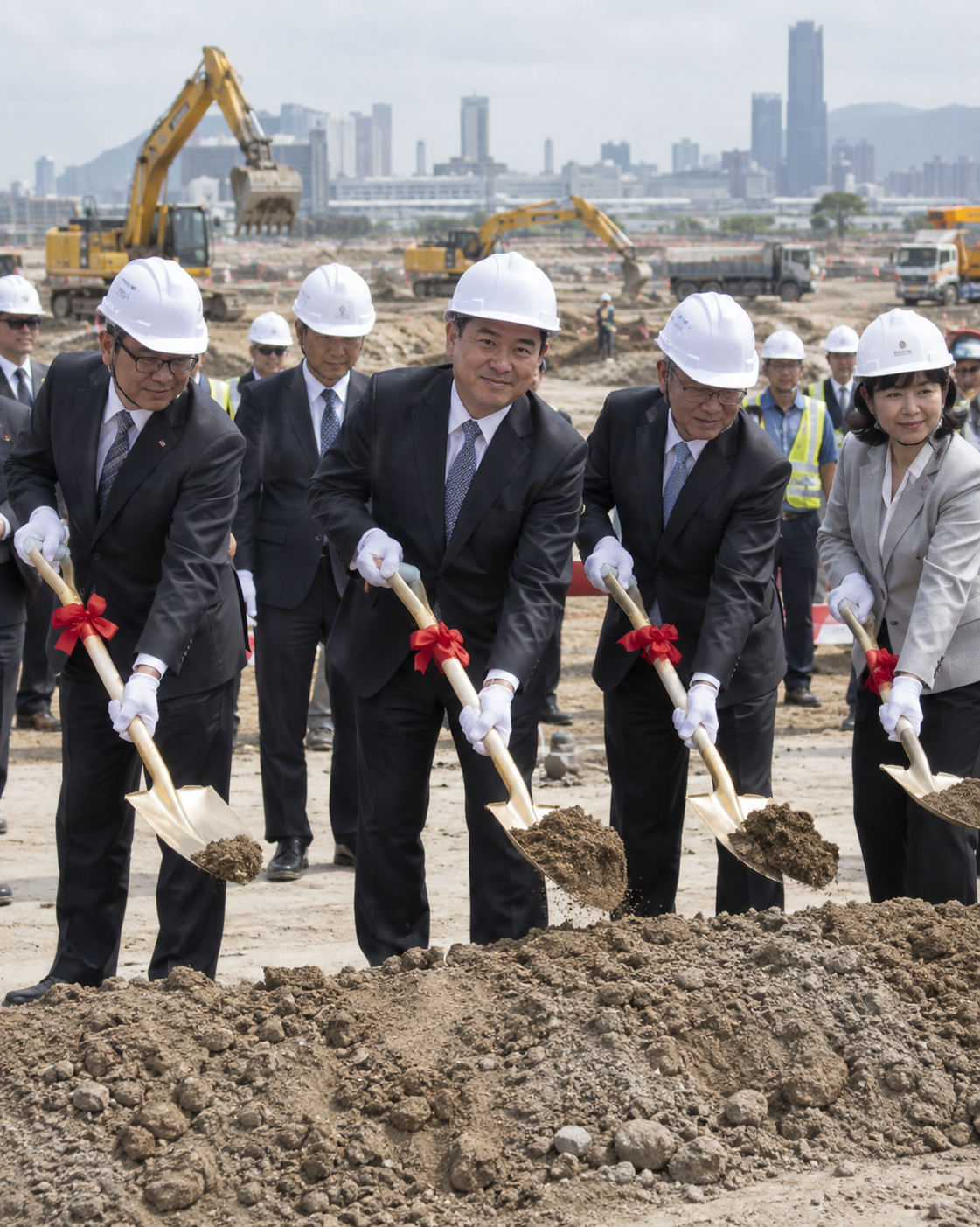
Taiwan has begun developing the Baipu Industrial Park in Kaohsiung, in southern Taiwan, targeting the semiconductor supply chain for AI and high-performance computing. At the heart of this project are a technology verification laboratory and a talent training center to be established by TSMC. The goal is for both facilities to begin operations in the fourth quarter of 2029. This complex differs in nature from projects that simply increase the number of factories directly mass-producing semiconductors. Equipment and materials companies will conduct research on technologies to be applied to TSMC’s cutting-edge packaging processes, and Bringing together all the spaces for testing and verification in one place is
CXMT, China’s largest DRAM manufacturer, announced that it has begun mass production using its fifth-generation technology platform. The company stated that it has reduced the pitch of the core memory structure to 11.95 nanometers and that two 24Gb LPDDR5X products manufactured on the same platform are already in mass production. The most notable figure from this announcement is that the total number of chip dies that can be produced from a single wafer has increased by at least 50% compared to the previous 4th-generation platform. However, this figure is subject to final inspection The yield, which is the percentage of chips that pass inspection, is
It has been reported that OpenAI expects a cumulative negative free cash flow of $278 billion from 2026 to 2030, according to internal projections. The Financial Times reported this after reviewing the company’s presentation, and Reuters subsequently picked up the story. The same document also includes projections of approximately $856 billion in computing and infrastructure spending through 2030 and approximately $350 billion in revenue for 2030. These are all internal figures based on future assumptions and have not been announced by OpenAI as official financial results, or
Nscale, a U.K.-based AI cloud company backed by NVIDIA, has filed a Form S-1 registration statement with the U.S. Securities and Exchange Commission and is seeking a listing on the New York Stock Exchange. The proposed ticker symbol is NSCL, but the number of shares to be offered and the price range have not yet been determined. Revenue for the first half of 2026 was $140.6 million, a 1,252% increase from a year earlier. During the same period, the net loss reached $1.02 billion, reflecting simultaneous rapid revenue growth and massive capital burn. It appeared. |
AI cloud company Nebius has decided to raise pay-as-you-go prices for certain NVIDIA GPUs by 17–21% starting October 1, 2026. This is the second price increase in just three months, and as demand for AI computing grows rapidly, the cost burden of on-demand GPU capacity is rising. The price hikes aren’t limited to GPUs. Some AMD- and Intel-based CPU-only instances are set to rise by up to 25%, while memory products are expected to increase by approximately 41%. Some high-
Dutch semiconductor company Nexperia and India’s Tata Electronics have announced a strategic partnership covering everything from wafer manufacturing to assembly, testing, and technology development. The key aspect of this partnership is that it integrates both the front-end and back-end of the semiconductor supply chain into a single collaborative framework. The two companies plan to lay the groundwork for Tata Electronics to manufacture Nexperia’s MOSFET product line at the 300mm semiconductor fab currently under construction in Dolera, Gujarat, India. In Jagroad, Assam, Packaging
GlobalFoundries and Marvell have signed a multi-year agreement to expand production capacity for high-speed optical interconnect semiconductors for AI data centers. The production expansion is scheduled to take place at the GlobalFoundries facility in Burlington, Vermont. The technology in question is silicon germanium (SiGe), a semiconductor that combines silicon and germanium. It enables fast and power-efficient signal processing even at high frequencies, making it suitable for optical transceivers and next-generation optical interconnect devices. It is utilized. AI infrastructure...
AI infrastructure company Crusoe announced that it has raised $3.9 billion in an initial closing of its Series F funding round. Following the investment, the company was valued at $30.9 billion. The company plans to use the funds to expand its existing business, build its own AI factory, and expand Crusoe Cloud. The company aims to strengthen its vertically integrated strategy—where a single company connects power, data centers, and the cloud—ranging from large-scale data center campuses to modular Crusoe Spark facilities. That's right. C
Huawei has unveiled a schedule to sequentially release two next-generation AI chips in 2027. The company aims to launch the Ascend 960DT in the first quarter of 2027 and the Ascend 960PR in the third quarter of the same year. What stands out about this announcement goes beyond the individual chips. Huawei also presented its UnifiedBus technology, which bundles multiple AI processors into a single, massive computing system, as well as its “supercluster” concept, capable of connecting up to 1 million processors.
Dutch AI semiconductor startup Axelera AI announced the launch of Europa, its second-generation AI inference architecture, and said it has signed several AI factory supply agreements. Products based on Europa are currently shipping and are available in validated configurations on select Dell and Supermicro servers. The company explained that it has deployed its products to over 600 customers worldwide and that the value of the contracts it has signed amounts to tens of millions of dollars. At the same time, it is pursuing potential sales opportunities worth over $1.5 billion. "It's in the middle,"
Delos Data, founded by former Intel engineers, has raised over $100 million to develop network chips and software for AI data centers. Reuters reported the investment amount as $100 million, while the company’s official announcement stated it exceeded $100 million. Matrix Partners, Playground Global, Socratic Partners, Capricorn’s Technology Impact Fund, and Matter Ventu
Enflame Technology, a Chinese AI GPU company backed by Tencent, went public on the Shanghai STAR Market and raised 6.12 billion yuan, or approximately $912 million. This is a follow-up report confirming that actual trading and fundraising have been completed, following the initial announcement of the listing schedule. On its first day of trading, the stock closed at a price 179% higher than the initial public offering (IPO) price. While this reflects high investor expectations for Chinese AI semiconductors, it’s also important to note that the company is still operating at a loss. | 6.12 billion yuan
AI inference chip startup d-Matrix announced that it will integrate NVIDIA’s NVLink Fusion into its next-generation Raptor processor. This collaboration will enable the company’s chips to be directly connected to NVIDIA data center racks for joint use. The final design of Raptor is targeted for late 2026, with compatible server systems slated for release in 2027. Since the announced schedule is still in the planning phase, the timing of actual product validation and availability remains to be confirmed. | NVLink Fusion is a
Positron AI, a startup developing semiconductors for AI inference, has raised $875 million and achieved a valuation of $5 billion. This is a major investment round in which the company’s valuation—which stood at $1.06 billion just seven months ago—has more than quadrupled. The company plans to use the funds for the final design and production preparations of its next-generation Asimov chip, with the goal of beginning production in the second half of 2027. It’s important to consider both the fact that the company is still in the pre-mass-production phase and the scale of the investment. | Why Is Funding Flowing into Inference Chips? AI The center of industry is Mo...
Oracle’s AI cloud business has amassed a record backlog. Revenue for the first quarter of fiscal year 2027 rose 30% year-over-year to $19.3 billion, while cloud infrastructure revenue surged 121% to $7.4 billion. By securing over $30 billion in new AI cloud contracts this quarter alone, the remaining performance obligation (RPO) rose to $664 billion. The RPO represents the amount from contracts that have been signed but not yet recognized as revenue, indicating future growth potential and The burden of actual enforcement
U.S. telecommunications company Verizon and fiber-optic manufacturer Corning have signed a long-term supply contract worth billions of dollars. This is an example of how investment in AI infrastructure is rapidly expanding beyond servers and semiconductors to include long-distance communication networks connecting data centers. Corning plans to supply Verizon with more than 80 million miles of high-density optical fiber and connectivity solutions from 2027 through 2032. This expansion goes beyond ultra-high-speed internet for homes and businesses to include AI A Day in the Life of a Hyperscaler
Qualcomm and Amazon have agreed to jointly develop custom semiconductors for large-scale AI data centers over multiple generations. This deal could mark Qualcomm’s full-scale entry into the cloud AI infrastructure market, a shift from its traditional focus on smartphone chips. According to regulatory filings, the cap—which is tied to Amazon’s purchase volume—is $60 billion. Qualcomm also issued warrants to Amazon, allowing it to purchase up to 25 million shares at $161.26 per share.
OpenAI has publicly confirmed that it is collaborating with Samsung Electronics on joint research and production of next-generation semiconductors as part of its efforts to develop its own AI chips. This is significant because it goes beyond a simple memory procurement relationship to include collaboration on chip design and production. Harrison Kim, Head of OpenAI Korea, stated at a press conference in Seoul on September 9 that one of the areas where OpenAI has made the most progress with Samsung Electronics is the next-generation He explained that it involved the joint production and research of chips.
NVIDIA announced that it will begin releasing Windows AI PCs equipped with RTX Spark chips starting in October 2026. Lenovo will join the first wave of launches with thin laptops and 2-in-1 devices, while Acer will showcase a compact desktop concept. The goal of RTX Spark is to move away from the model of sending requests to the cloud and receiving results, and instead run large AI models and agents directly on personal PCs. This approach improves response times, enhances privacy, and reduces long-term usage costs.
Snowflake, a cloud data platform company, has raised its product revenue forecast for fiscal year 2027 to $6.07 billion. This is the result of growing demand from companies to migrate existing data to the cloud and integrate generative AI into their operations. Product revenue for the second quarter of fiscal year 2027 reached $1.49 billion, a 37% increase year-over-year, while total revenue totaled $1.55 billion. The company noted that roughly half of its recent growth acceleration has come from AI products. I explained that it had come out.
Hewlett Packard Enterprise (HPE) posted record-high revenue for the third quarter of fiscal year 2026, driven by demand for AI servers and networking equipment. The company also raised its full-year and next-fiscal-year outlook as the effects of its acquisition of Juniper Networks and increased data center investments were reflected simultaneously. Total third-quarter revenue was $12.2 billion, an increase of approximately 34% compared to the same period last year. Revenue in the Cloud & AI segment was $9.0 billion, while the Networking segment generated $2.9 billion.
Broadcom has once again significantly raised its long-term outlook for its custom AI accelerators and data center networking businesses. As more companies seek to design their own AI chips, this signals that not only NVIDIA’s general-purpose GPUs but also custom semiconductors and networking equipment are becoming key pillars of AI infrastructure investment. During a conference call following its earnings announcement, Broadcom projected AI semiconductor revenue of approximately $115 billion for fiscal year 2027. Previously, The 1,0 I mentioned
Indian data center company Yotta Data Services is aiming to raise up to $1.5 billion (approximately 2 trillion won) through an initial public offering (IPO) scheduled for January through March 2027. The company announced that it plans to submit draft documents to Indian securities regulators in October. The funds raised will be used to repay debt, purchase GPUs, and expand sovereign cloud infrastructure that keeps data within India’s borders. As demand for AI computing grows rapidly, data center operators are also The massive investment in equipment
OVHcloud, a French cloud company, has obtained SecNumCloud security certification for its public cloud services. This means it meets the high standards of security and control required by French government agencies and regulated industries when handling sensitive data. This certification is significant in that its scope has expanded beyond existing dedicated and private environments to include the public cloud, where resources can be scaled up or down as needed. Yes. OVHcloud offers this platform in Italy and Germany
SB Energy, a SoftBank-backed power and data center developer, has filed its initial public offering documents with the U.S. Securities and Exchange Commission. The company reported a total project backlog of approximately $439 billion, with data center capacity under contract or under construction totaling 8.8 GW. While the numbers alone are staggering, they must be interpreted with caution. The $439 billion figure represents the value of long-term contracts, not cash currently on hand or short-term revenue, and SB Energy currently operates
Dell Technologies has once again significantly raised its annual outlook based on demand for AI servers. AI server orders secured over the past 12 months total more than $130 billion, and the revenue forecast for AI-optimized servers for fiscal year 2027 has been raised from $60 billion to $74 billion. AI server revenue alone reached $16.4 billion in the second quarter, and the order backlog at the end of the quarter stood at $95 billion. Large-scale investments in AI infrastructure are driving demand not only for chips but also for complete server systems, networks, and storage
Singapore-based Keppel DC REIT and its parent company, Keppel, have agreed to acquire a 90% effective stake in two data centers in the Tokyo metropolitan area of Japan. Amid growing demand for data centers driven by the expansion of AI services, this is a major transaction aimed at securing long-term rental income in the Japanese market. The acquisition price for 100% of the two assets is 190 billion yen, which amounts to approximately $1.19 billion or S$1.5485 billion based on the exchange rate at the time of the announcement. Upon completion of the transaction, Keppel DC REIT
NVIDIA has invested $3.5 billion in convertible bonds issued by Taiwanese fabless company MediaTek. Rather than a simple financial investment, this is more of a strategic deal aimed at expanding the scope of collaboration—from custom AI chips for data centers to local AI in PCs and automotive computing. The key point is that MediaTek is adopting NVIDIA’s NVLink Fusion. This will enable cloud companies and large AI developers to integrate their custom-designed XPUs into NVIDIA’s NVLink-based rack systems
Shenzhen Longsys Electronics, a Chinese memory semiconductor company, has launched an initial public offering (IPO) on the Hong Kong Stock Exchange to raise up to approximately $800 million. The company, which is already listed on the Shenzhen Stock Exchange, is issuing additional H-shares in Hong Kong to secure funding for research and development and gain access to overseas capital markets. Longsys is offering a total of 26,077,800 H-shares at a maximum price of 240.60 Hong Kong dollars per share. If all shares are sold at the maximum price, the total offering The size is approximately 6
The bottleneck in the AI data center competition is shifting from computing chips to the movement of data between chips and servers. As demand for photonic wafers used in optical interconnects grows rapidly, French semiconductor materials company Soitec is pursuing multi-year supply agreements with more than 10 customers. These agreements are not mere purchase orders but rather production capacity reservation contracts that combine a fixed price, committed volume, and a deposit. Customers commit to actual demand, and Since Soitec has a structure in place to secure medium- to long-term supply, AI infrastructure
In its first half-year earnings report since going public, Chinese DRAM company CXMT saw its revenue increase nearly tenfold and returned to a substantial profit. Demand for AI data centers and computing equipment, driven by memory shortages and rising prices, led to a significant jump in earnings. Revenue for the first half of 2026 totaled 150.31 billion yuan, an increase of 873.64% compared to the same period last year. Net income attributable to controlling shareholders was 77.605 billion yuan, marking a turnaround from a loss of 2.332 billion yuan a year earlier. I switched.
Chinese memory semiconductor company CXMT announced that it has begun mass production of LPDDR6, a next-generation mobile DRAM, and will supply it to Xiaomi’s new foldable smartphone, the 18 Fold. This is significant as it marks the first time the technology has moved beyond development-stage samples to be used in actual consumer products. Xiaomi has also confirmed the supply plan, and the 18 Fold is scheduled for release in September 2026. The new smartphone is expected to feature the Xring O3, a 3-nanometer mobile processor designed in-house by Xiaomi, and
When discussing AI data centers, the first thing that comes to mind is GPUs from companies like NVIDIA. However, to reliably operate numerous AI accelerators, power distribution equipment that safely distributes incoming power to servers and cooling systems is also essential. As competition in AI infrastructure expands beyond semiconductors to include power and cooling equipment, electrical infrastructure company nVent has embarked on a major acquisition. | nVent Signs Agreement to Acquire Maverick Power Connection nVent E
Chinese AI semiconductor companies are rapidly expanding not only in technology development but also in the capital markets. Enflame Technology (燧原科技), a Chinese AI GPU company, has set September 2, 2026, as the subscription date for its initial public offering (IPO) on the Shanghai STAR Market. The target fundraising amount is 6 billion yuan, or approximately $892 million. The funds raised through this IPO are scheduled to be invested in next-generation AI chips and AI hardware and software businesses. China’s efforts to develop its own AI semiconductors
As AI models grow in scale, there’s been an increase not only in the direct purchase of GPUs but also in contracts to secure the necessary computing power from large-scale data centers over the long term. RUM Group has signed a GPU service contract worth approximately $13.7 billion with a private U.S. cloud customer. While this is one of the largest AI infrastructure contracts announced recently, challenges related to facility construction and financing remain. | $13.7 billion over 6 years, three Supplied in stages by RUM Gro
Smartphone manufacturer Xiaomi has significantly expanded the scope of its semiconductor strategy. Following the unveiling and mass production of its new smartphone processor, the Xring O3, the company announced that it has also completed development of the Xring O100, an AI chip for consumer devices, and the Xring D100, a chip for autonomous driving. What’s significant about this announcement isn’t just the addition of a new smartphone chip. Xiaomi has expanded its AI capabilities from mobile devices like smartphones and tablets to From home appliances to electric vehicles
As competition in AI intensifies, so do the power and cooling demands on data centers. Even when companies try to install more of the latest GPUs, grid connections, cooling infrastructure, site acquisition, and various permits and approvals often can’t keep up with the pace of expansion. Instead of solving this problem on Earth, there is a company that aims to move the data center itself into Earth orbit. It is Starcloud, a U.S. startup founded in 2024. Starcloud announced on August 21 local time According to the announcement, $250 million (
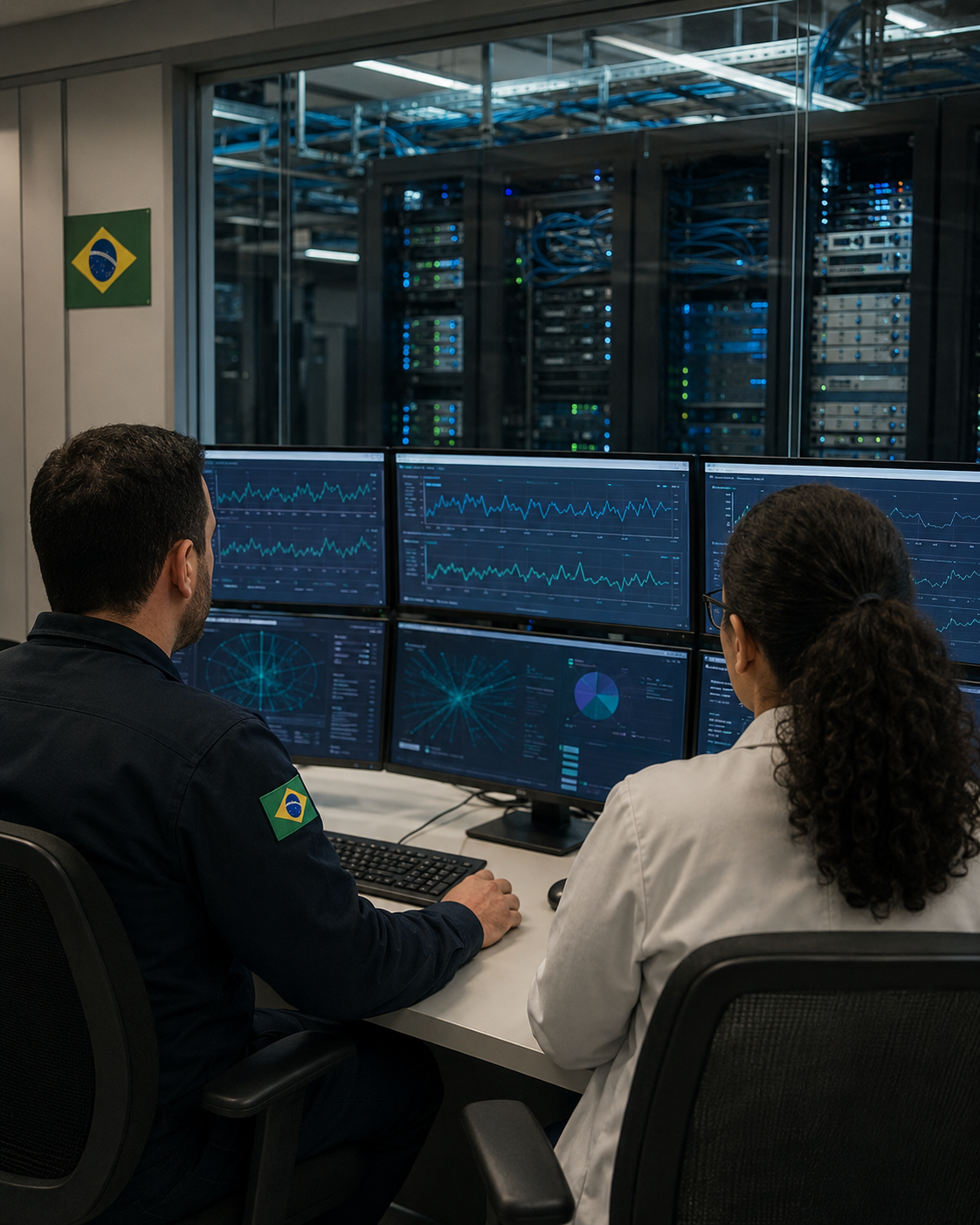
The focus of the AI competition is rapidly shifting from model performance to securing computing infrastructure. Brazil has now unveiled an AI investment plan worth approximately 2.3 billion reais—about $444.2 million, according to Reuters. What stands out is that Brazil has not entrusted all its resources to a single country or company. It is separately pursuing an infrastructure project for large language models (LLMs) in partnership with a Chinese company and a project for a massive supercomputer—likely to be powered by U.S.-made GPUs—thereby ensuring a range of technological options. I went with an expansive layout. This time
When discussing the AI semiconductor market, the first companies that come to mind are chip design firms like NVIDIA. However, to actually produce more AI accelerators, the entire supply chain—including foundry production lines, HBM, advanced packaging, and testing equipment—must expand in tandem. The financial results released by Applied Materials, a global semiconductor equipment company, on August 14, 2026 (Korea Standard Time), clearly illustrate this trend. The company reported record-high revenue in the third quarter, I recorded it, and 4
The focus of the AI semiconductor competition is gradually shifting. While the ability to train massive AI models quickly was the key priority until now, the bigger challenge is now emerging: how to deliver trained models to a vast number of users as quickly and cost-effectively as possible. Amid this trend, AMD signed a definitive agreement on August 6, 2026, to acquire Taalas, a Canadian AI semiconductor startup. The acquisition price has not been disclosed. It hasn't happened yet, and the deal hasn't been finalized. Regulations
When it comes to the competition in AI infrastructure, GPUs are the first component that comes to mind. However, to continuously store and quickly retrieve the data generated by AI, high-capacity SSDs and NAND flash are also necessary. Sandisk’s recently announced financial results and long-term contracts have provided concrete evidence that the focus of AI investment is expanding from computing devices to storage devices. SanDisk’s revenue for the fourth quarter of fiscal year 2026 was $8.965 billion, a 372% increase from a year ago. Data center revenue is
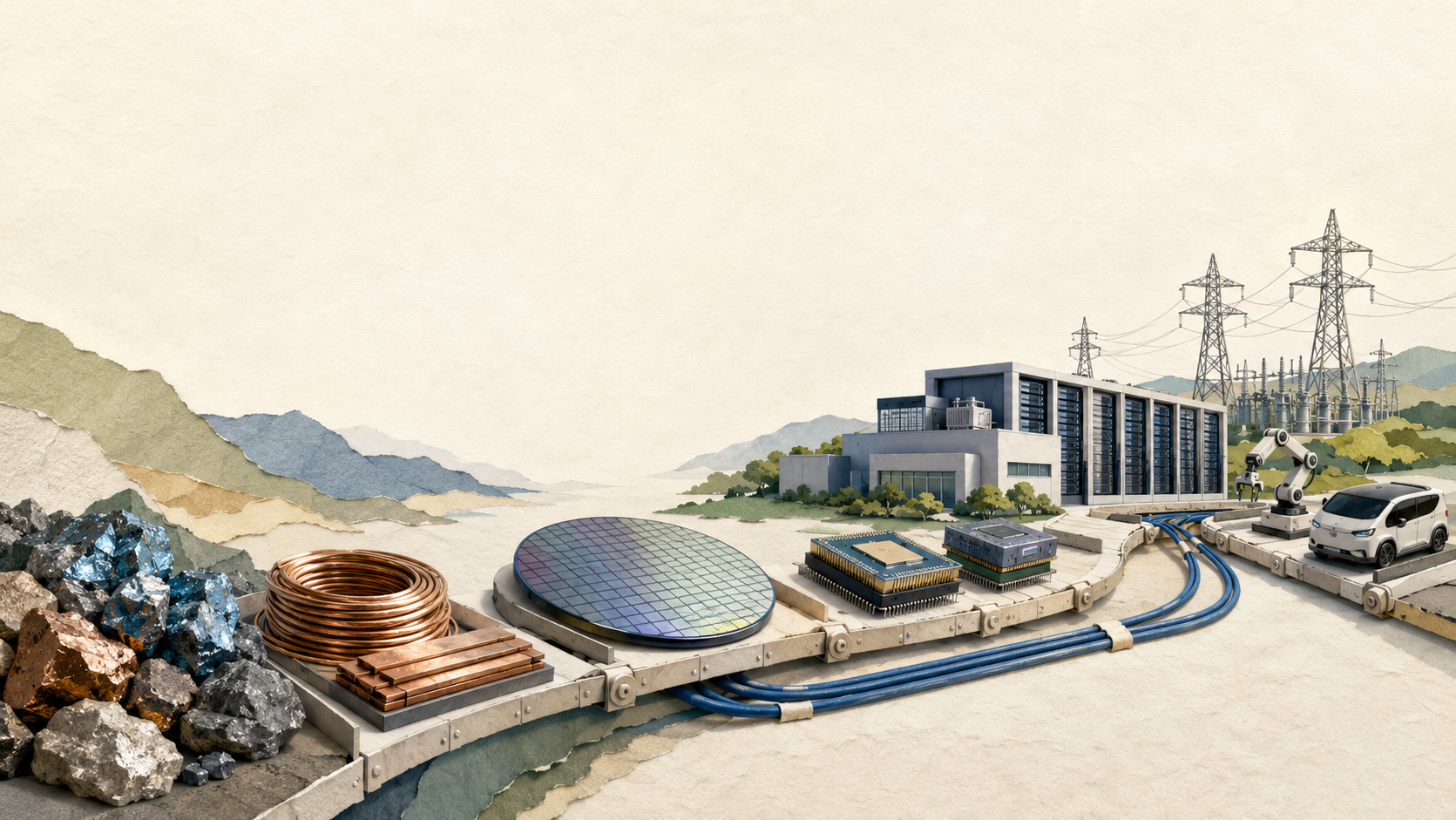
The focus of the AI competition is rapidly shifting from model performance to infrastructure and supply chains. This is because, no matter how advanced an AI model may be, it is difficult to significantly scale up services without the support of high-performance semiconductors, data centers, a stable power supply, and critical minerals. Against this backdrop, on August 2, Yonhap News summarized President Lee Jae-myung’s tour of San Francisco and three South American countries, highlighting AI cooperation with U.S. Big Tech and South American critical minerals. He cited the expansion of the supply chain as a major achievement. The structure of this visit was
News that Naver and NVIDIA are building an AI factory has recently been garnering a lot of attention. While the name might bring to mind a factory where robots assemble AI devices, the actual meaning is slightly different. It’s closer to a massive computing infrastructure that integrates large-scale GPUs, power, cooling, networking, and operating software to train AI models and keep them running continuously in live services. In particular, this initiative isn’t simply intended for use in Naver services— This isn't just a matter of adding servers. It's the hyperscale project in Sejong City.
Some major news was recently announced in the AI semiconductor market. Samsung Electronics and the U.S. semiconductor company Broadcom have agreed to expand their collaboration to build next-generation AI infrastructure. The estimated scale of the partnership is over $200 billion over the next five years, with the collaboration set to continue through 2030. While the amount alone makes it seem like a massive deal, there’s another aspect of this announcement that really deserves attention. Samsung Electronics will not only supply memory but also HBM, Providing a combined solution that integrates foundry and advanced packaging